
 PAPINEAU
 PAPINEAU
 Beaudry
Architects
Bolduc & Venne
New headhouse (1999): Mario Bibeau

Artists

Start of service
October 14, 1966

Art & Architecture

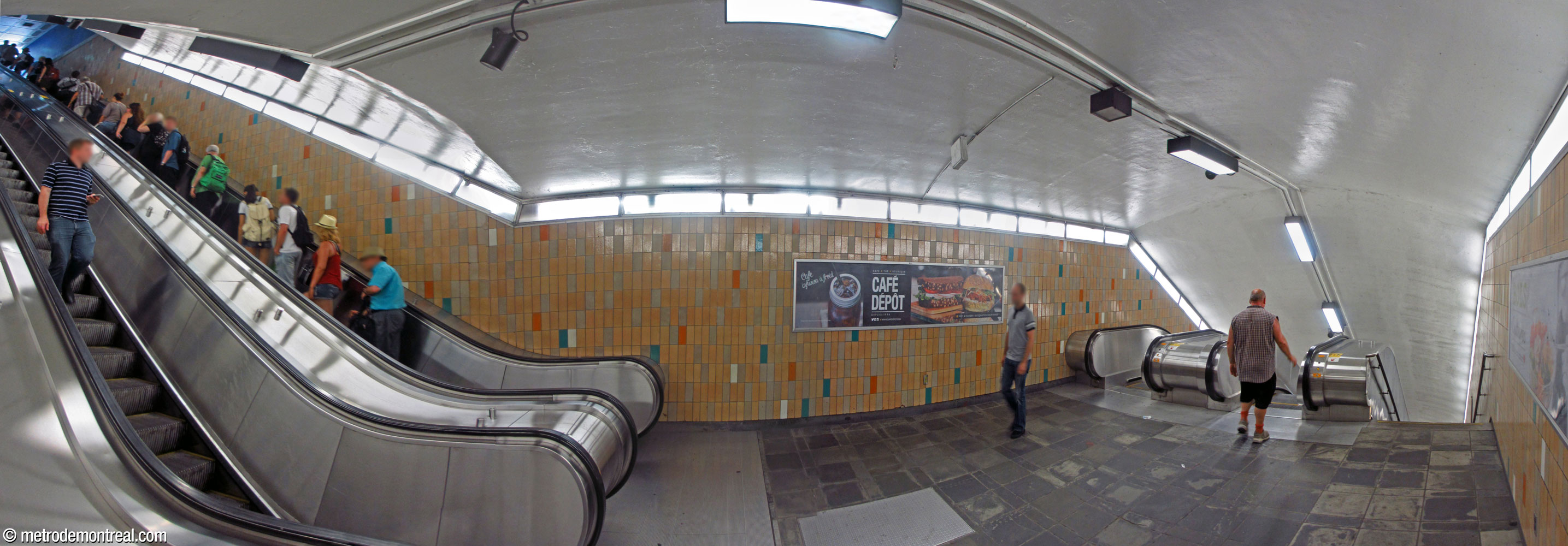
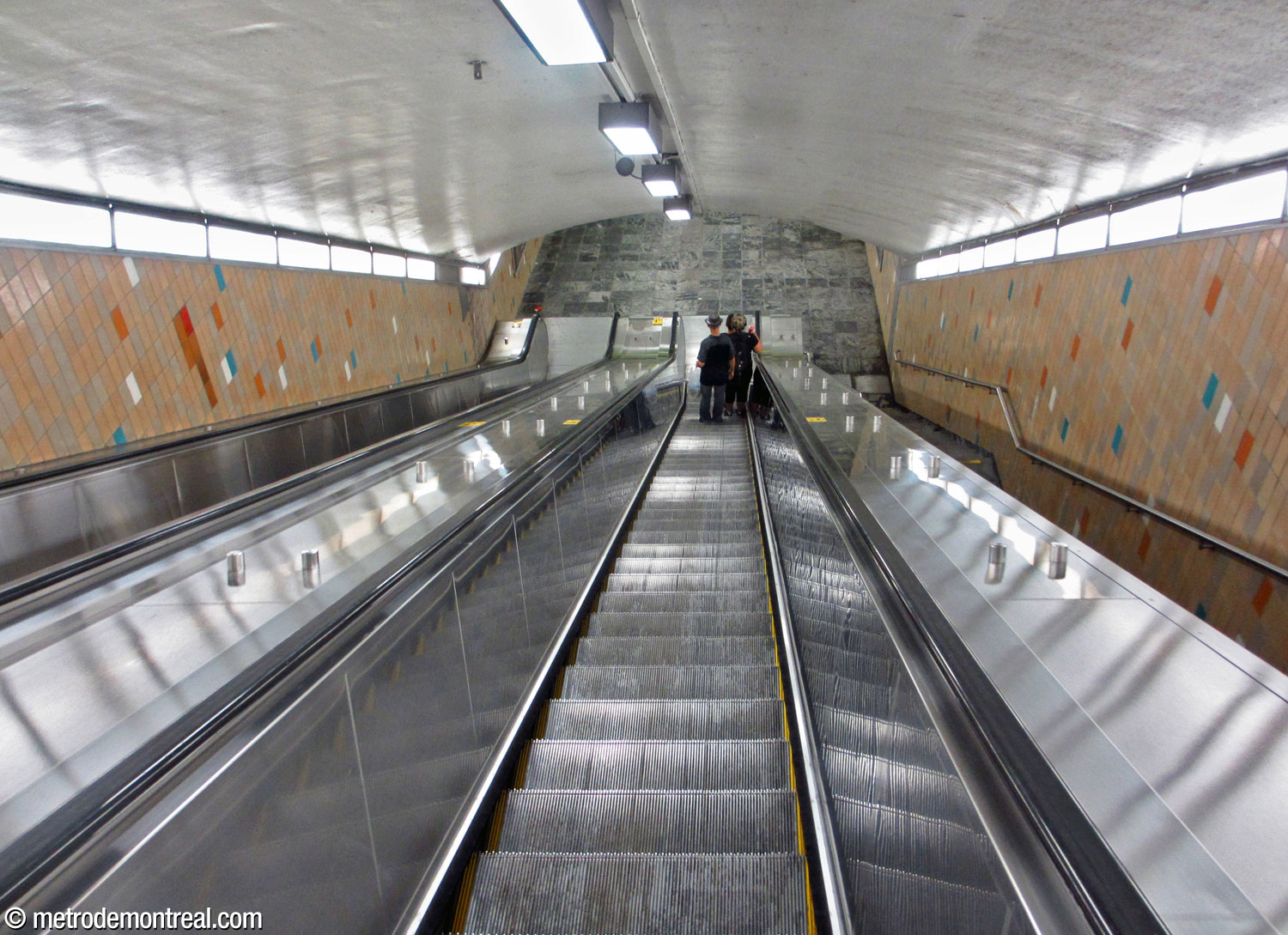
The first impression of this station is of a relatively plain original network station. The randomly distributed colours of the glazed wall tiling are consistent through most of the station: pale tan and grey with blue, orange, and white accents. In the centre of the platforms and behind the benches, the tiling becomes more variegated, with brown, green, black, red, and teal added.


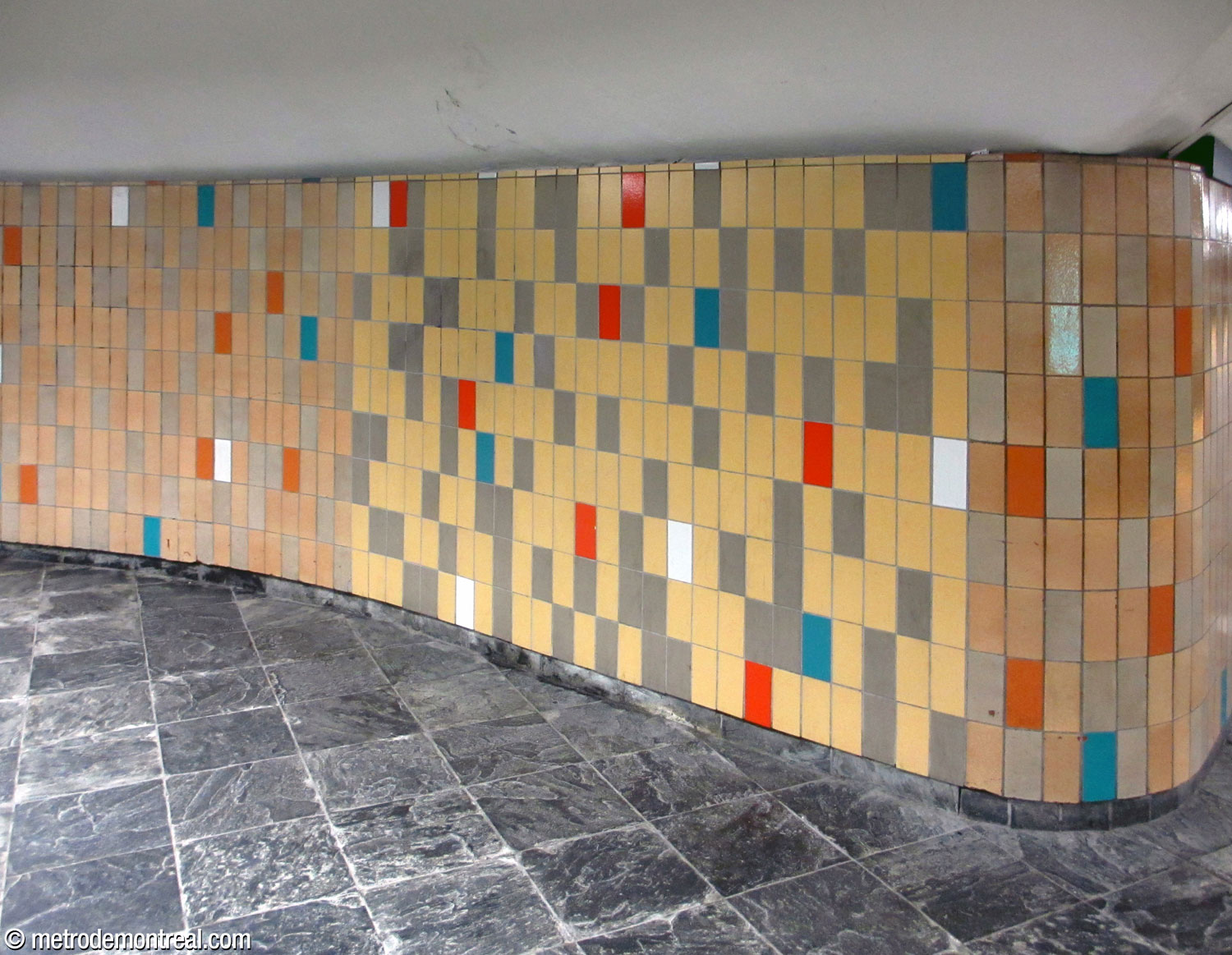
In the platform walls within the transept, these darker colours are densest at the top and form a gradient down to the floor. These colours are a real period piece: distinctly not to modern tastes but an historic example of quintessential 1960s styling. Sadly, it has suffered in places from inept repairs that tried and failed to be consistent with the original colours.

Structurally, the deep-level trainroom, built in tunnel, is connected to the single access by two long, straight flights of stairs and escalators. Much like its neighbour Beaudry, a transept contains the crossover between the platforms, allowing passengers to see the platforms and orient themselves, but the staircases to the platforms are separate from the transept and enclosed.

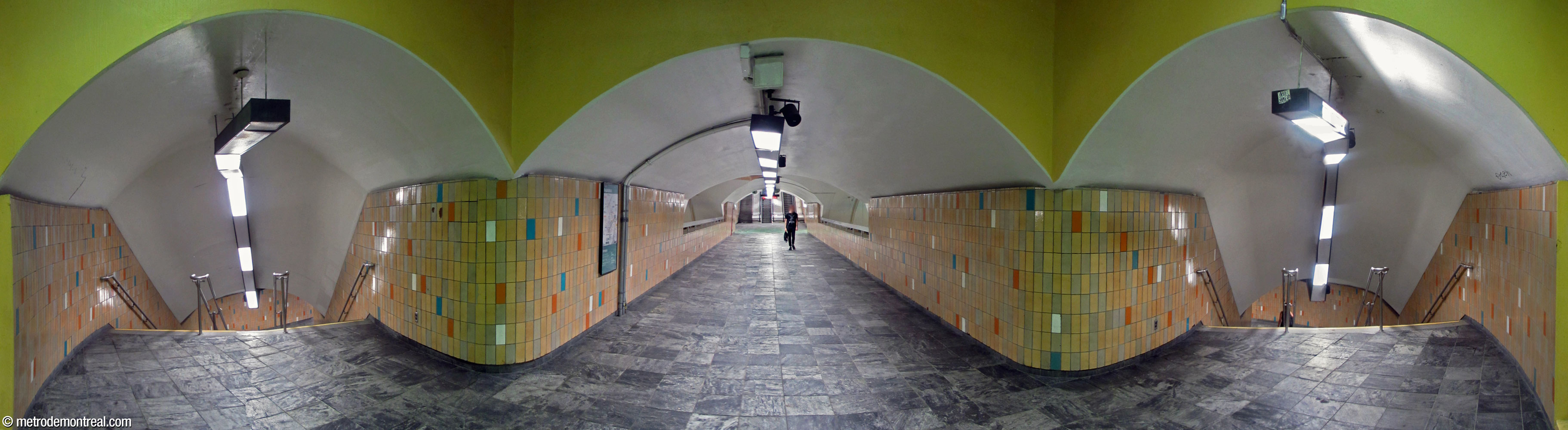
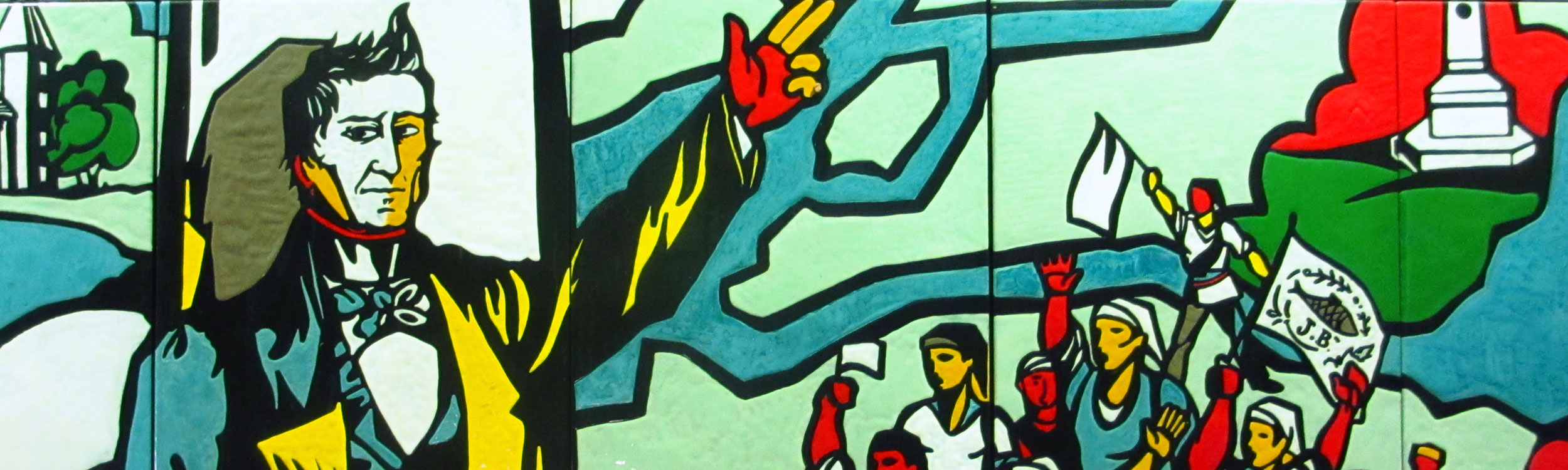
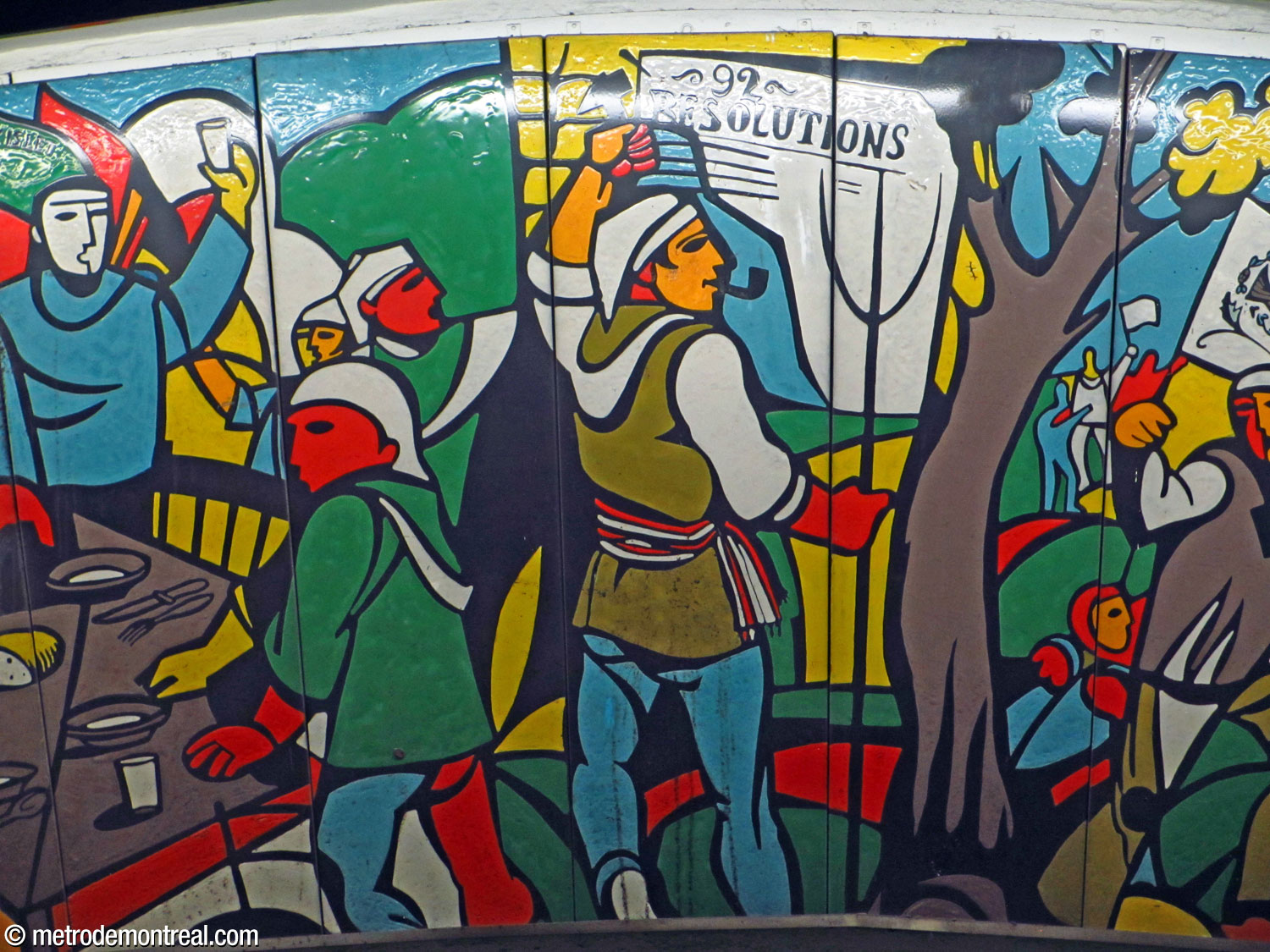
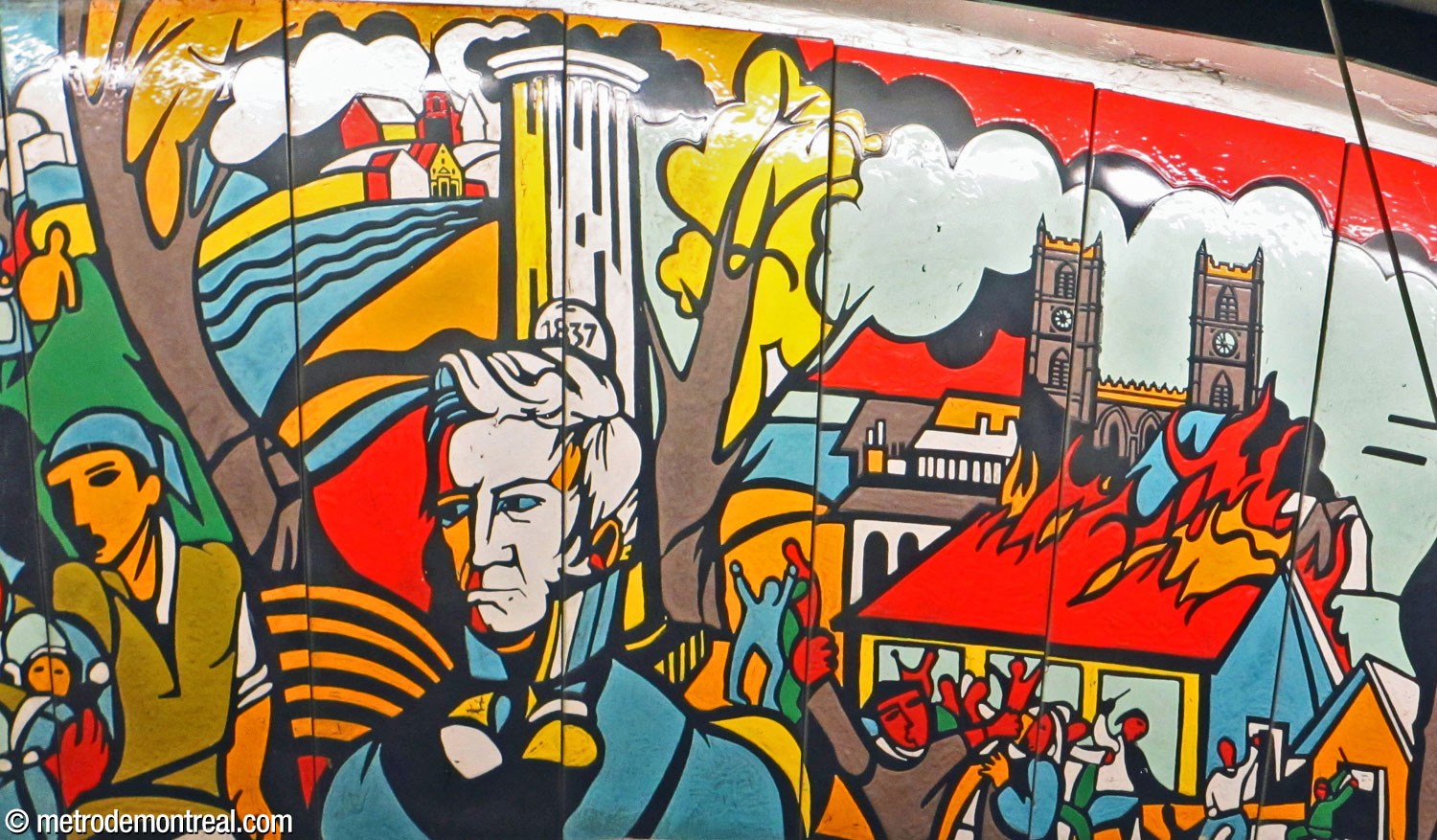
The station’s high point is its impressive mural cycle commemorating the Patriotes rebellion of 1837-38. The central panel commemorates Louis-Joseph Papineau, leader of the uprising in Lower Canada (now Quebec), and occupies the wall at the end of the crossover to the Angrignon platform. The other two murals, on the tympanums between the tunnel vault and the transept ceiling, are friezes that make up a timeline of the rebellion’s events.
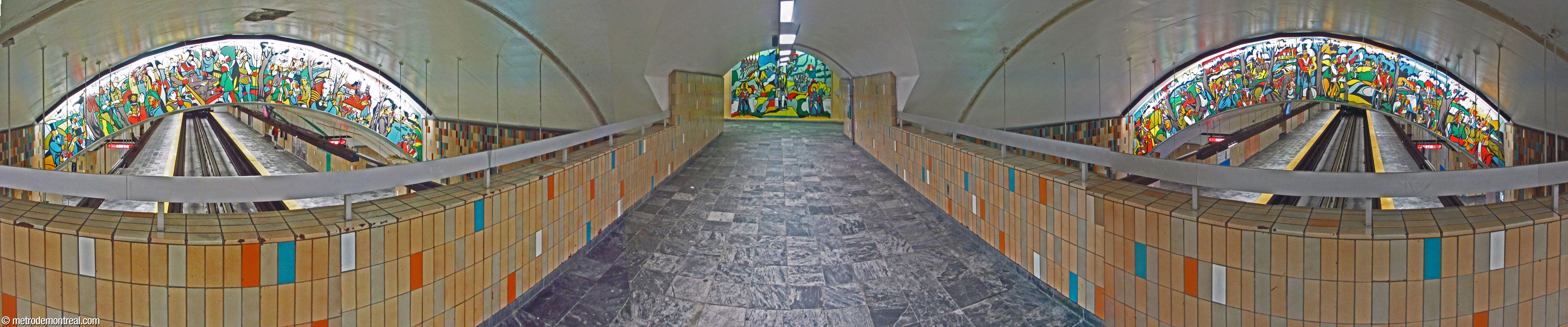
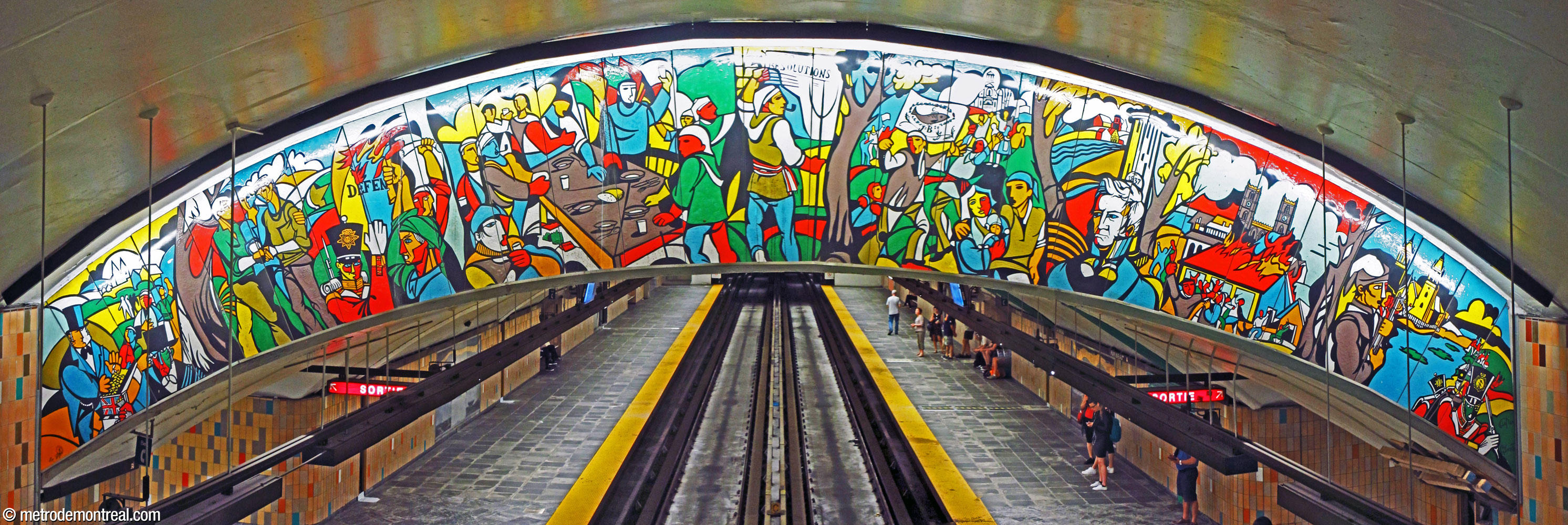
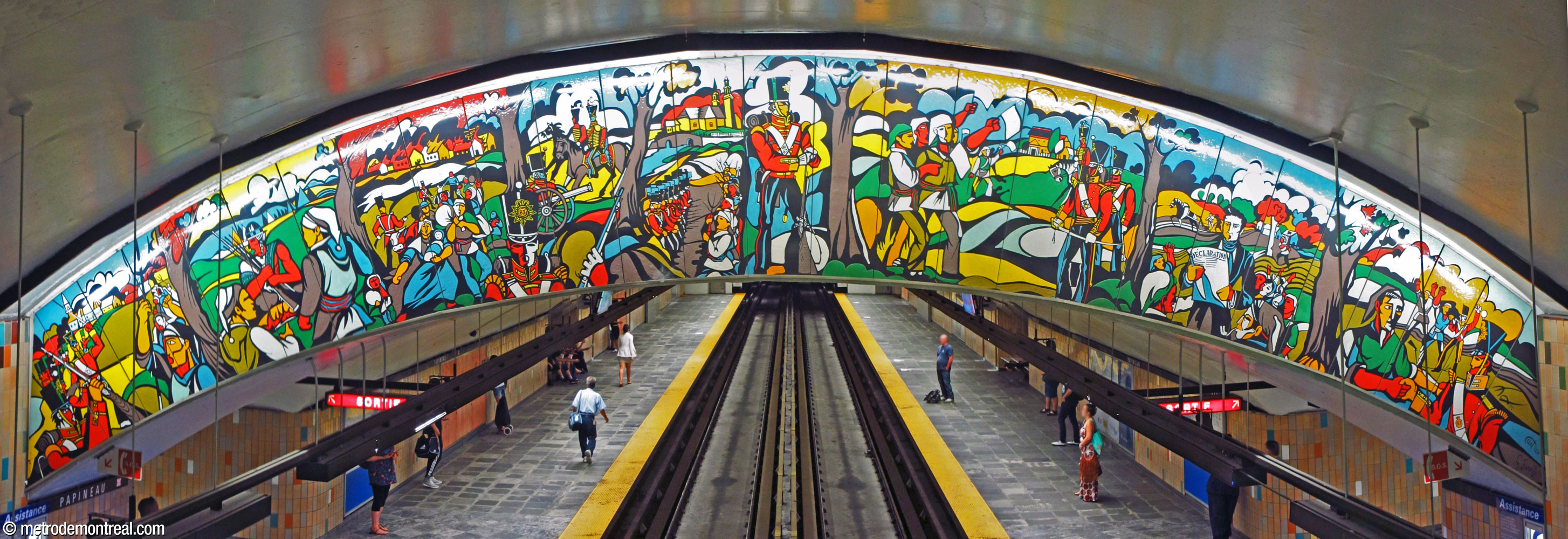
The murals, executed by Jean Cartier according to designs by George Juhasz, are entitled Les patriotes de 1837-38. They are among the most striking exemplars of the policy of historical, didactic art espoused by the metro’s first art director, Robert LaPalme.

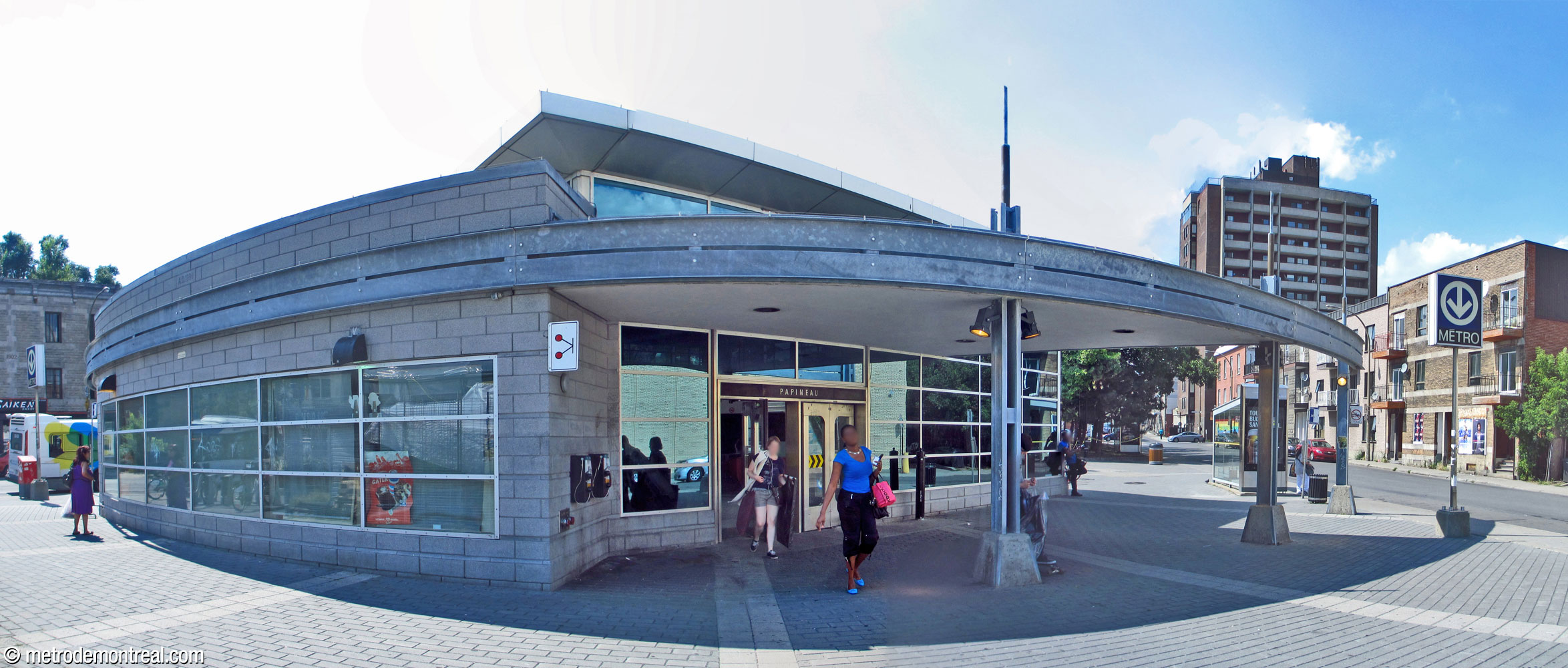
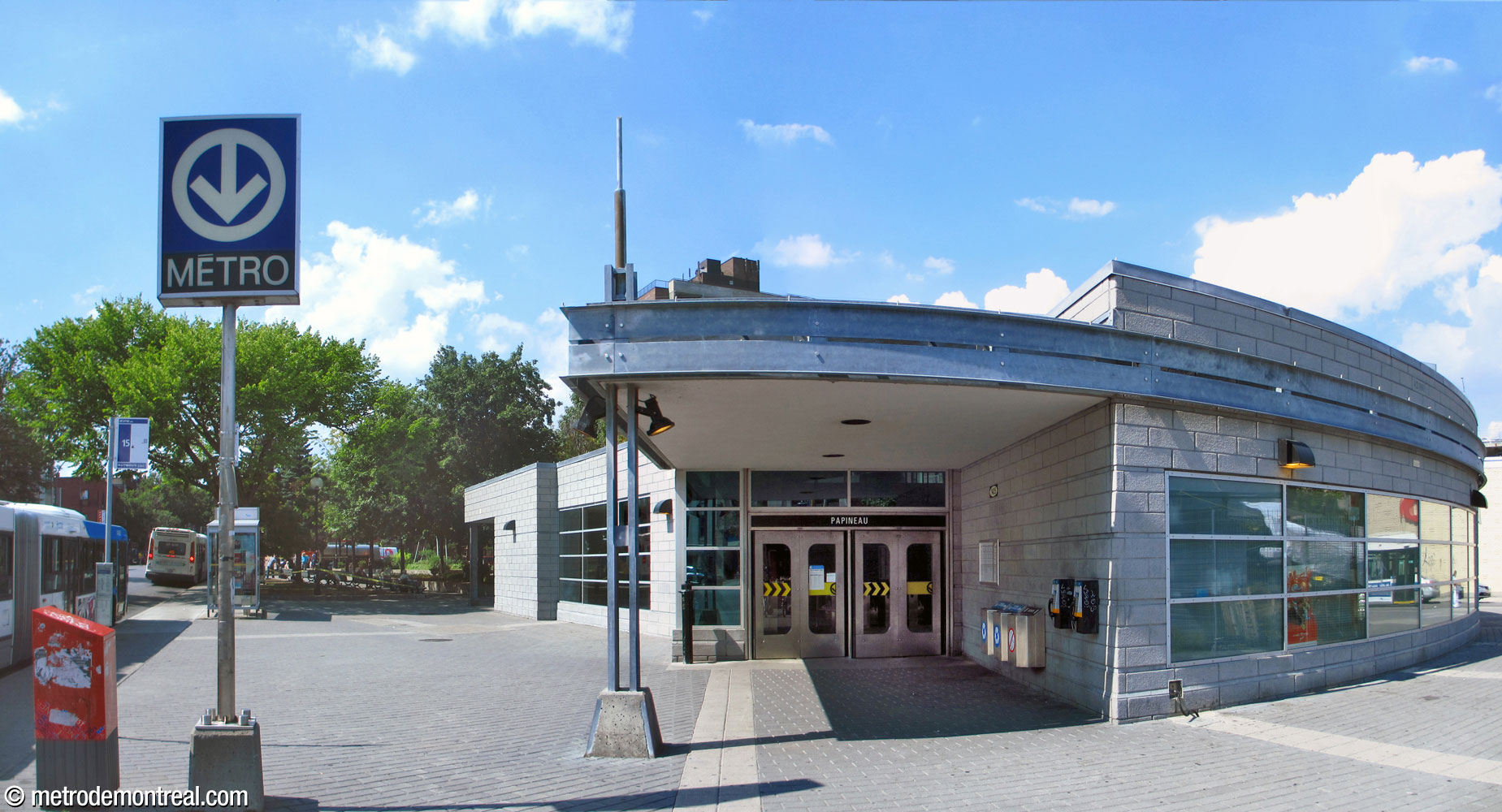
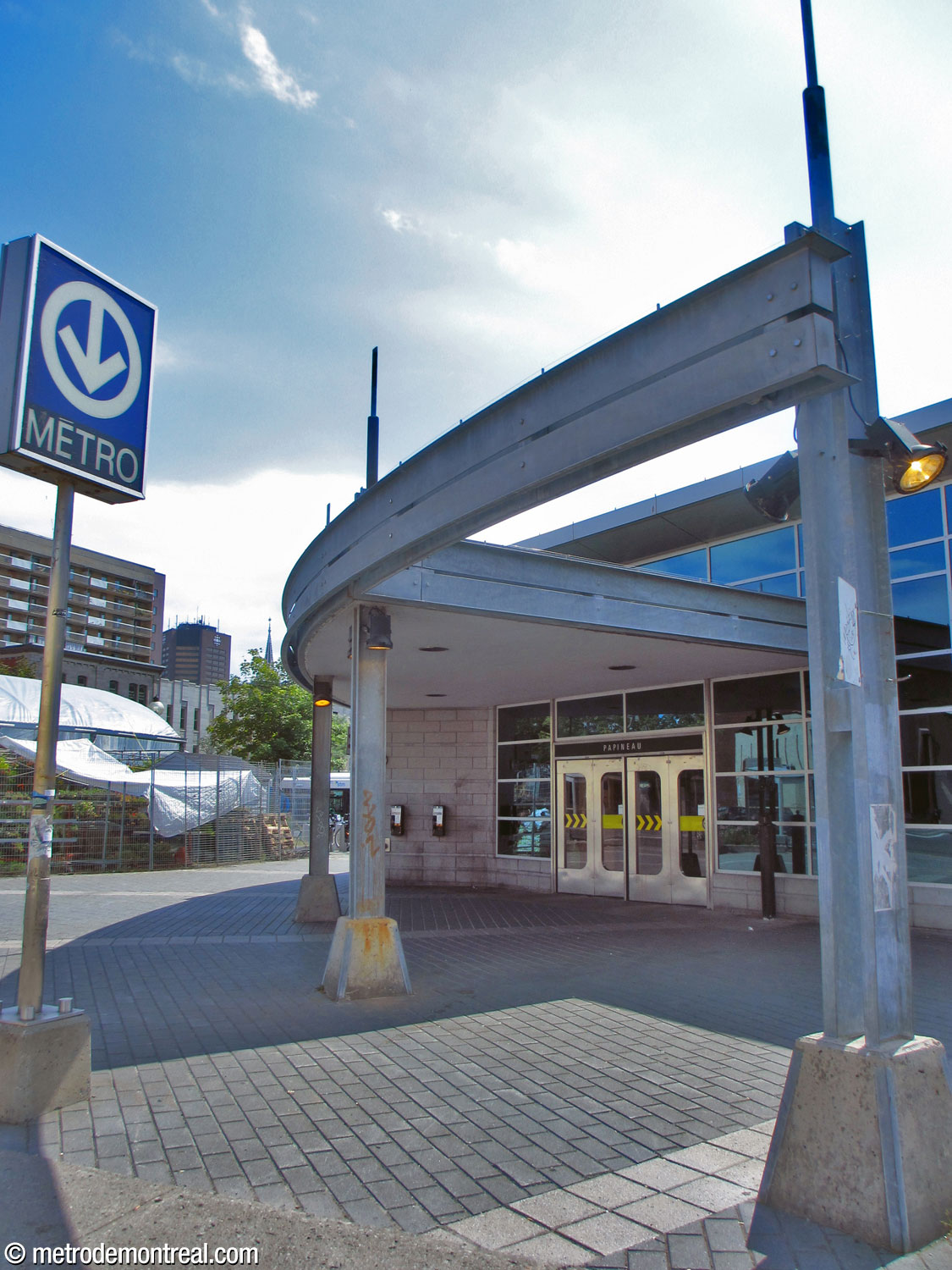
The station is also enhanced by its postmodern headhouse in concrete, steel, and glass. As at the neighbouring Berri-UQAM, Beaudry, and Frontenac stations, this headhouse was constructed in 1999 to replace the original headhouse, which had been intended to be only temporary. The two exits, on either side of the building, are sheltered by canopies whose perimeters form part of a large continuous quarter-circle with one of the headhouse walls; this curve is continued and emphasized by a decorative beam that extends out from the eastern end.
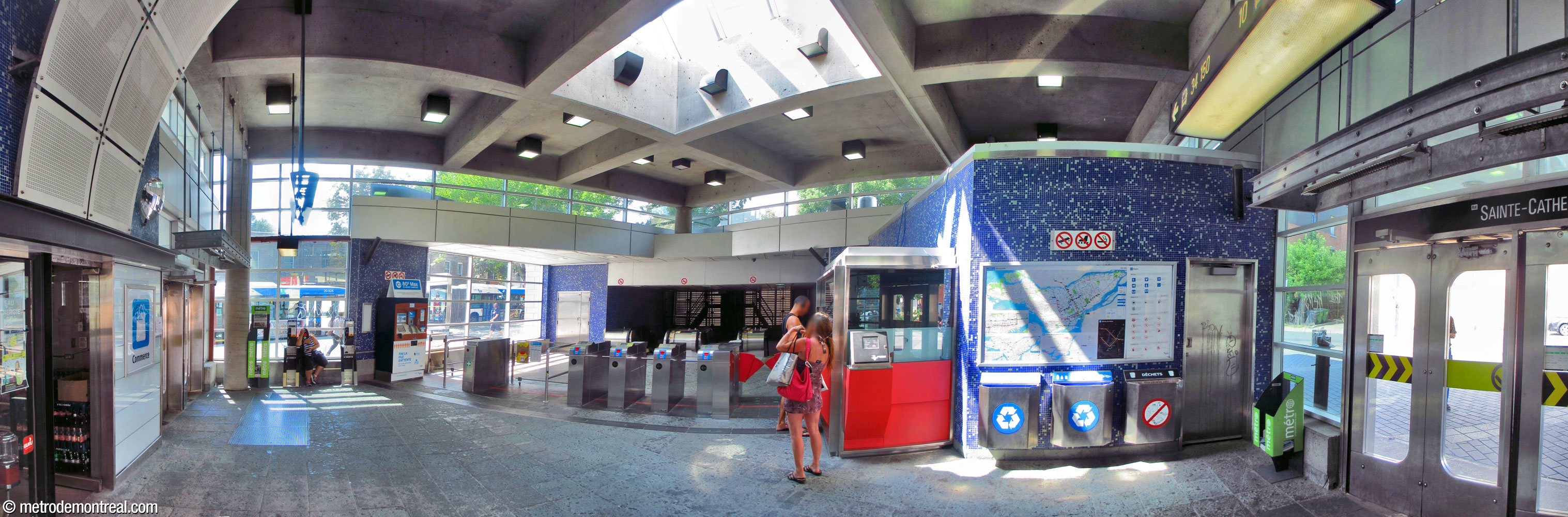
The interior, containing the station’s ticket hall, is a square room illuminated by windows that extend up to form a clerestory around the whole perimeter of the ceiling, as well as by a skylight in the centre. Other surfaces are clad with a mosaic of small blue and cyan tiles.
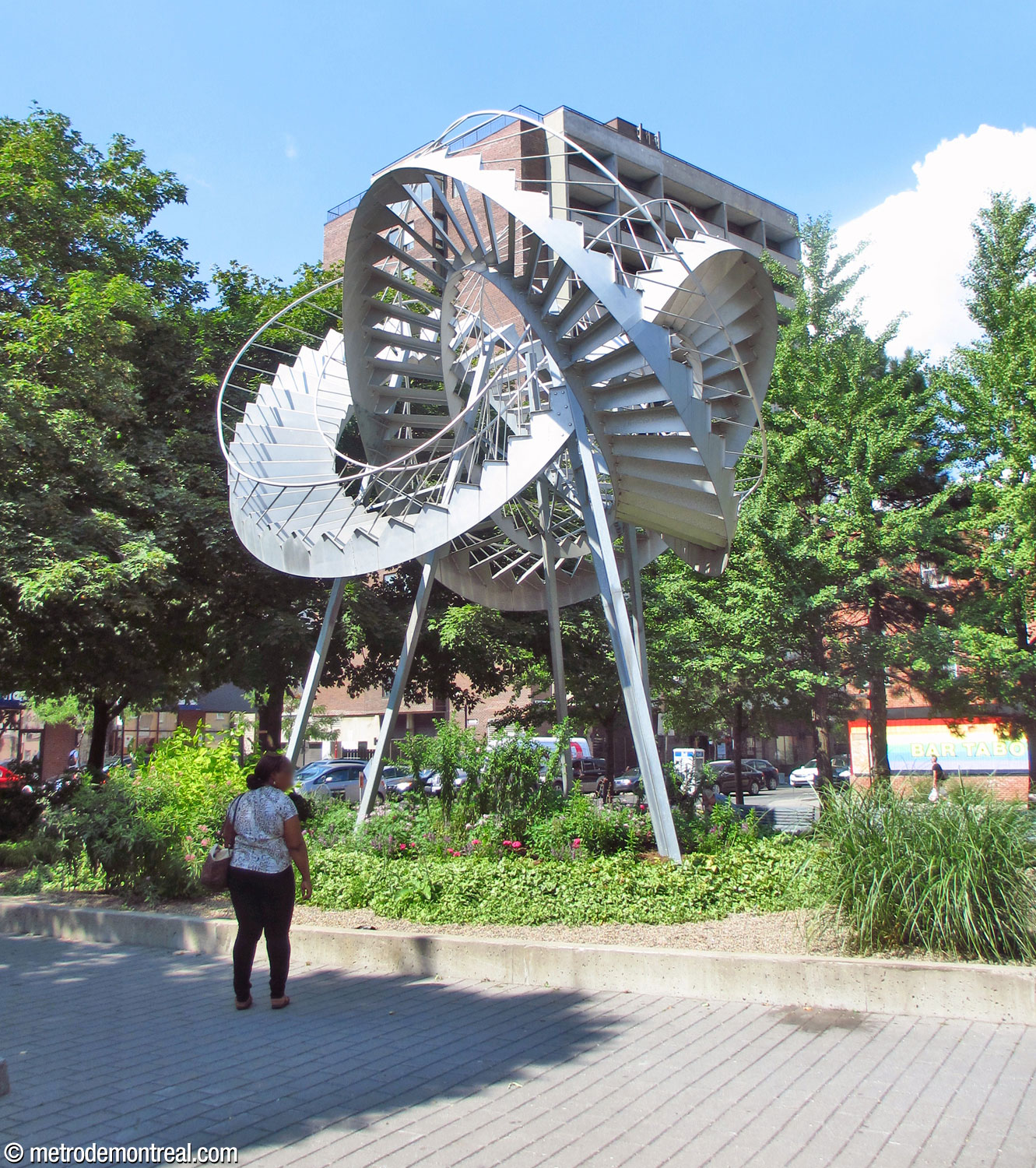
The construction of the new headhouse was soon followed by the reclamation of a former parking lot surrounding the station. To the south is a plaza hosting a public market; to the north, an attractive square (Place Emmett-Johns) was created and embellished with a monumental sculpture in homage to Montreal’s distinctive outdoor staircases, Révolutions by Michel de Broin.

Accessibility
This station is not currently wheelchair-accessible. In the STM’s 2023-2032 capital expenditures program, this station was targeted for the installation of elevators by 2027, and the STM’s 2022 accessibility report indicated that planning for elevators was underway. However, the station no longer appears in the 2025-2034 capital program, due to budget cuts by the provincial government,1 and no construction work has yet been announced.
According to the Plan de développement d’accessibilité universelle de la STM 2012-2015 (p. 40), the predicted complexity of adding elevators at this station was rated as problematic.
History & Trivia


Platform Depth
21.6 m deep
13th deepest station

Interstation Distances
To Beaudry: 495.00 metres
To Frontenac: 1157.57 metres
Origin of the Name
Avenue Papineau. Despite the murals at transept level, and the proximity of Avenue De Lorimier and the Pied-du-Courant prison where the Patriotes were held, this station is not named for Louis-Joseph Papineau (1786-1871), the well-known Patriote leader who with William Lyon Mackenzie led the 1837 Rebellion seeking responsible government.
It is in fact named for his father, Joseph Papineau (1752-1841), a notary and surveyor who was four times elected to the legislature of Lower Canada. He was later seigneur of the Petite-Nation in the Outaouais.
The street was named Chemin Papineau in 1810. Following the rebellion, because of the role of the junior Papineau, the authorities renamed the street Chemin Victoria, but the original name was restored in 1844 and formalized as Avenue Papineau in 1890.
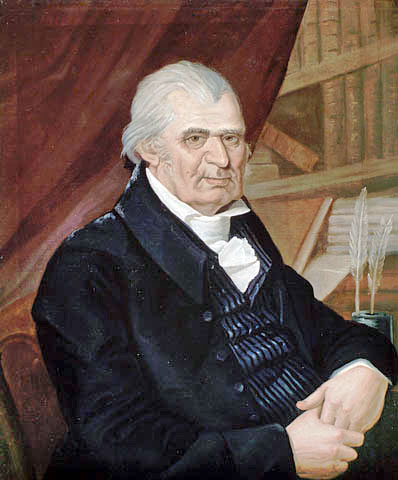
Joseph Papineau
(Source2)
Trivia
- This station served temporarily as the terminus of the green line for two months between the inauguration of the metro on October 14, 1966, and the late opening of Frontenac station on December 19 of that year.

Construction of the station’s original headhouse
(Source3)
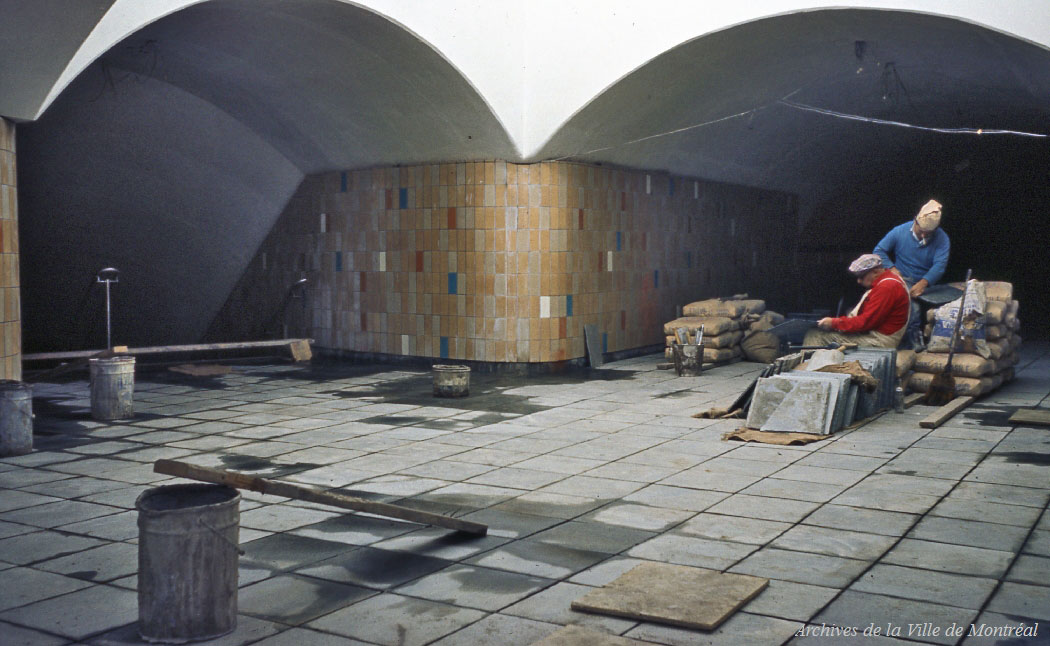
Work on the transept during the construction of the station
(Source4)

The station’s former headhouse prior to 1999
(Source5)
General Information
Platform diagram
Most convenient metro cars to use when travelling to this station

Station surroundings
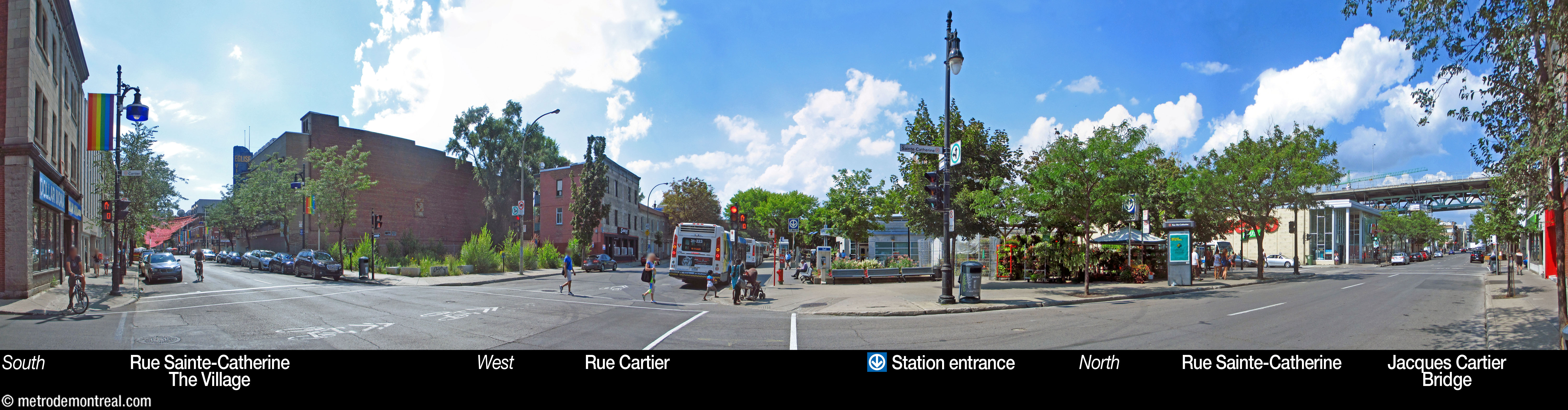
Station address
Borough of Ville-Marie
1425 Rue Cartier, at Rue Sainte-Catherine
Official website
Service information, opening hours, frequency, bus routes

Most recent update: October 14, 2026
References
- Ouellette-Vézina, Henri. (2025, April 16). “Faute de financement: L’installation d’ascenseurs encore à l’arrêt dans le métro.” La Presse. ↩
- Louis Dulongpré. Portrait of Joseph Papineau. 1825. Oil on canvas. National Gallery of Canada, Ottawa. ↩
- Source: Archives de la Ville de Montréal, VM94-M190-003. Used under the Creative Commons BY-NC-SA 2.5 CA License. ↩
- Source: Archives de la Ville de Montréal, VM94-MD47-003. Used under the Creative Commons BY-NC-SA 2.5 CA License. ↩
- © STM archives. ↩