
 SAINT-LAURENT
 SAINT-LAURENT
 Place-des-Arts

Architects
Paul G. Brassard and Walter Warren

Artist

Start of service
October 14, 1981

Art & Architecture
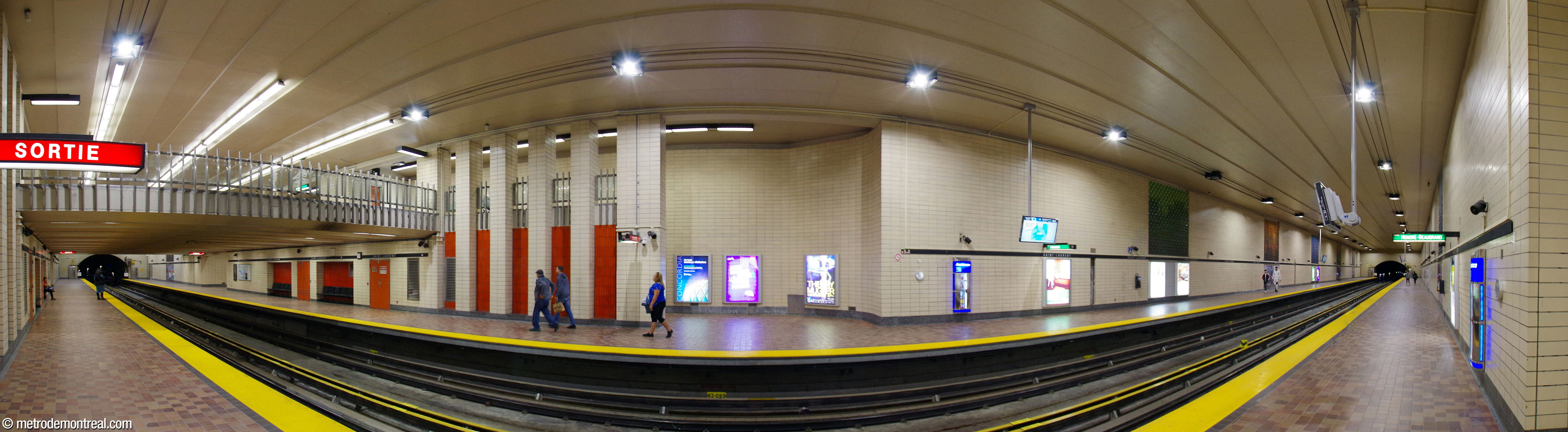
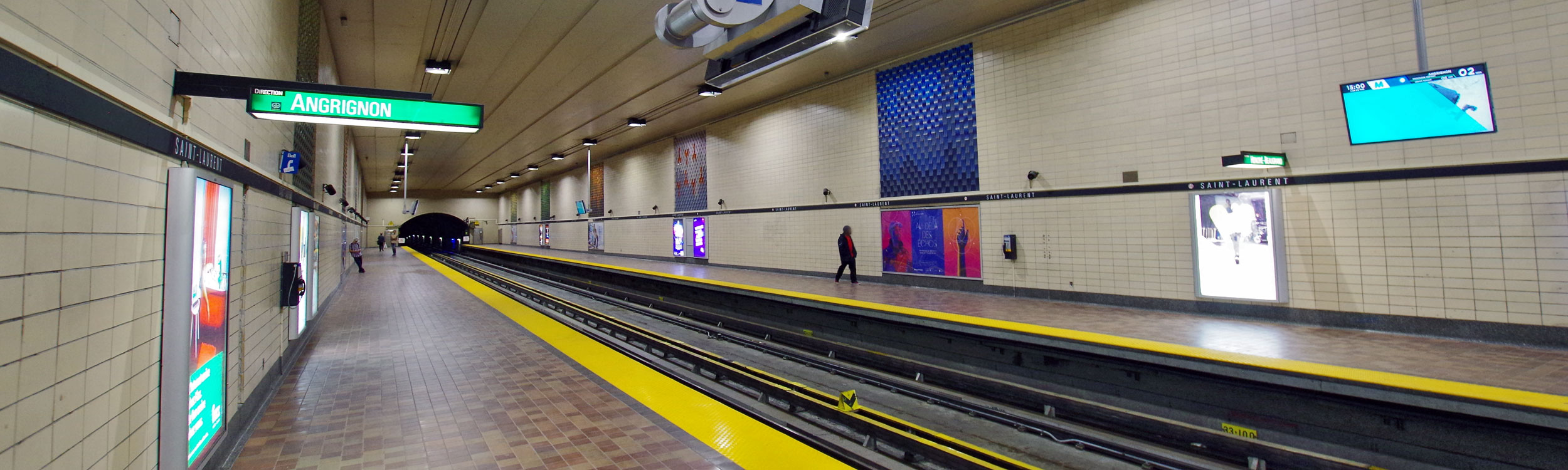
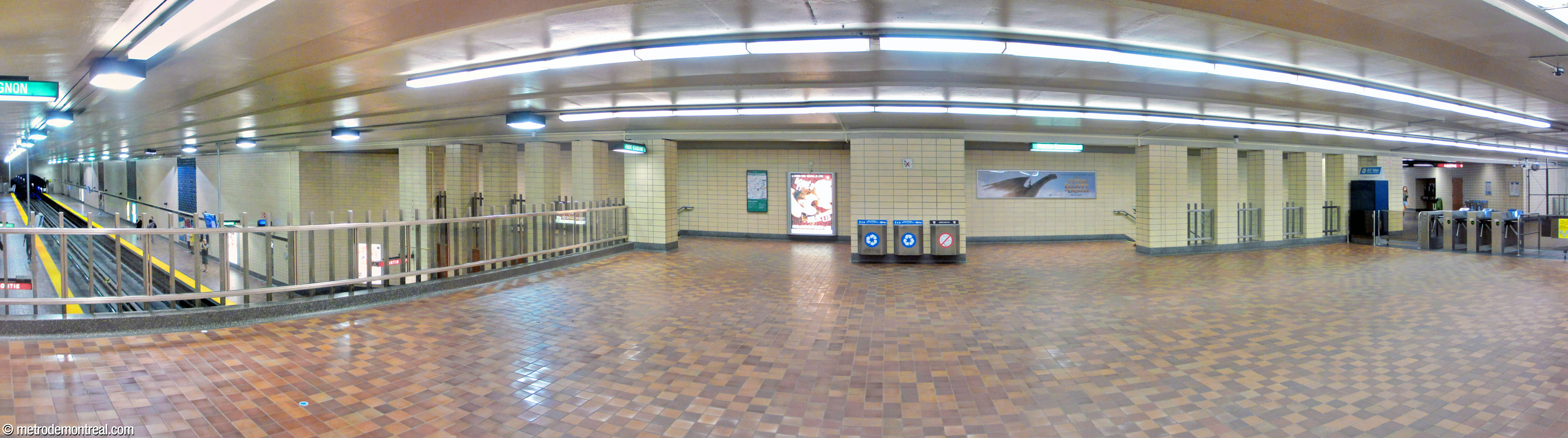
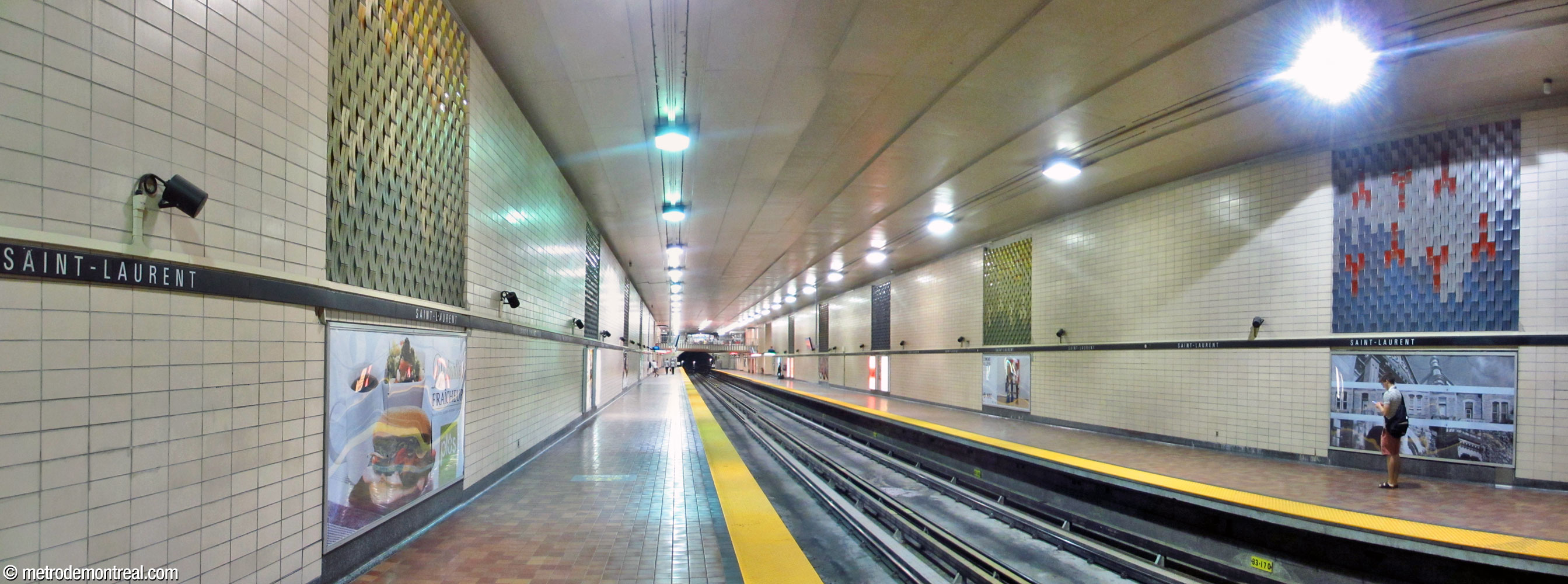
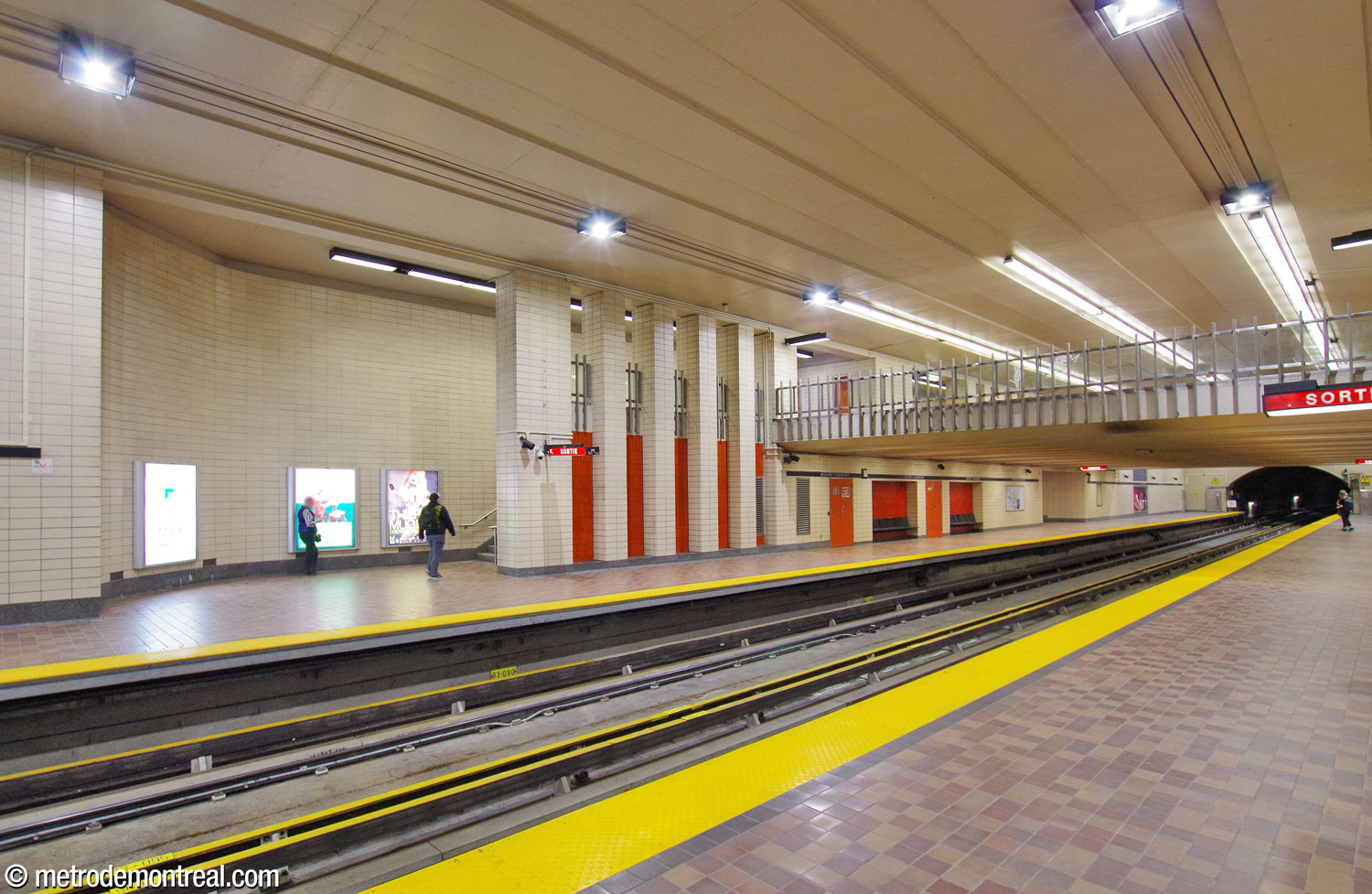
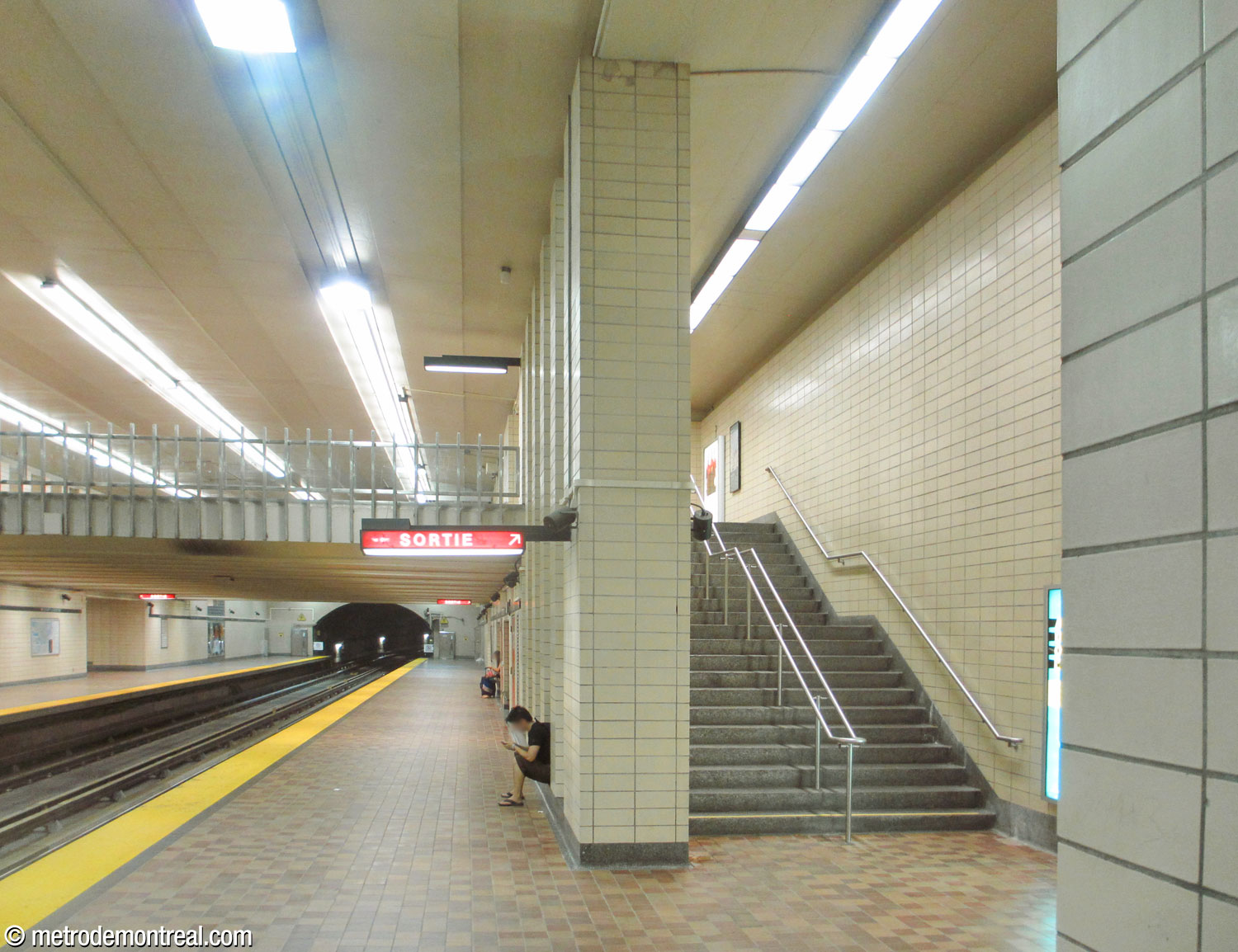
This is a very plain station. Its large rectangular volume, built cut-and-cover, is walled with eggshell-coloured ceramic. The floors are done in brown tiles. A mezzanine near the western end of the volume hosts the ticket hall and overlooks the platforms on both ends; the ticket hall’s fairly broad fare-paid zone is connected to the platforms by two staircases on each side.

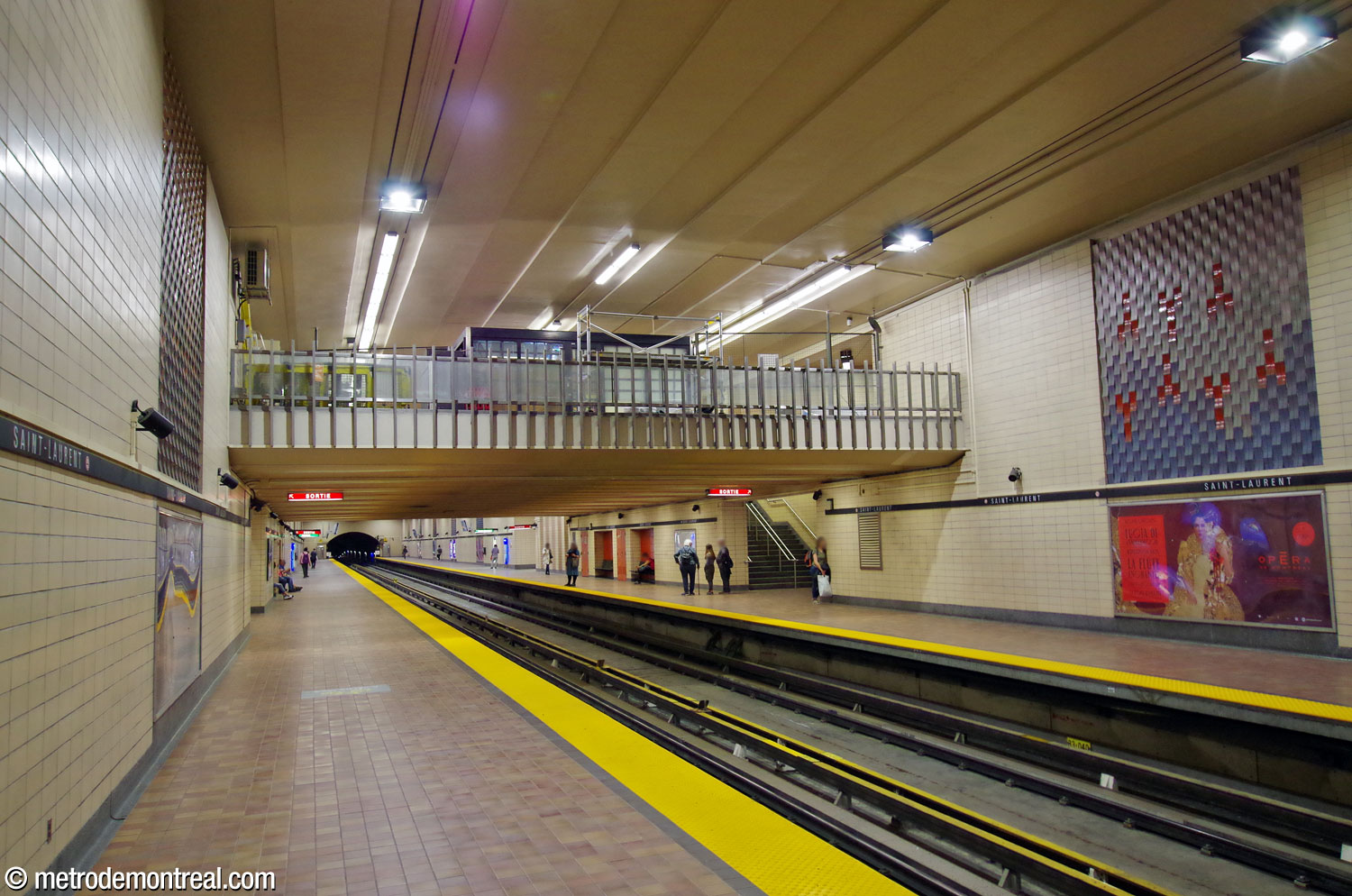

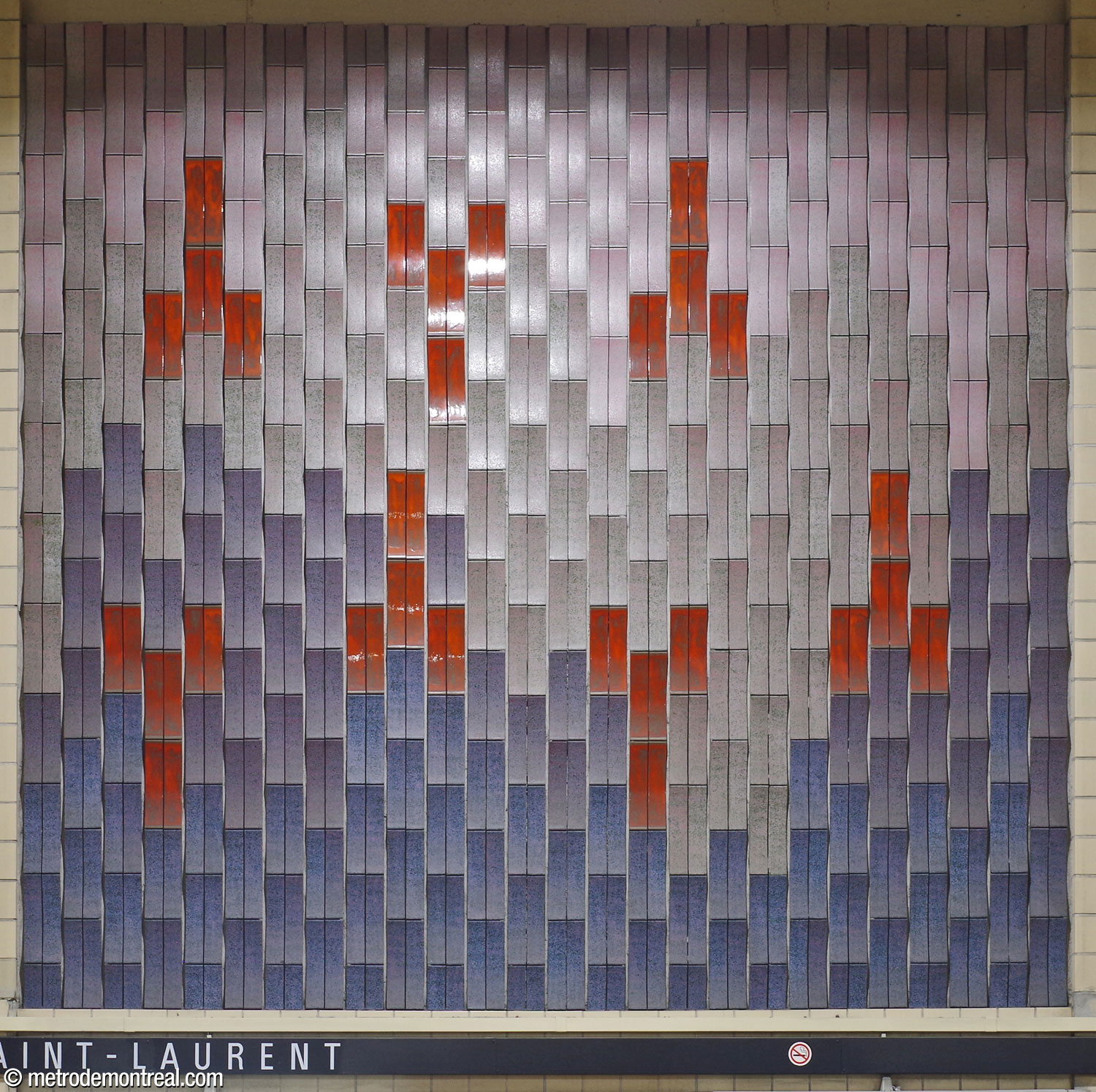
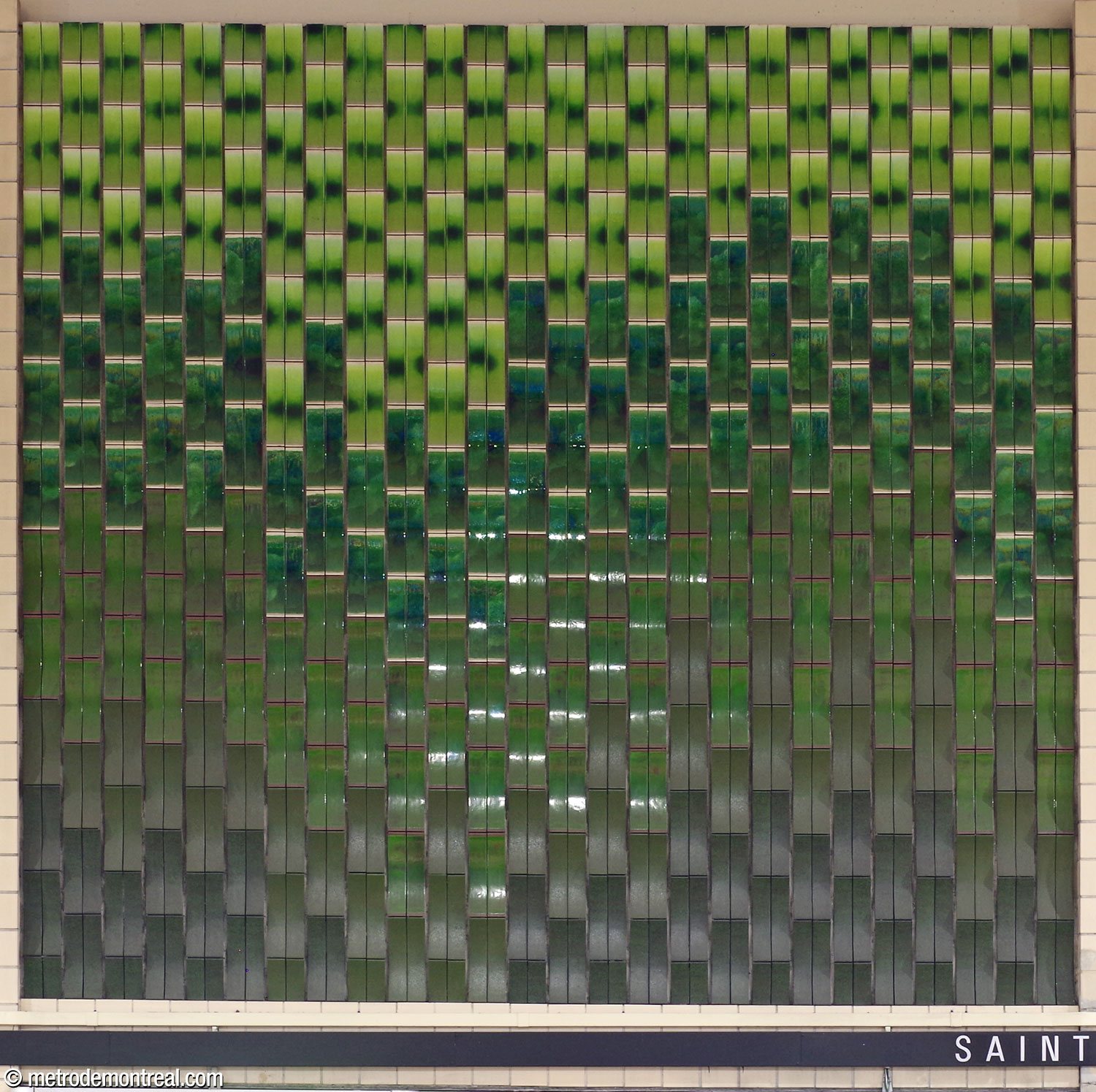
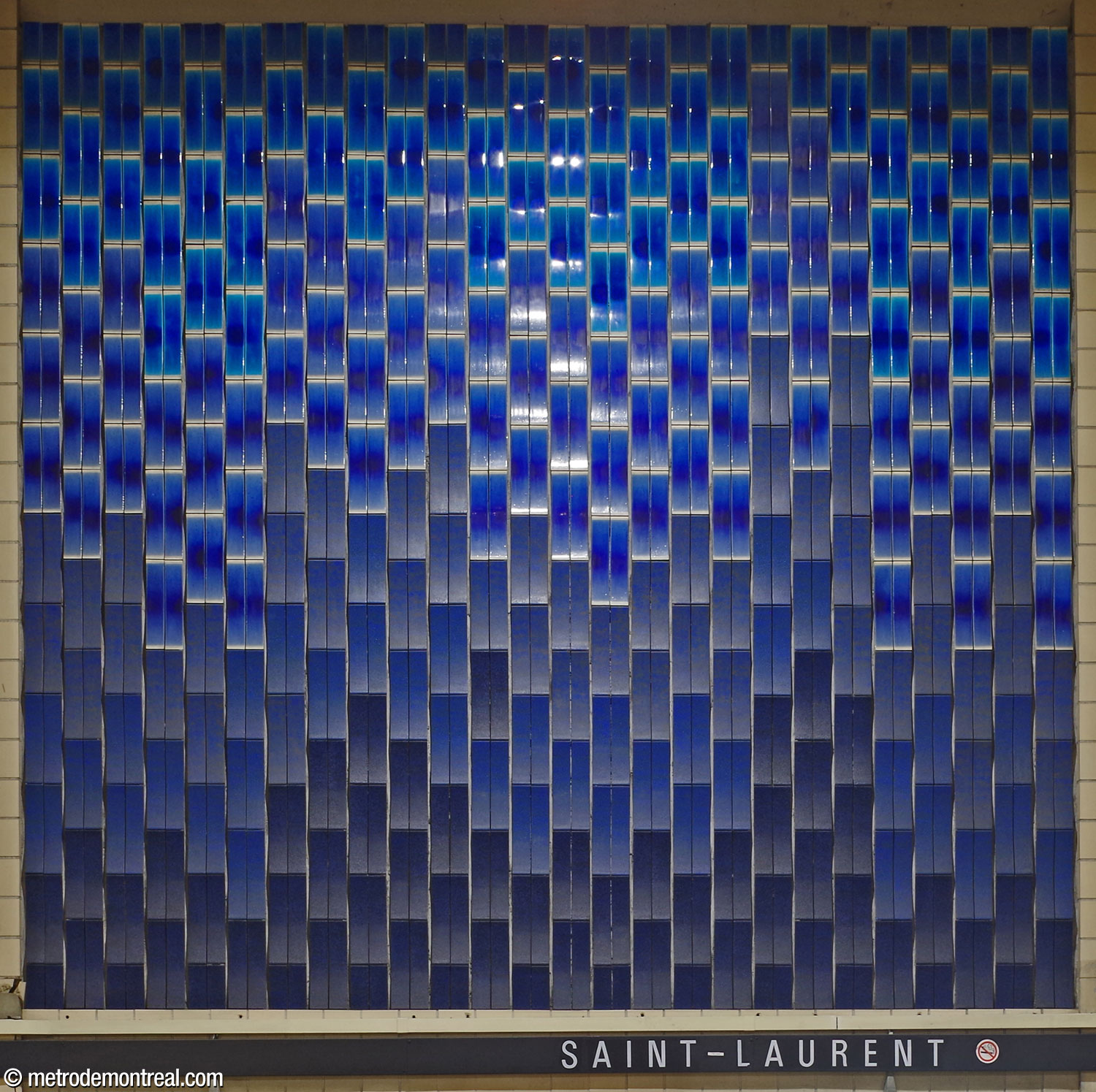
The pale expanses of the walls are punctuated by panels of coloured tiles rising to the ceiling, each panel with a different colour scheme and pattern. Although they are the work of the noted ceramist Claude Vermette, these panels, installed during the station’s construction, were originally not construed as an artwork, since the integration of art into the stations’ architecture had not yet begun and so that it would be easier for the transit company to remove them if it decided to do so. Fortunately, the STM later gave them the recognition they are due.
In the central area, the staircases are divided from the platform by screens of orange tiles. This is the only part of the station with benches, and the rest of the platform area suffers from a complete lack of seating.
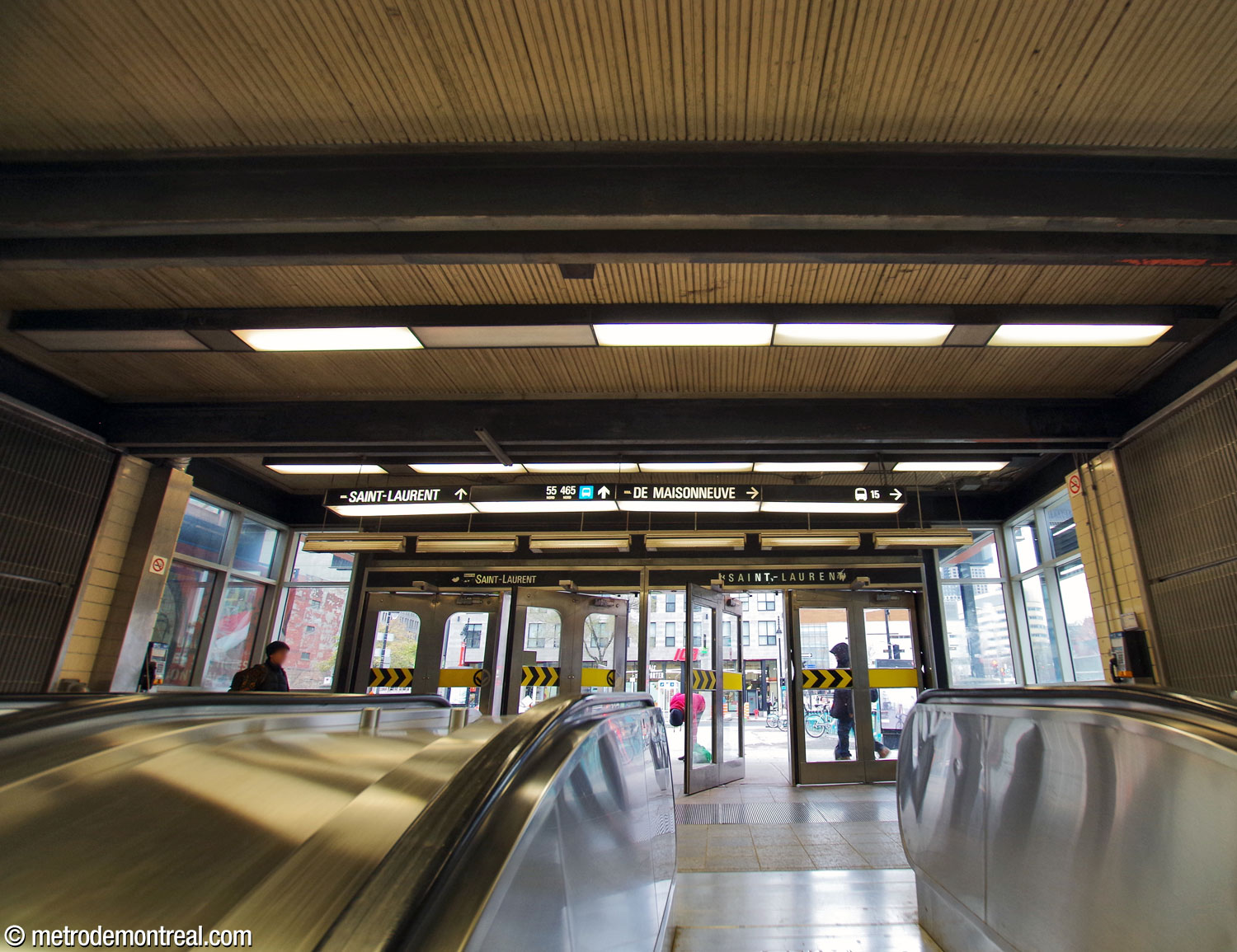
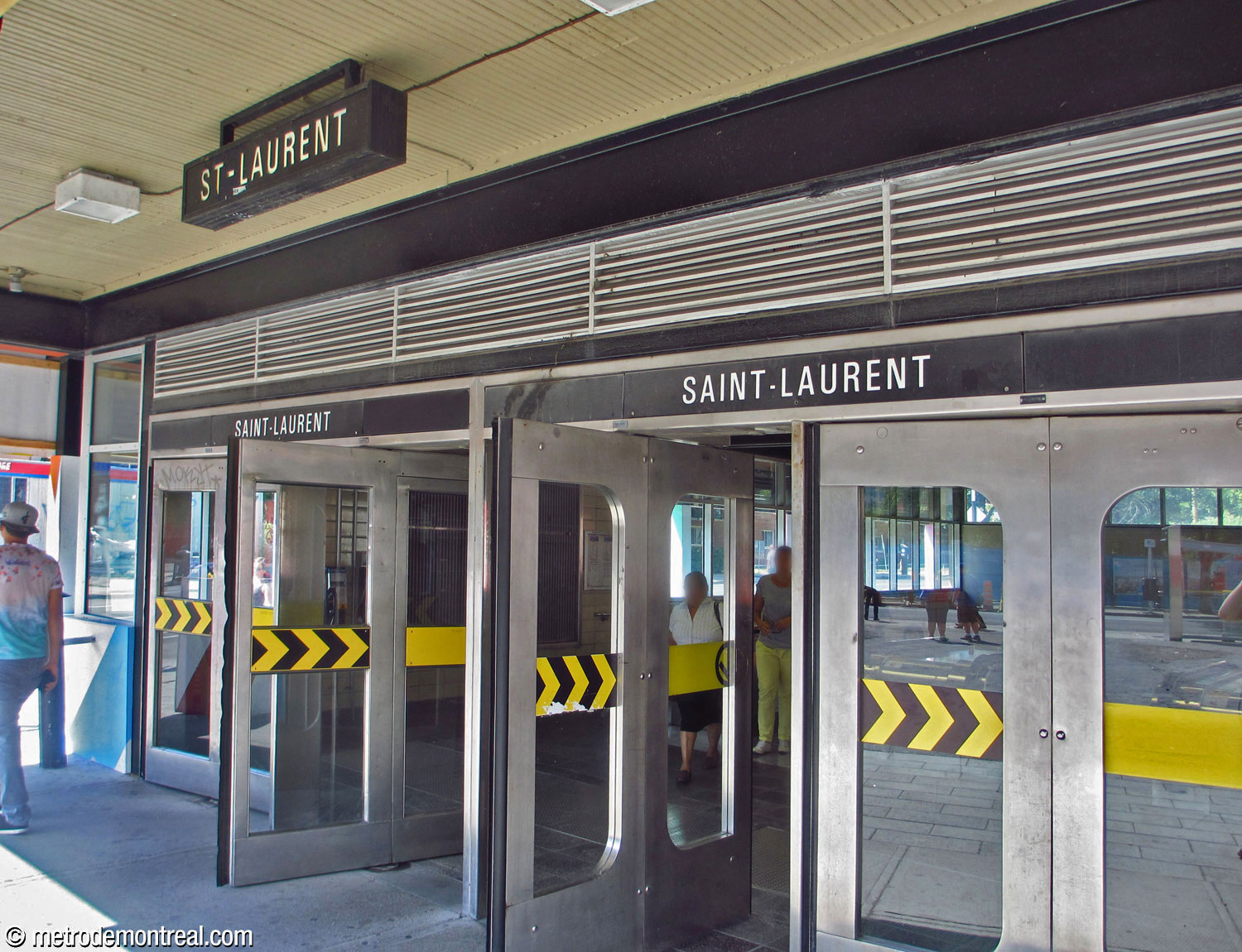
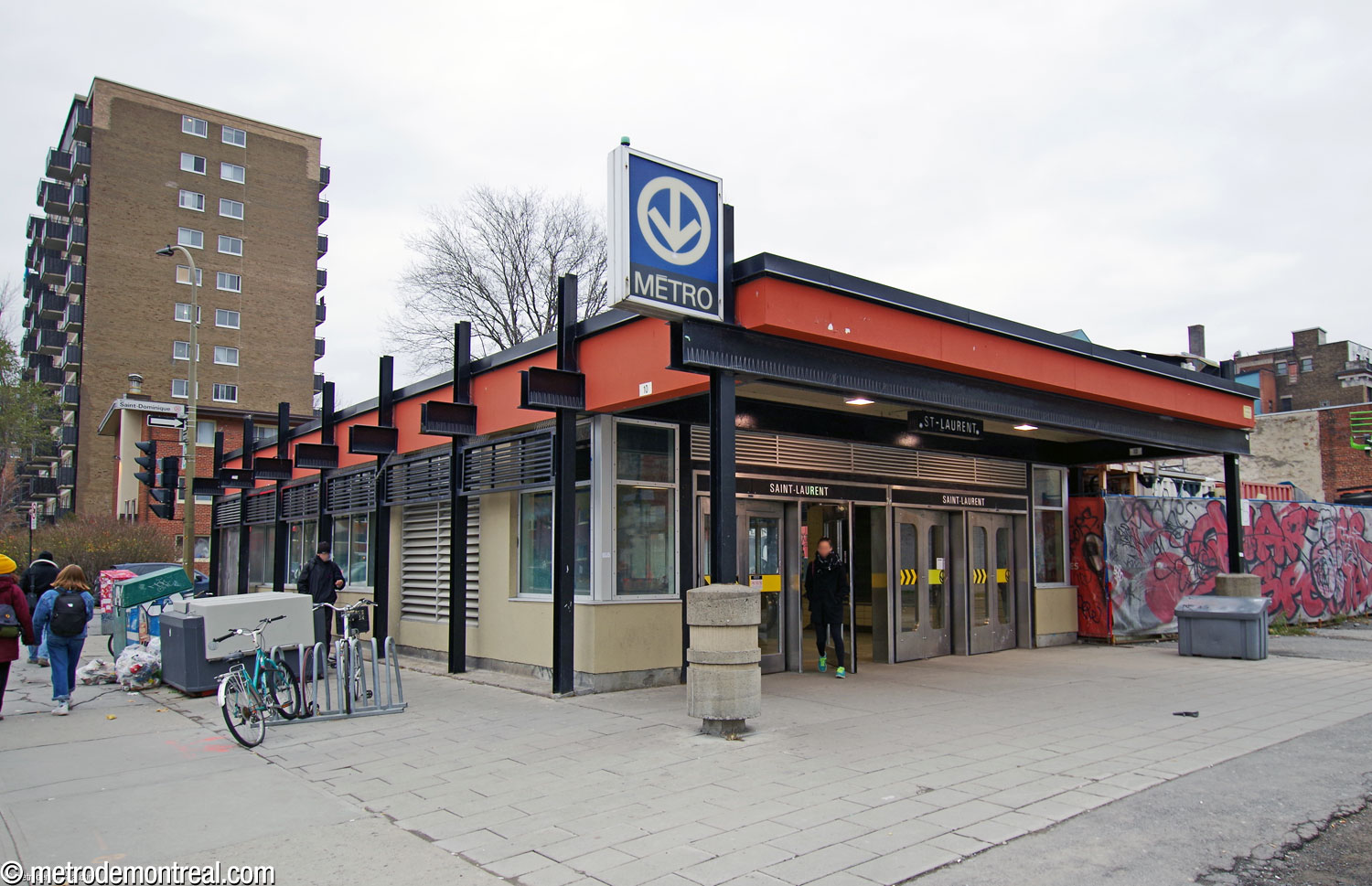
The single headhouse is quite small and somewhat shabby, as it was meant to be only temporary but has now lasted some six decades. Its overhanging flat roof is supported by an exposed framework of steel beams. Numerous different building projects for the surrounding lot, into which the entrance would have been integrated, have all come to nothing.

Accessibility
This station is not currently wheelchair-accessible. No plans to install elevators have yet been announced.
According to the Plan de développement d’accessibilité universelle de la STM 2012-2015 (p. 40), the predicted complexity of adding elevators at this station was rated as moderate (estimated cost $13-$18 million).
History & Trivia


Platform Depth
9.1 m deep
58th deepest station

Interstation Distances
To Place-des-Arts: 354.38 metres
To Berri-UQAM: 336.80 metres
Origin of the Name
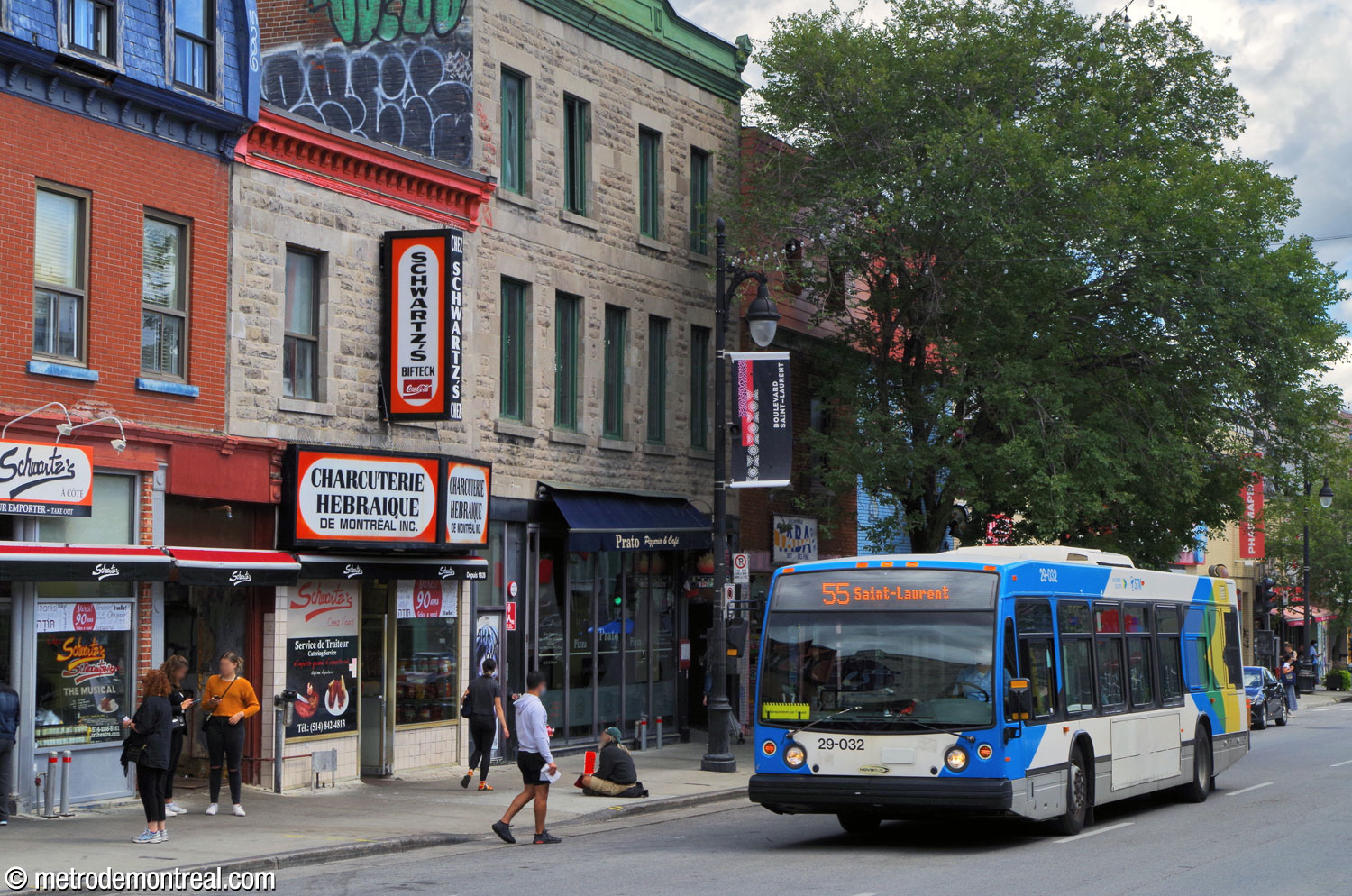
Boulevard Saint-Laurent. Boulevard Saint-Laurent is a very old street indeed. By the beginning of the 18th century, the road from the village to the northern shore of the island followed the current street. This street led to Sault-au-Récollet, Côte Saint-Michel, Côte Sainte-Catherine, and Côte Saint-Laurent, and it became known as the Saint-Laurent road after the village of Saint-Laurent was founded in 1720.1
On an 1825 map, the street is identified as Rue Saint-Lambert below Craig Street (today’s Rue Saint-Antoine) and as “St. Laurent or Main Street” above it.2 The name Saint-Laurent was extended south of Craig Street in 1905. It is still informally called “the Main” and “la Main” (pronounced as in English), representing its geographical, commercial, and cultural importance. It was proclaimed the dividing line between eastern and western Montreal as early as 1792, and as the zero point for street numbers east and west of it in 1905.1 In 1997, the federal government designated it as The Main National Historic Site of Canada.
In Catholicism, Saint Lawrence of Rome is believed to have been the first papal librarian, and to have been martyred in 258 under the emperor Valerian. A legend states that he was executed by being roasted on a grill, but it is more likely that he was beheaded. His feast day is August 10, and he is the patron of librarians, students, and cooks.
Boulevard Saint-Laurent
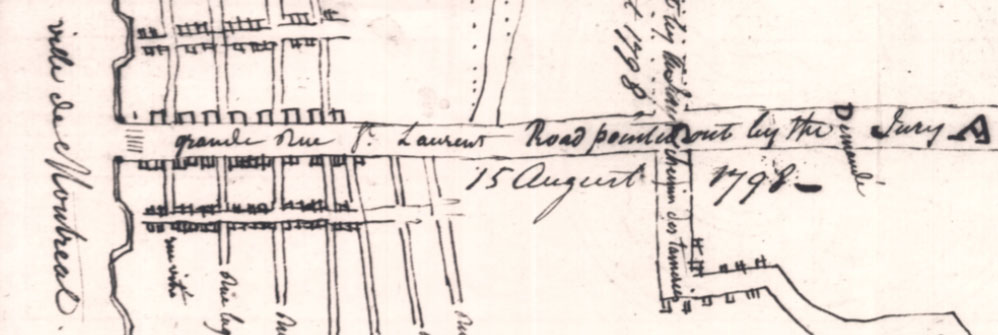
1798 map showing the “grande Rue St. Laurent” outside the city walls
(Source3)
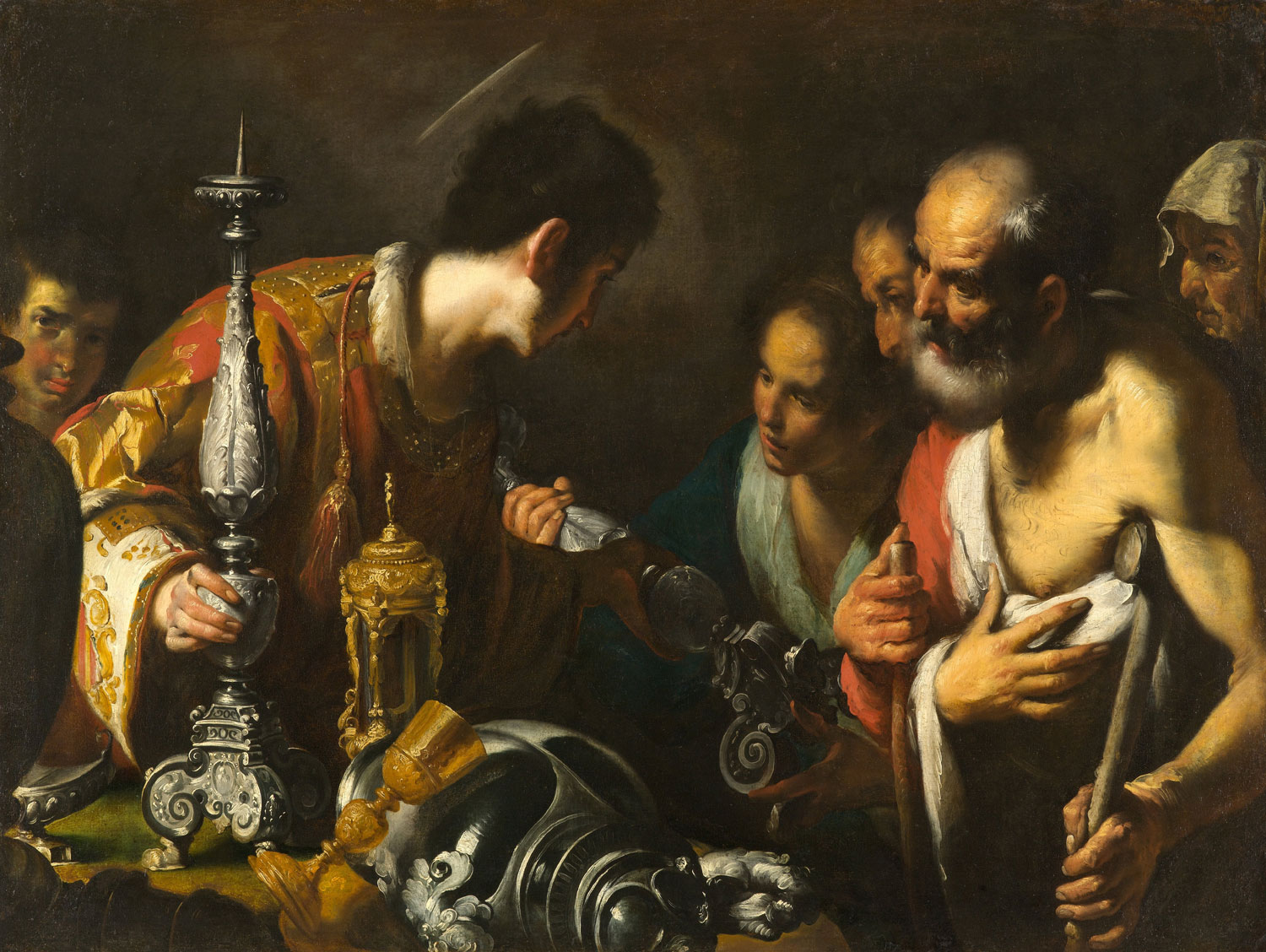
Saint Lawrence Distributing the Treasures of the Church, by Bernardo Strozzi
(Source4)
Trivia
- The never-completed program of works of art on historical subjects proposed by the metro’s first art director, Robert LaPalme, anticipated that this station would feature an artwork featuring “the vegetable growers and the hay and vegetable markets of Montreal.”5
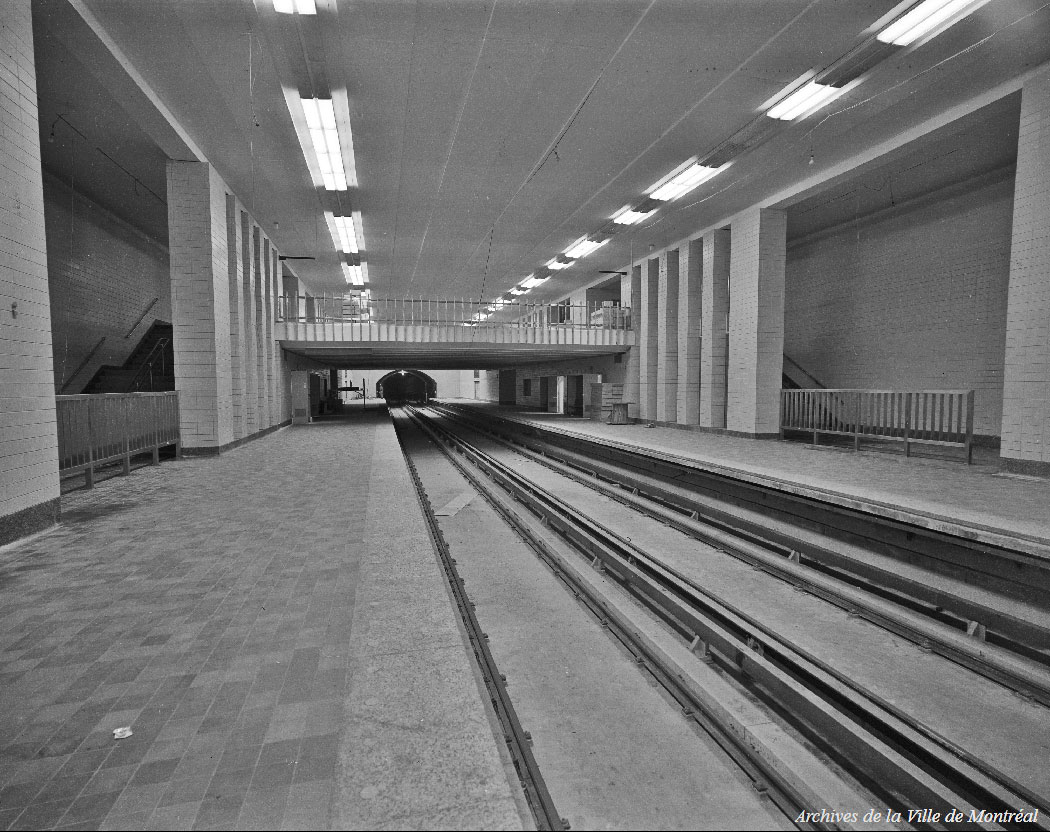
Trainroom of the station during its construction
(Source6)
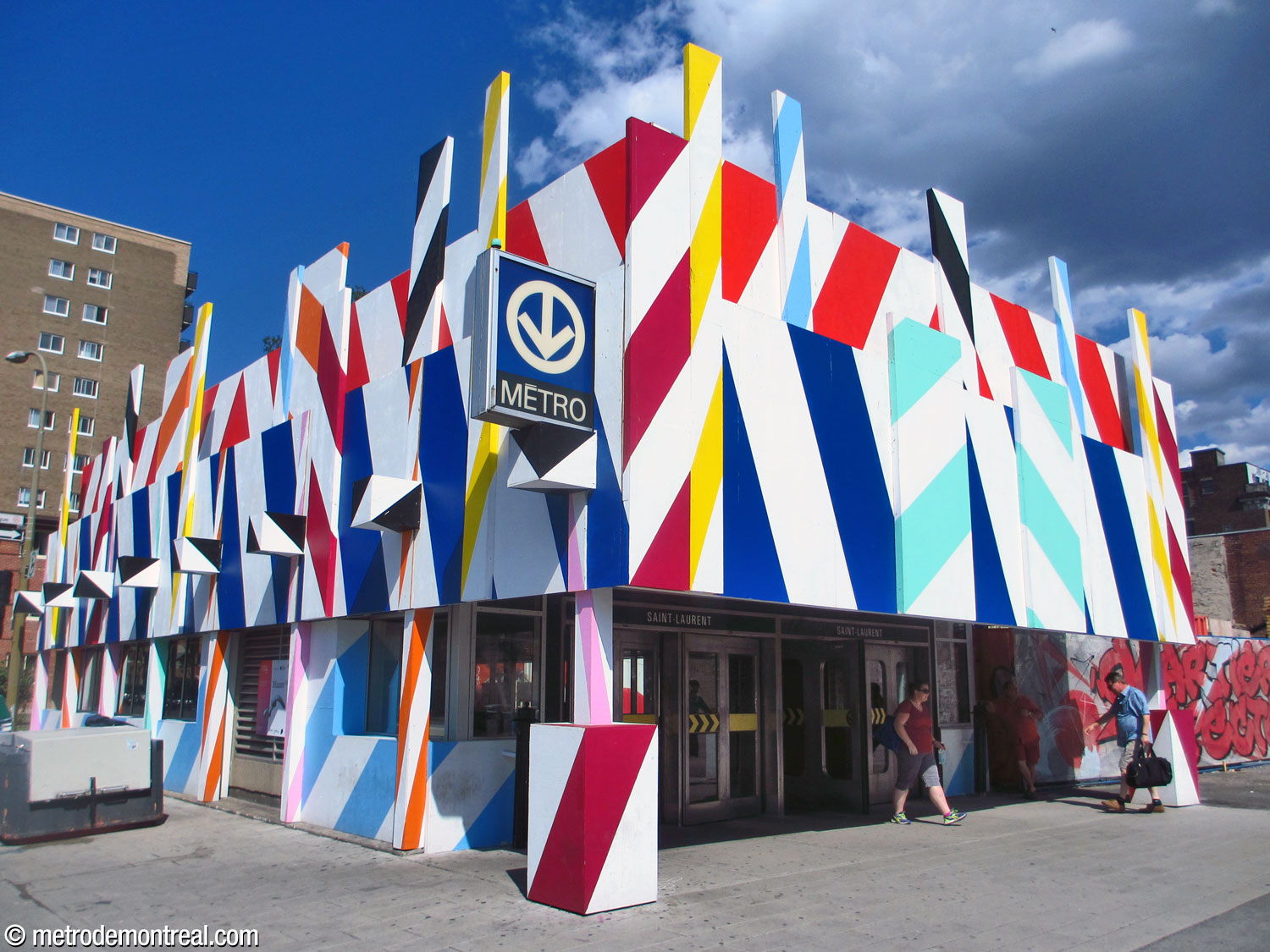
The station’s headhouse decorated by Irish muralist Maser during the 2016 Mural Festival
General Information
Platform diagram
Most convenient metro cars to use when travelling to this station

Station surroundings
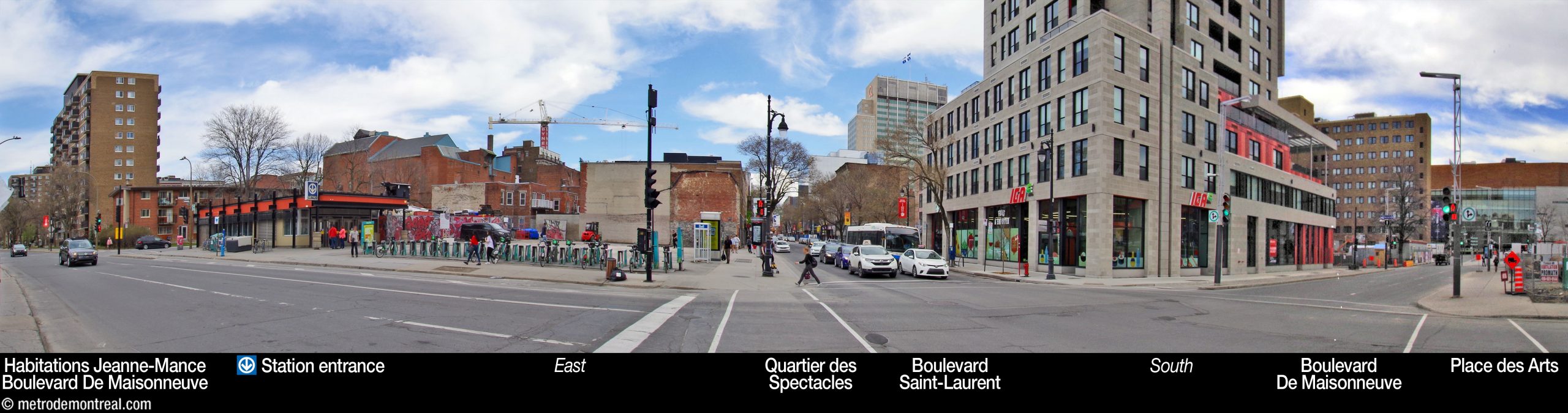
Station address
Borough of Ville-Marie
10 Boulevard De Maisonneuve Est, at Boulevard Saint-Laurent
Nearby attractions
- Quartier des Spectacles
- MEM – Centre des mémoires montréalaises
- Le 2-22 – Réseau Art Actuel – Artexte, galerie d’art contemporain – VOX, centre de l’image contemporain
- Société des arts technologiques
- Maison du développement durable
- Théâtre du Monument-National
- CLSC Sainte-Catherine
- Native Friendship Centre of Montreal
- Al-Omah Al-Islamiah Mosque
Official website
Service information, opening hours, frequency, bus routes

Most recent update: October 8, 2026
References
- Fiche descriptive : Boulevard Saint-Laurent. Commission de toponymie du Québec. ↩ ↩
- Adams, John. (1825.) Map of the city and suburbs of Montreal. [Map.] New York: Jas. D. Stout. Bibliothèque et Archives nationales du Québec, 0005245760. ↩
- Image source: Anonymous. Plan montrant l’ouverture de la rue Saint-Laurent et des prinicipales artères sur l’île de Montréal. August 15, 1798. Source: Archives de la Ville de Montréal, CA M001 VM066-3-P001. Used under the Creative Commons BY-NC-SA 2.5 CA License. ↩
- Bernardo Strozzi. Saint Lawrence Distributing the Treasures of the Church c. 1625. Oil on canvas. North Carolina Museum of Art, Raleigh, NC. Source: Wikimedia Commons. ↩
- "Une fois décoré, le métro sera un livre d'images sur Montréal." (1968, February 25). Le Petit Journal, p. 7. Source: Bibliothèque et Archives nationales du Québec. ↩
- Image source: Source: Archives de la Ville de Montréal, VM94-M177-006. Used under the Creative Commons BY-NC-SA 2.5 CA License. ↩
