
 SQUARE-VICTORIA–OACI
 SQUARE-VICTORIA–OACI
 Bonaventure

Architect
Irving Sager (City of Montreal)


Start of service
February 6, 1967

Art & Architecture
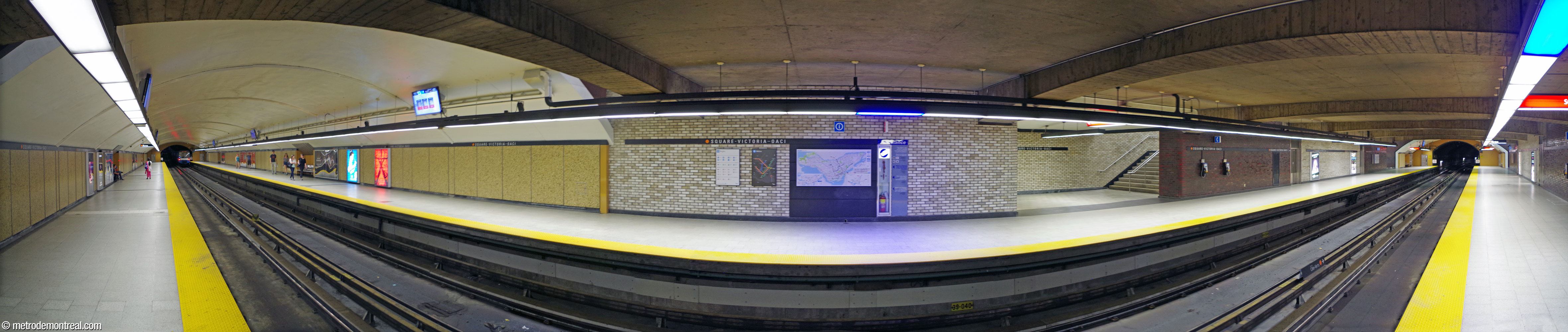
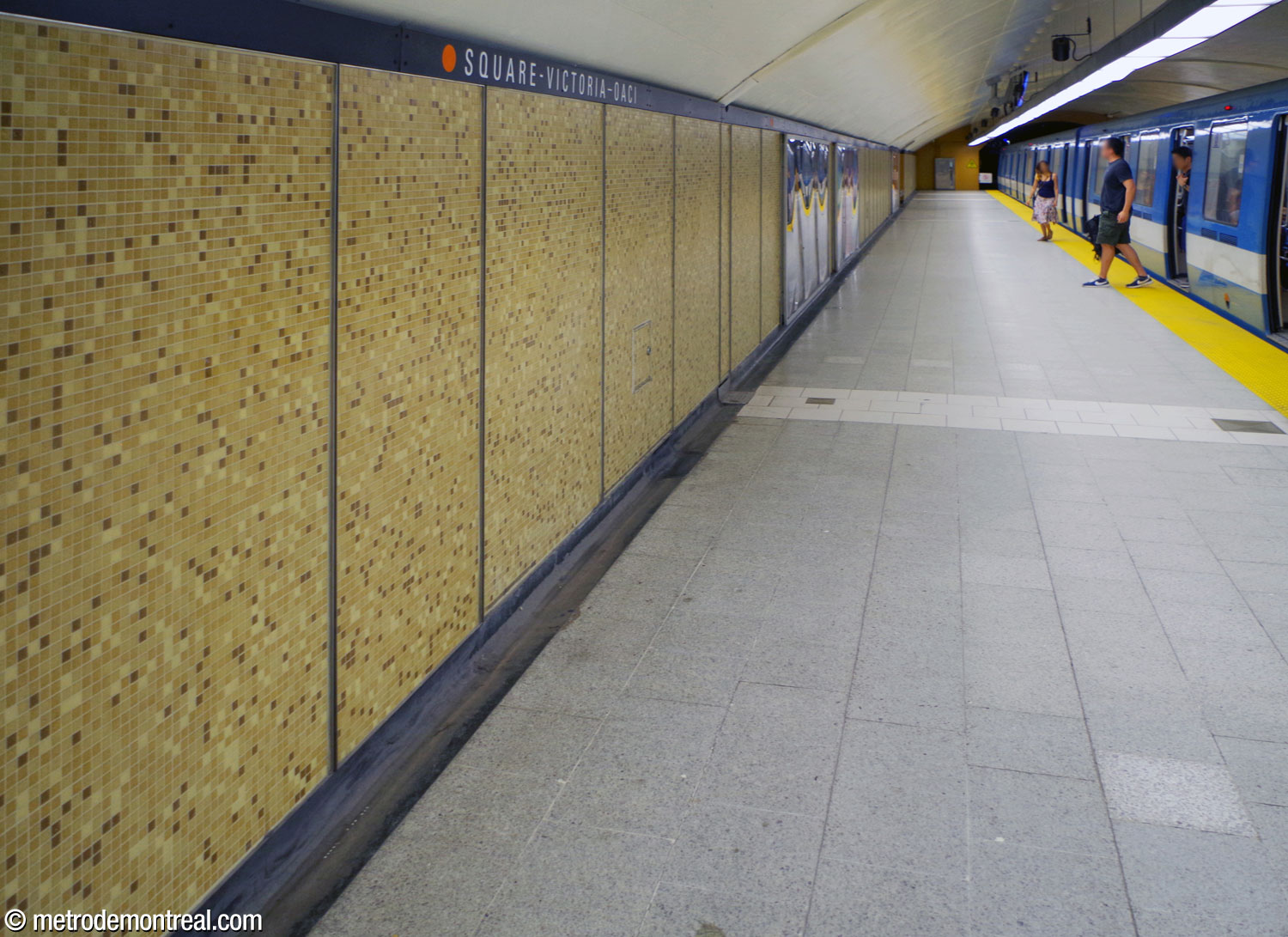
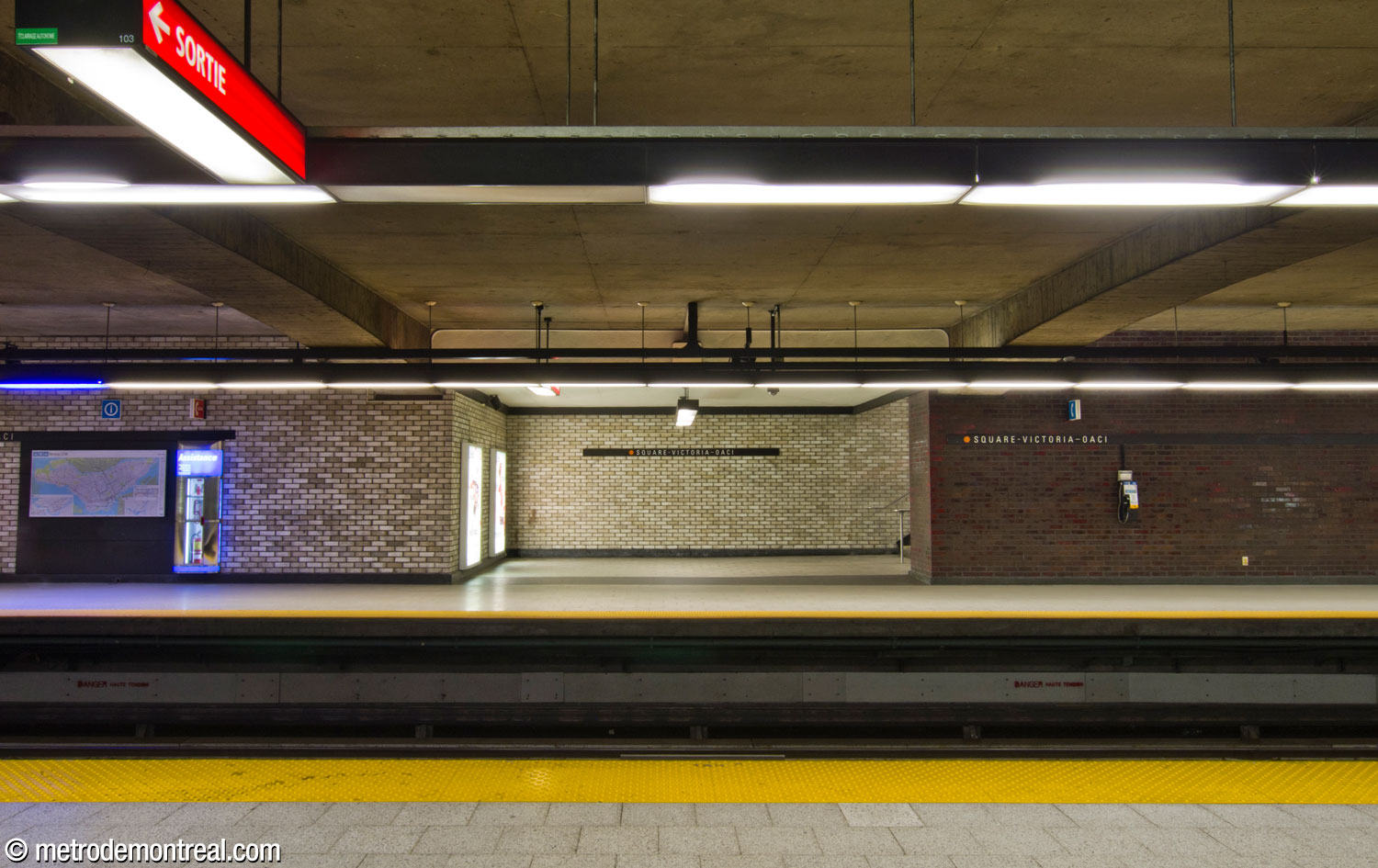

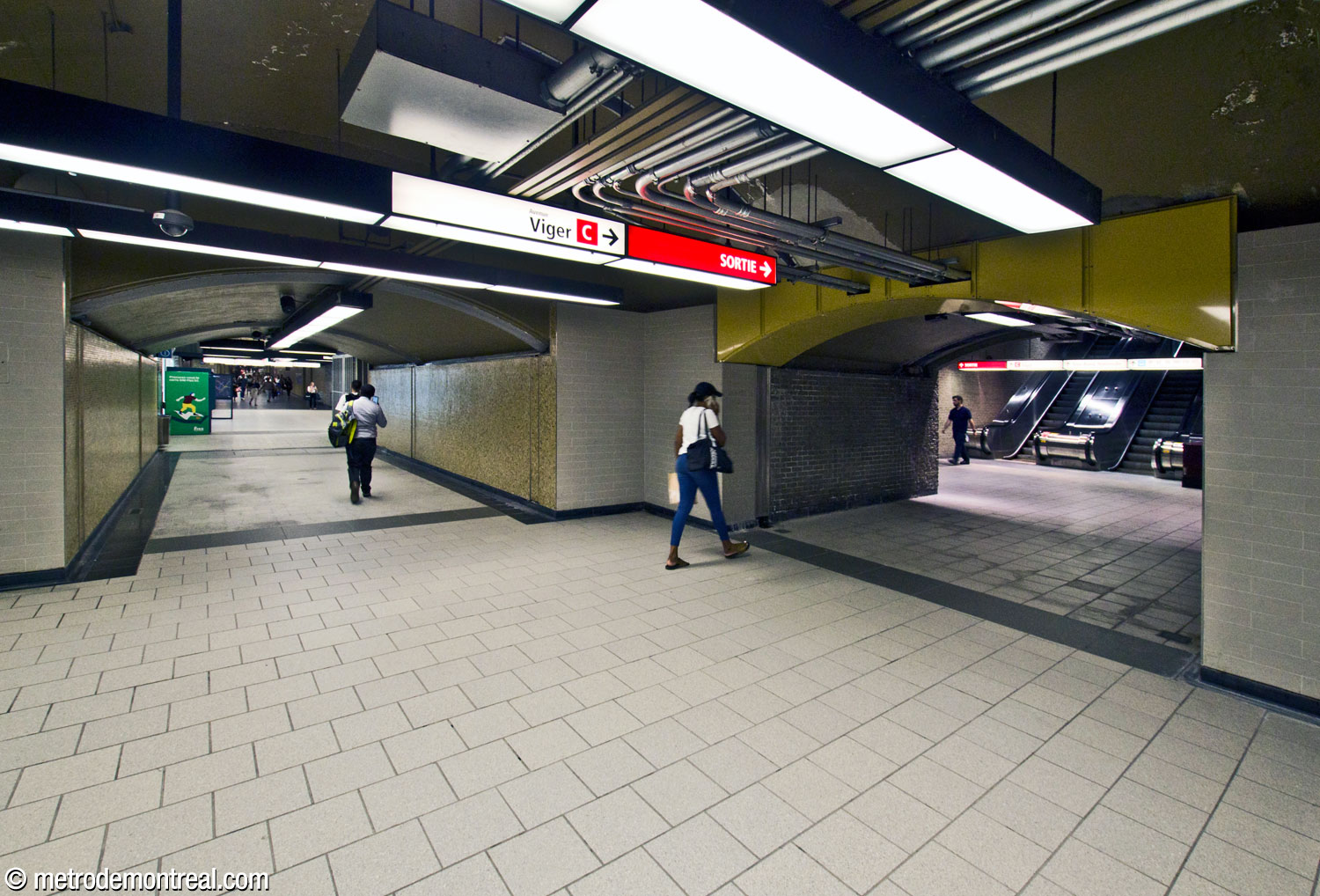
A number of simple wall claddings are used. In the central volume of the platforms and mezzanine, maroon and beige glazed bricks are used. Most of the rest of the station, however, including the ends of the platforms and the corridors, are in gold-coloured tiles, recalling that this station was built to serve Montreal’s financial district and the Tour de la Bourse stock exchange building.
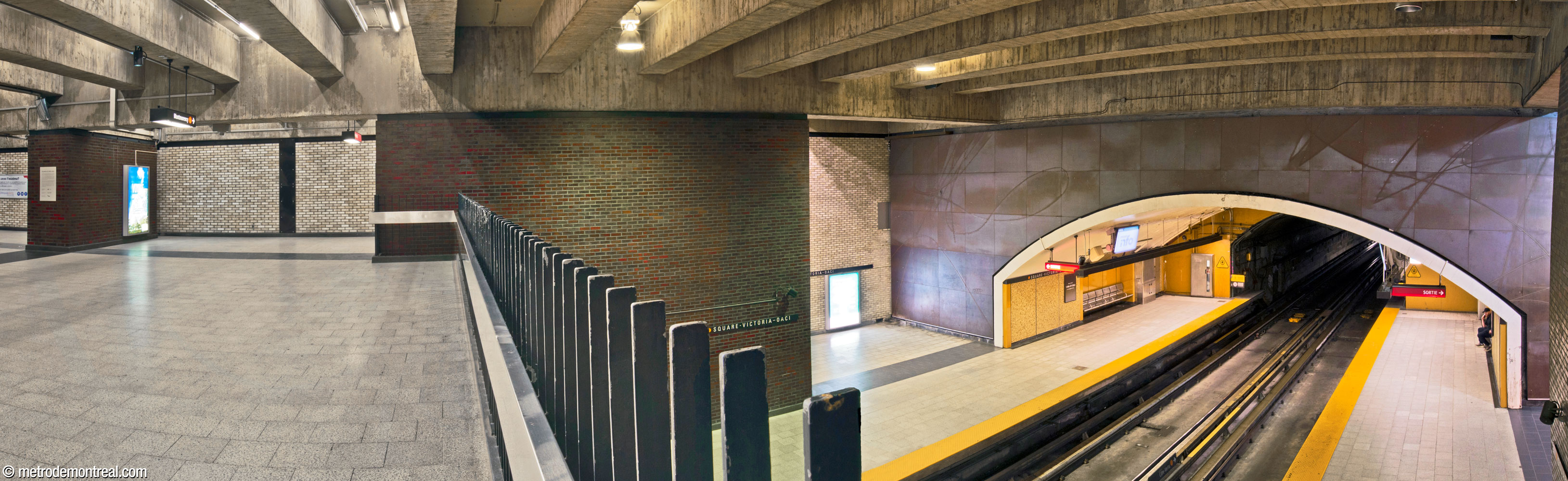
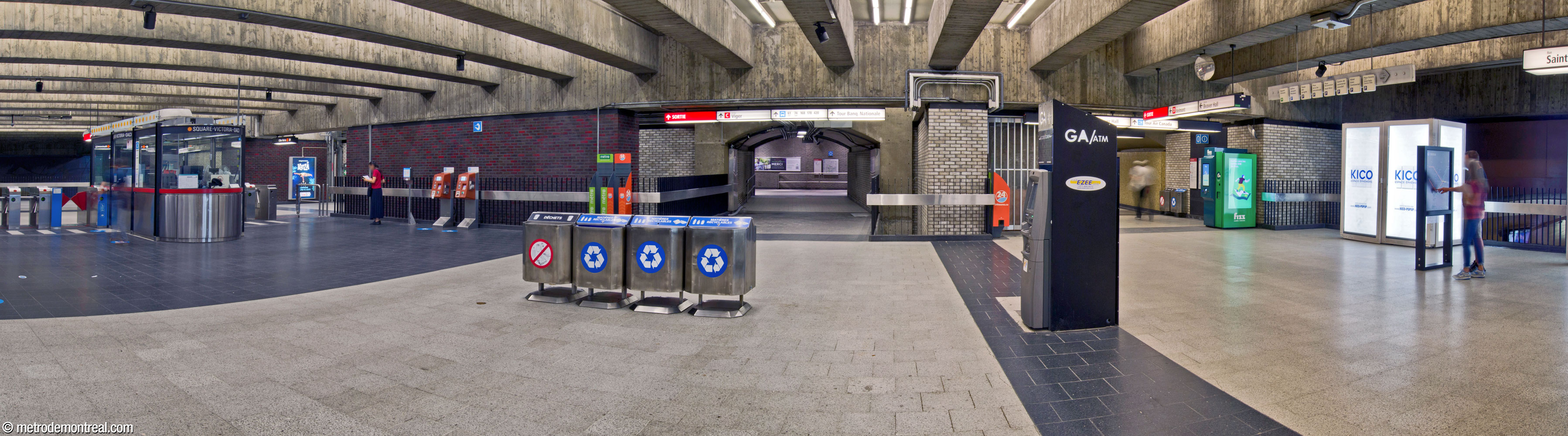
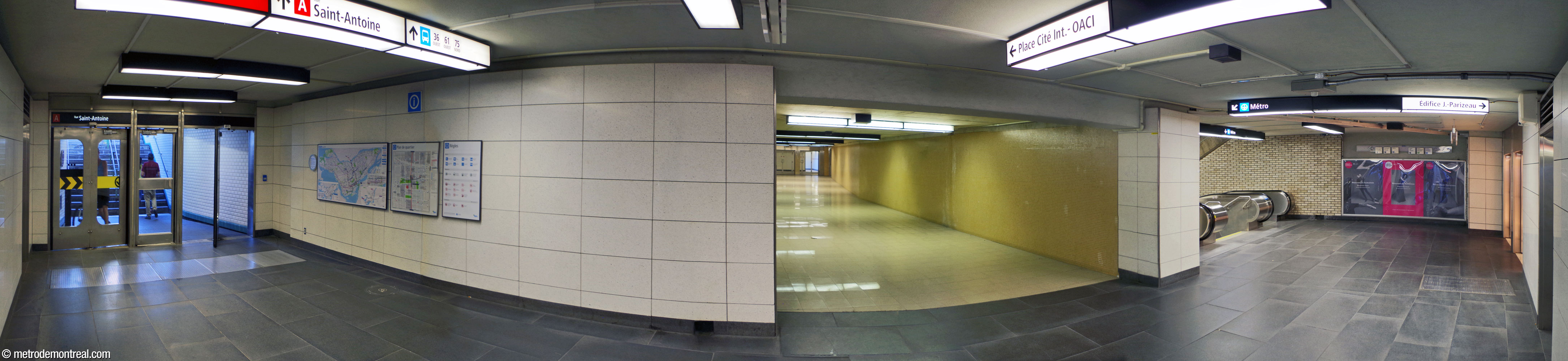
The station centres on its ticket hall, built on a long, broad mezzanine to accommodate the flood of passengers every day from the surrounding office towers and direct them towards four broad staircases to the platforms. From the ticket hall, two very long tunnels branch out north and south, leading to entrances spread over four blocks (around 300 metres) from Rue Belmont to Rue Saint-Jacques.



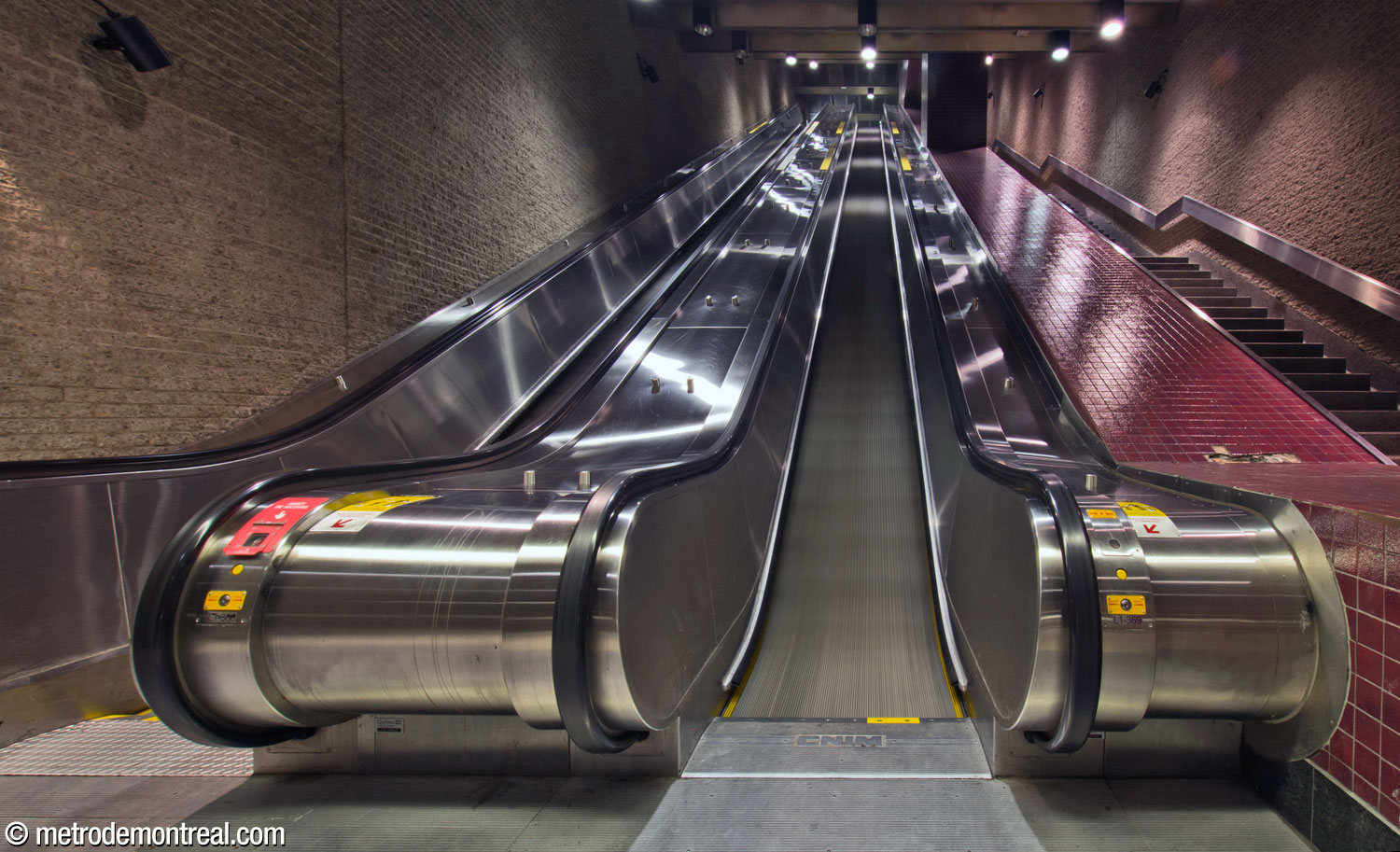
The northern tunnel runs two blocks (nearly 150 metres) right up Côte du Beaver Hall to the Belmont exit, scaling a 15-metre slope by means of two dizzying sets of escalators. The Belmont exit also provides an underground city link to the 1080 Beaver Hall building, within which it was constructed.


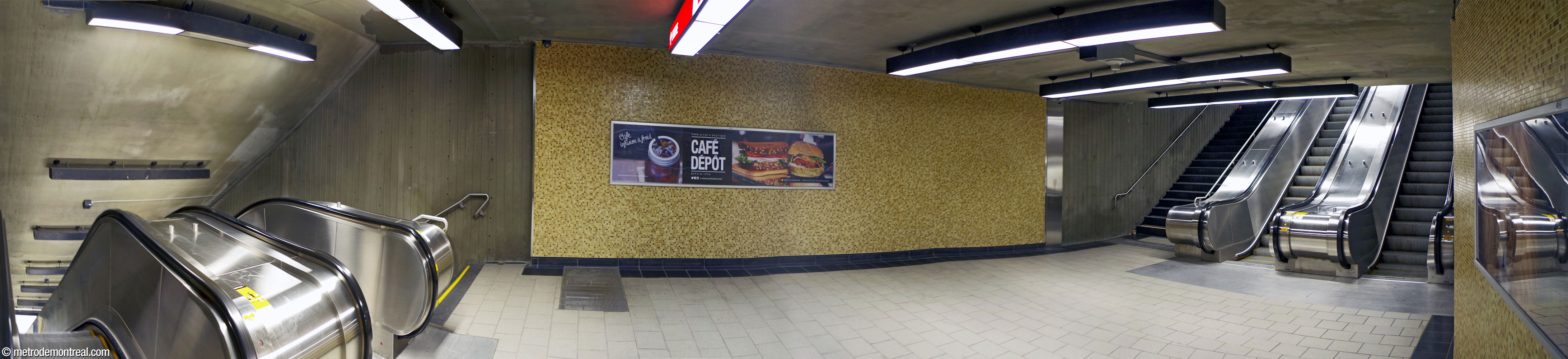

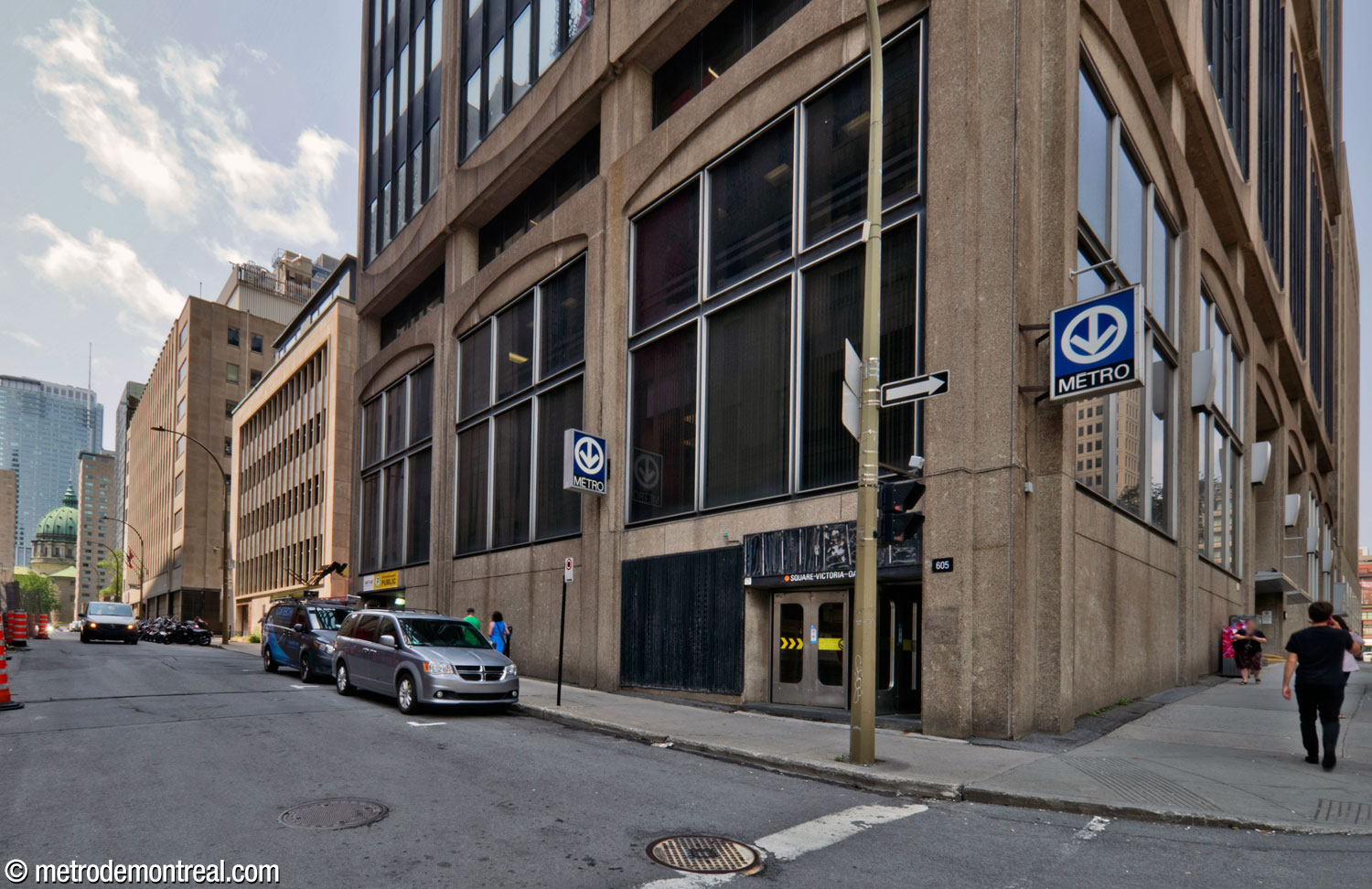
The southern tunnel collects passengers at two points. The first is the escalator that leads up to the Saint-Antoine exit (see below). The landing between the escalator and the stairs up to the exit also gives access to the ICAO building and to the Édifice Jacques-Parizeau.

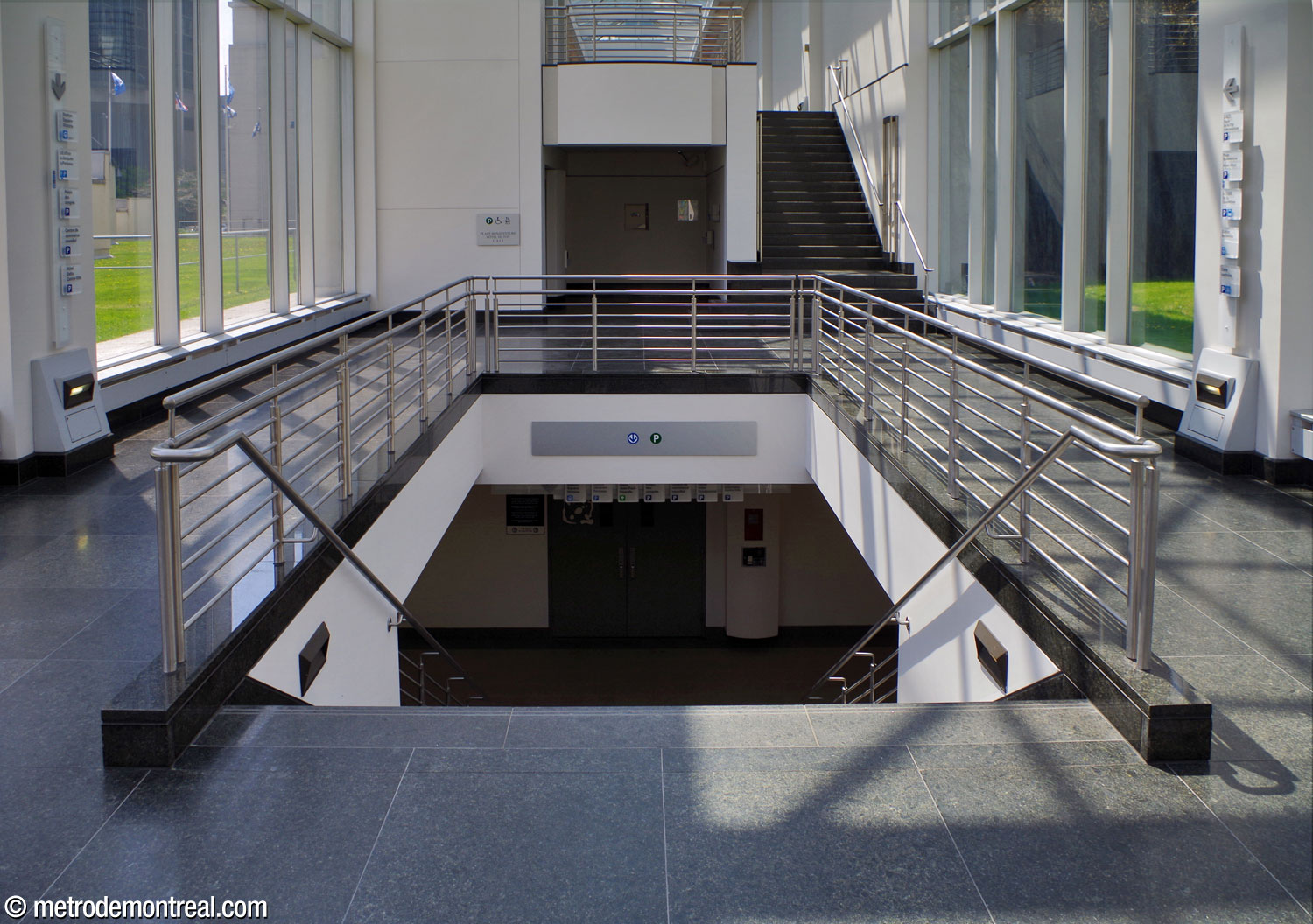


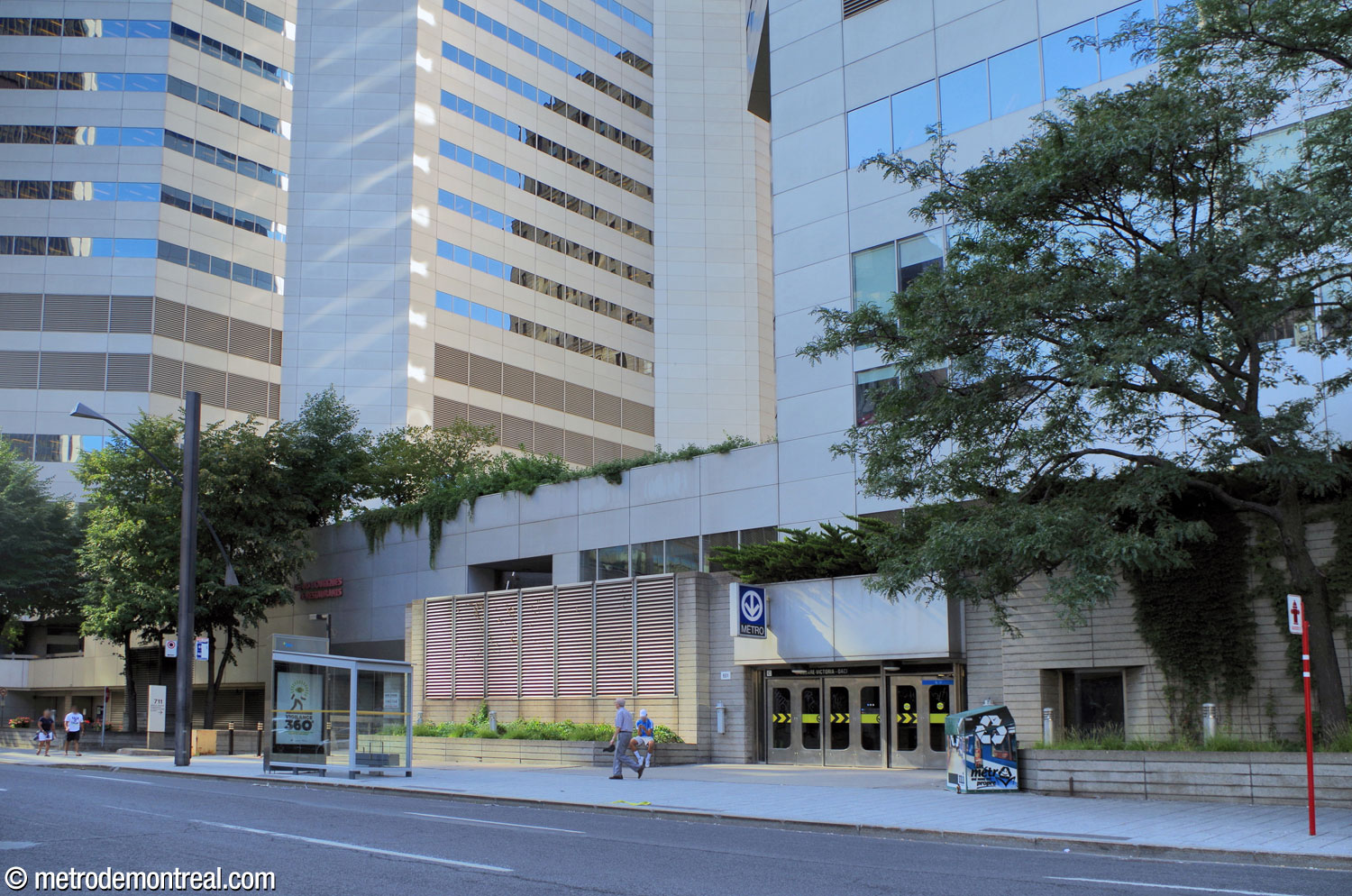
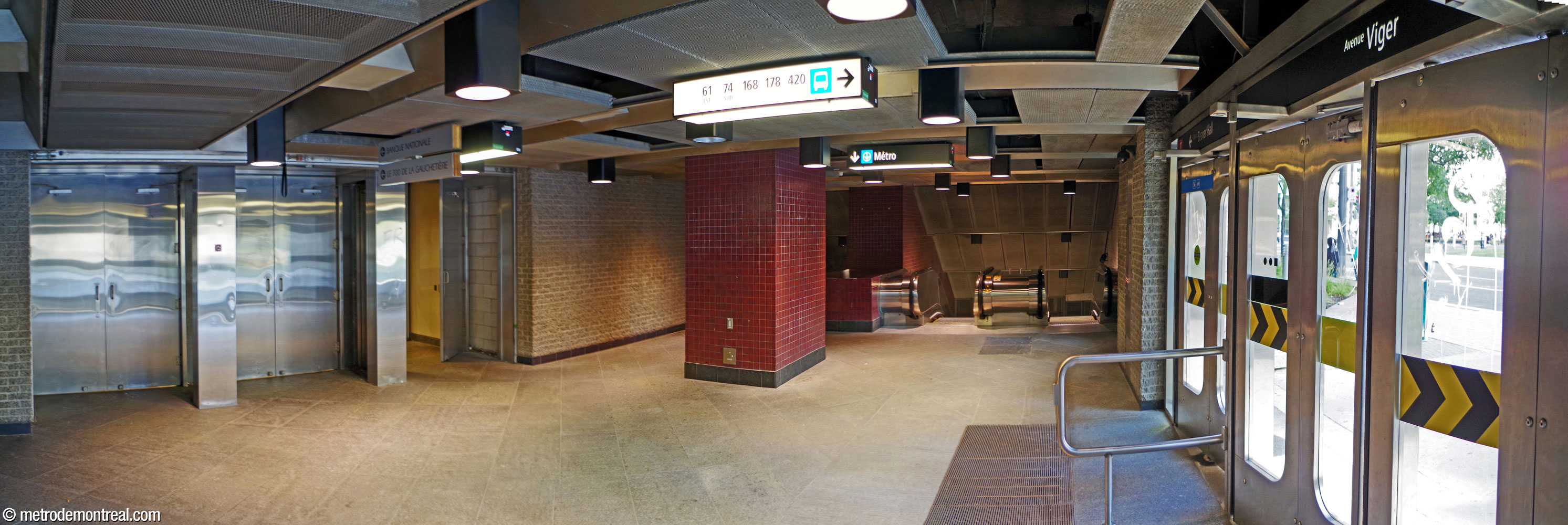
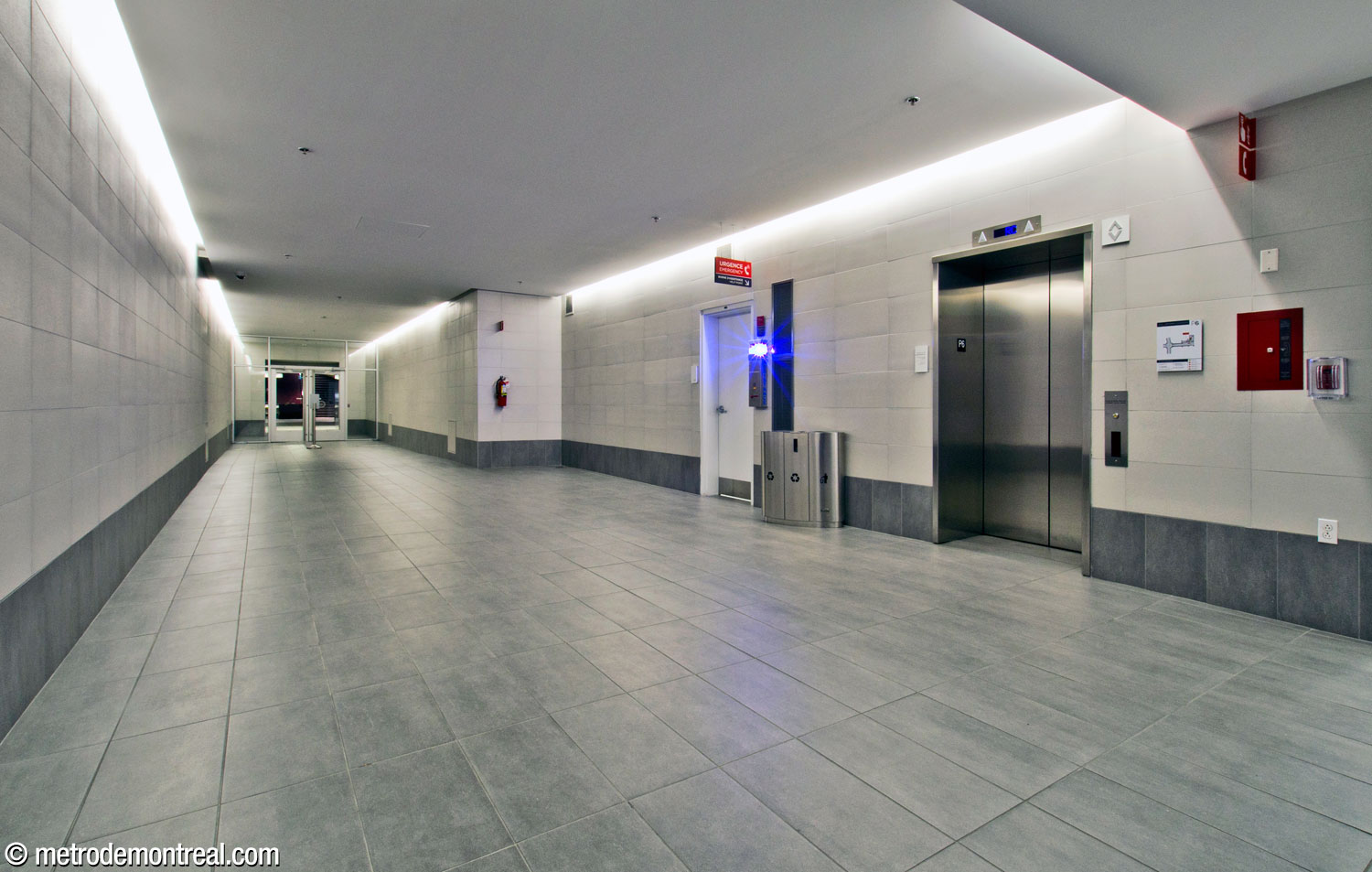
Finally, the staircase towards the Viger exit, allowing access to the 600 and 700 De La Gauchetière towers, is immediately north of the mezzanine in the centre of the station. Facing it, the most recent underground city connection provides access to the Tour Air Canada via an elevator.

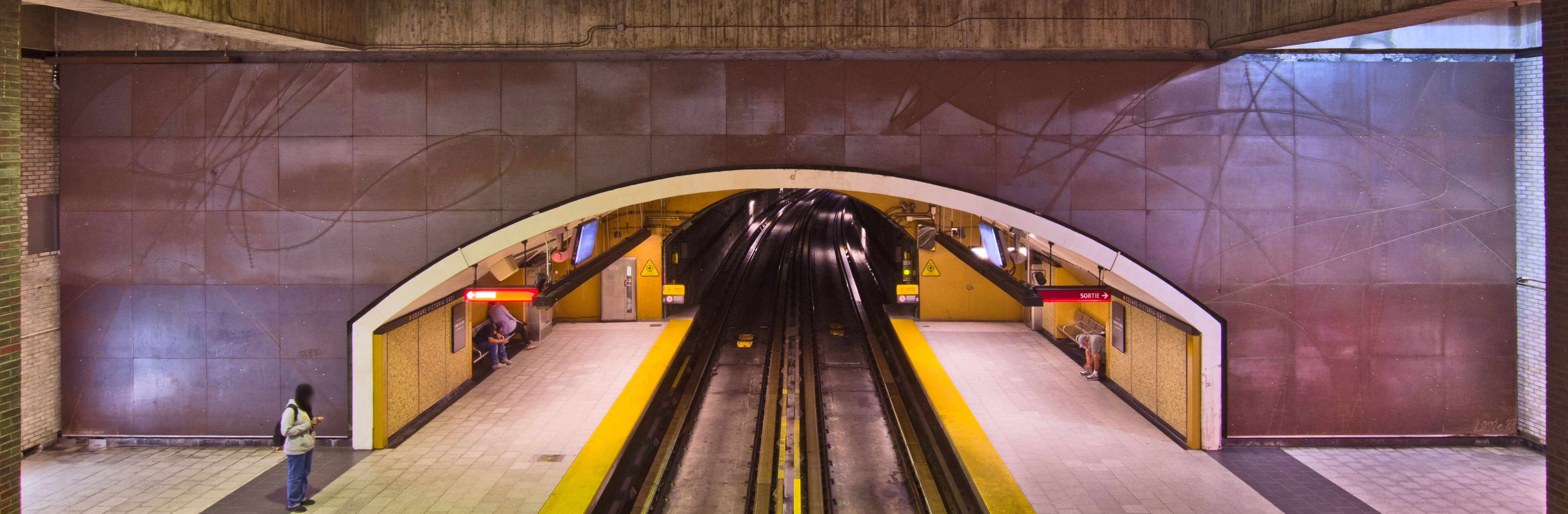
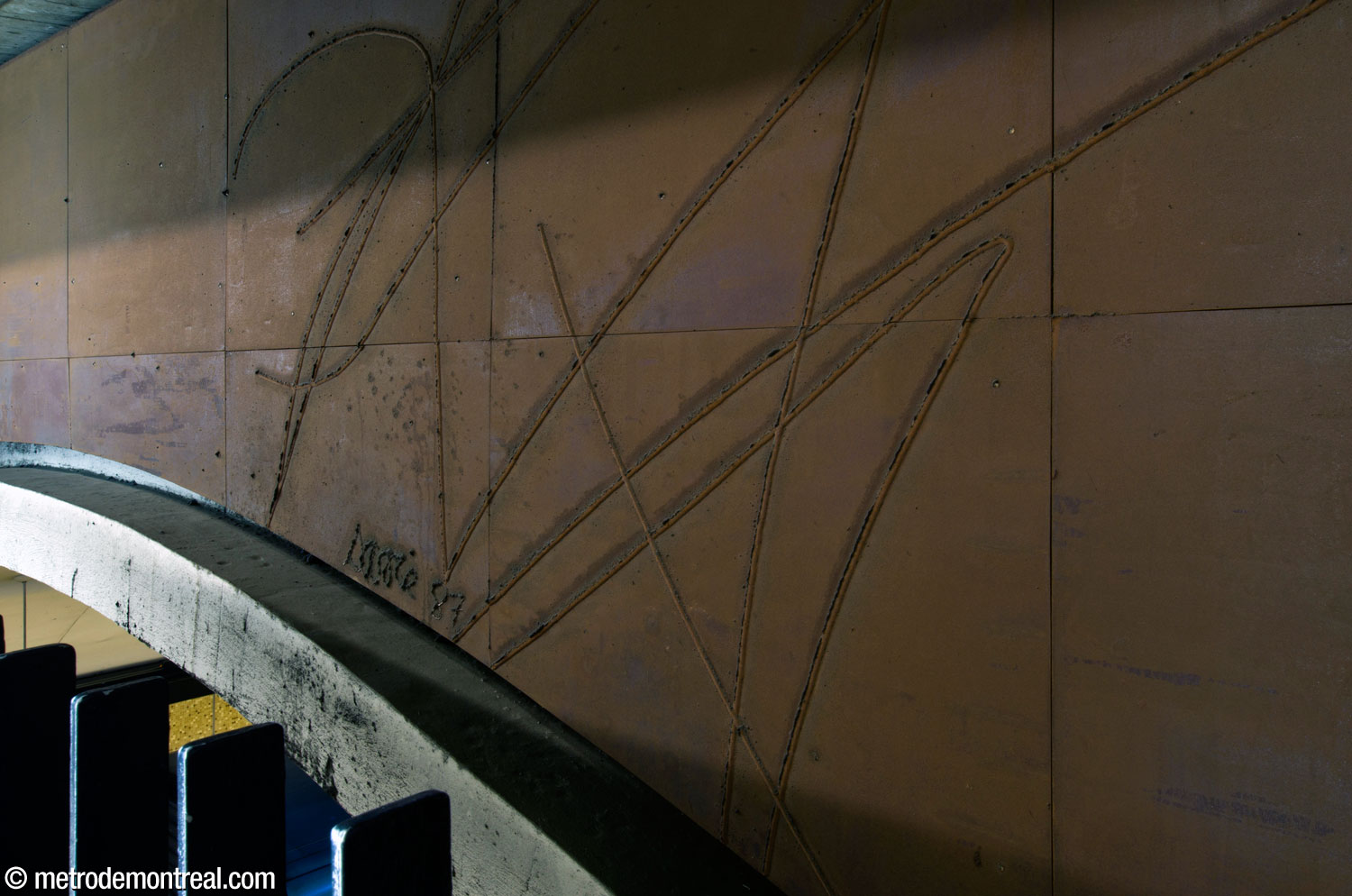
The ticket hall and platforms are enhanced by a discreet but sizeable work of art, a pair of murals in brown Cor-Ten steel by Robert Savoie. The larger of the two murals is on the western spandrel wall of the volume over the trainroom vault, and the other is on the eastern spandrel wall, separated from the mezzanine by only a narrow overlook. Entitled Kawari Kabuto (a Japanese term referring to a highly ornate samurai helmet), the murals are patterned with fluid designs of raised ridges.

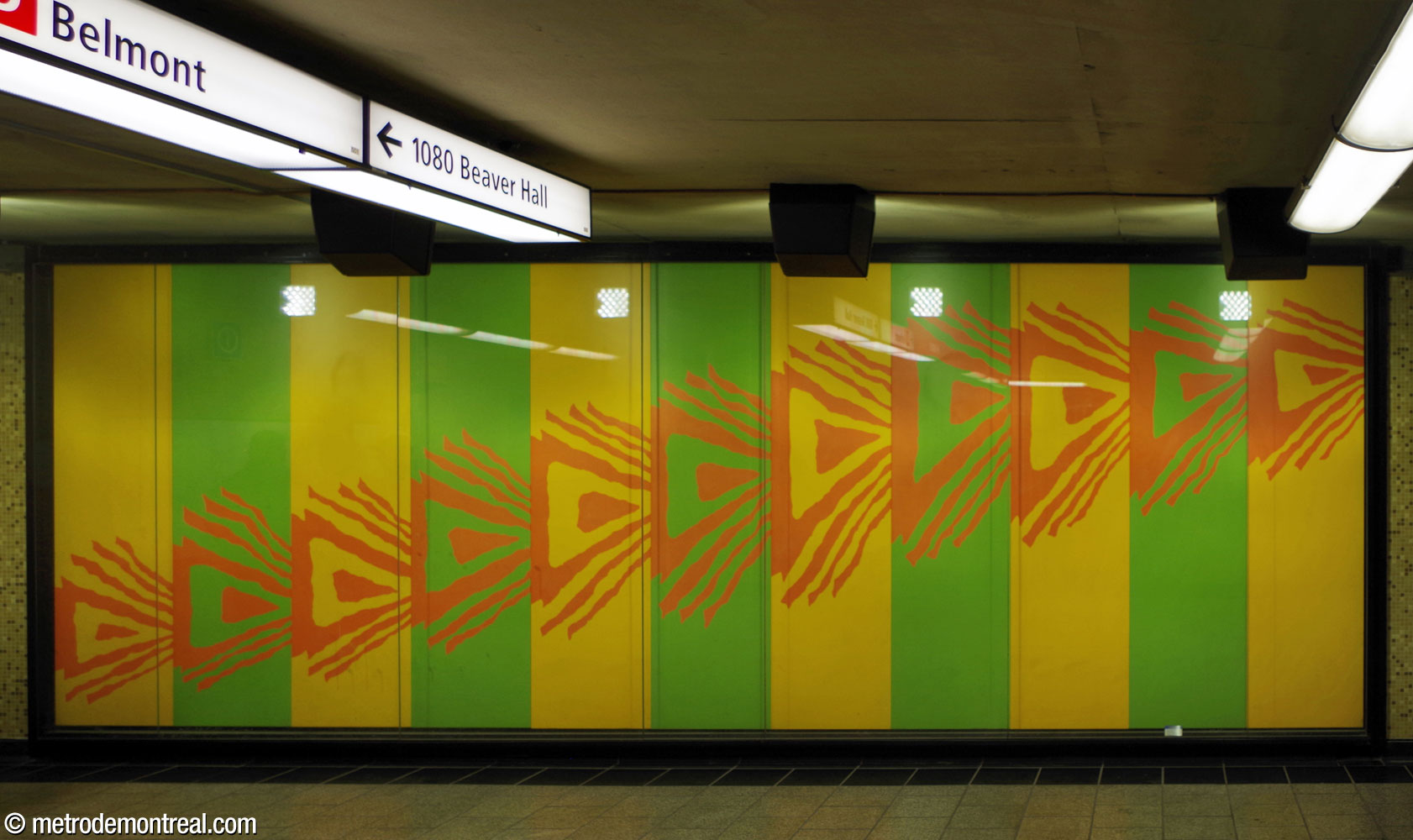
Another work of art is located inside the station, a brightly coloured mural by Jean-Paul Mousseau. Modifications to the station over the years have led this work to be moved from place to place; it is currently located within the Belmont entrance, at the head of the escalators, where its vibrant orange arrow shapes serve as a directional indicator.
But the station’s glory, and a crown jewel of the Montreal metro’s art collection, is its authentic fin de siècle Art Nouveau Parisian metro entrance that graces the Saint-Antoine exit in Square Victoria. This magnificent example of French architect Hector Guimard’s famous work was donated by the city of Paris to the people of Montreal in 1967 to commemorate the cooperation between French and Canadian engineers in creating the metro.
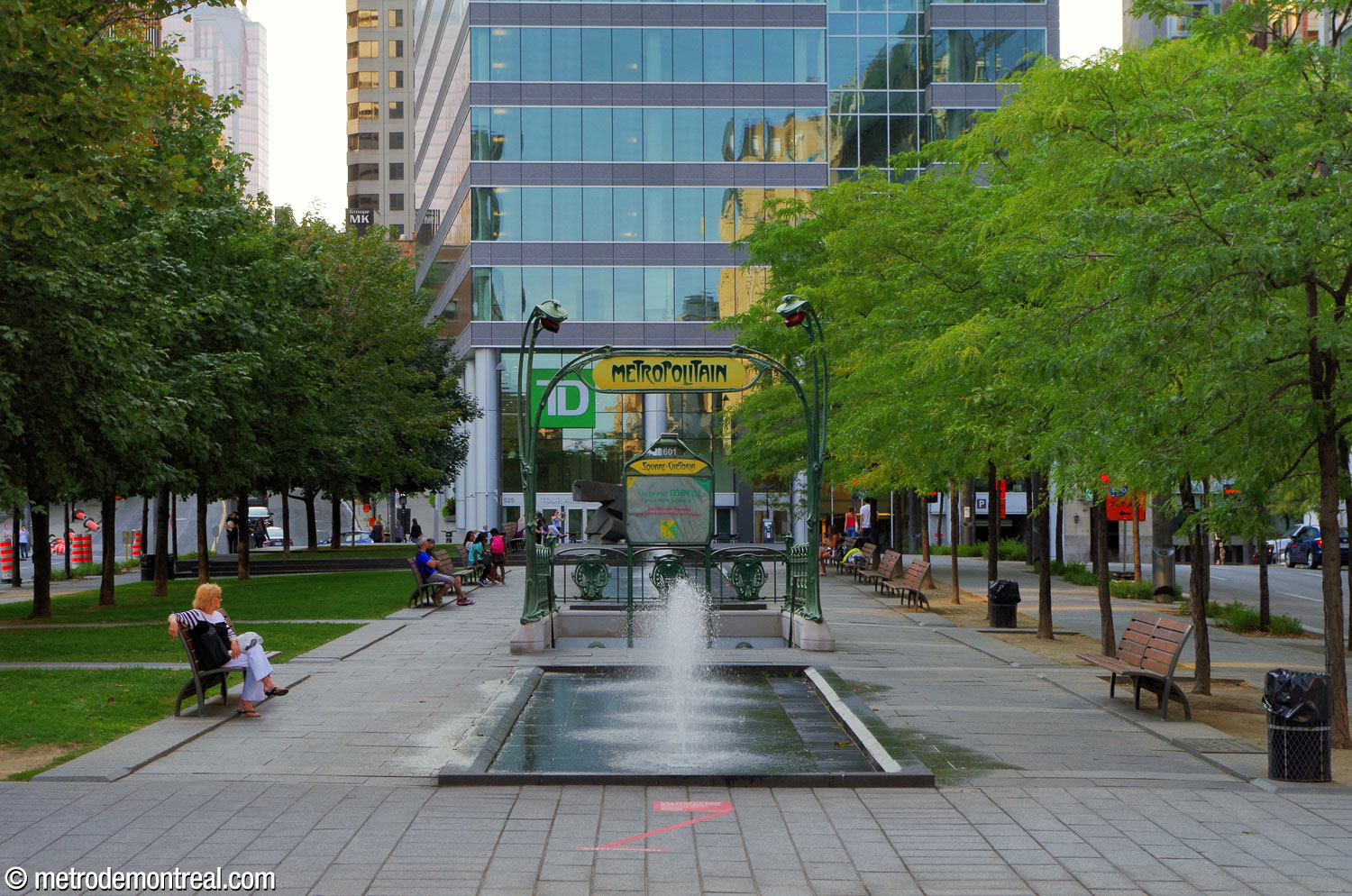
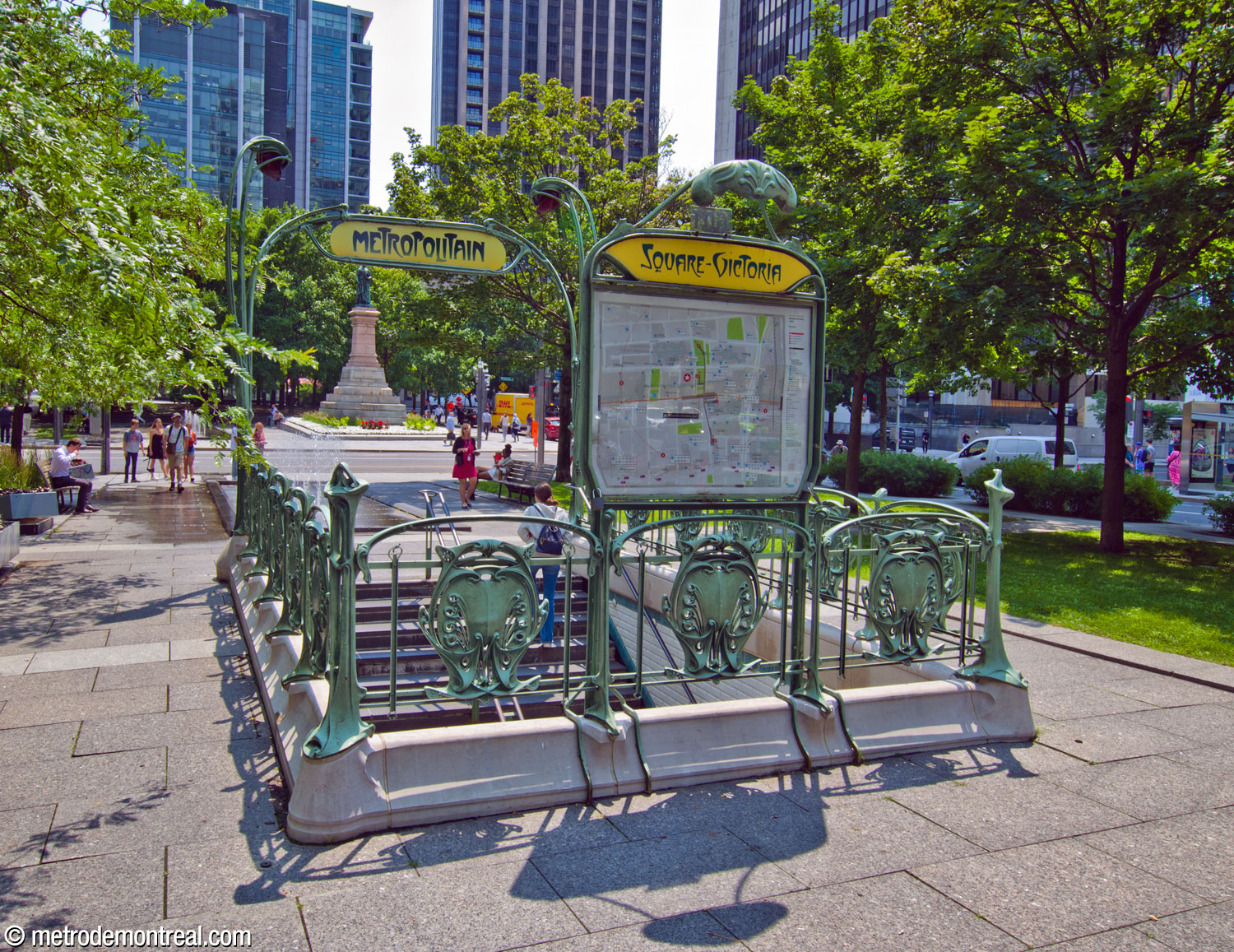
Guimard’s cast-iron metro entrances are known worldwide as iconic images of Paris. With their sinuous plant-like forms, they are justly regarded as an important example of the Art Nouveau style of the turn of the century. Some are preserved in museums such as the Museum of Modern Art in New York. While Paris has since donated reproduction Guimards to other cities, Montreal has the only original Guimard entrance in use on a metro station anywhere in the world outside Paris.

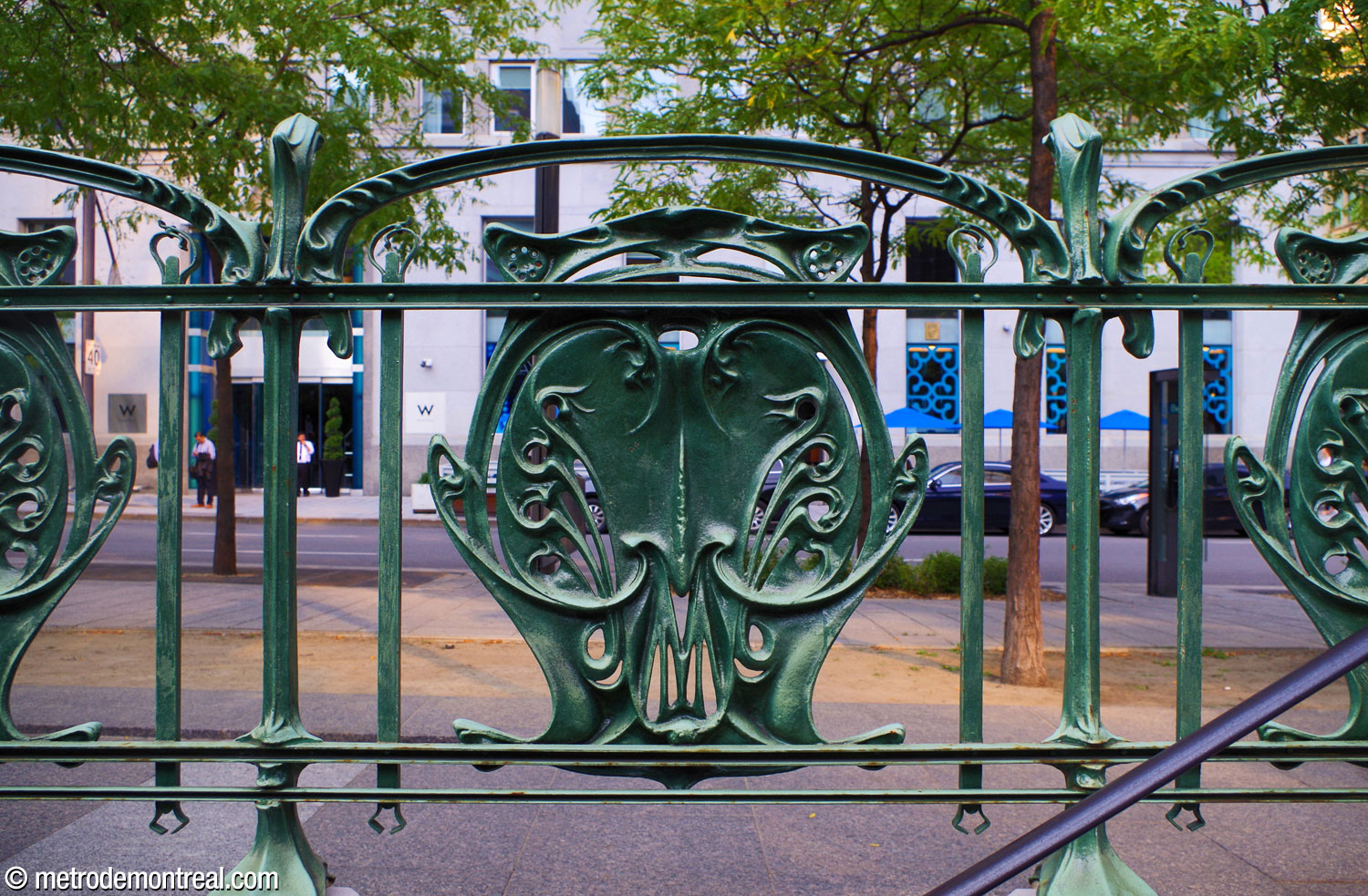
Restored in September 2003 as part of the Quartier International development project, Montreal’s Guimard entrance is the pride of the
metro, and is worth a trip all by itself.

Accessibility
This station is not currently wheelchair-accessible. No plans to install elevators have yet been announced.
According to the Plan de développement d’accessibilité universelle de la STM 2012-2015 (p. 40), the predicted complexity of adding elevators at this station was rated as high (estimated cost over $18 million).
The Tour Air Canada underground city connection provides public elevator access to the station’s ticket hall level.
History & Trivia


Platform Depth
16.2 m deep
32nd deepest station

Interstation Distances
To Bonaventure: 392.60 metres
To Place-d’Armes: 356.60 metres
Origin of the Name
Square Victoria. This square was formerly known as Haymarket Square (Place du Marché-à-Foin) and Place des Commissaires. It was renamed in 1860 after Queen Victoria (1819-1901), Queen of the United Kingdom of Great Britain and Ireland 1837-1901 and Empress of India 1876-1901, on the occasion of a visit to Montreal by the Prince of Wales, the future King Edward VII.
The square was redesigned in the early 2000s as part of the Quartier International development project. This project included the recreation of the square’s original road grid, the planting of more trees on either section of the park, the installation of fountains and new lamps and furniture, the refurbishment of the Saint-Antoine and Saint-Jacques exits of the metro station, and the restoration of the statue of Queen Victoria to its pedestal, which was also moved.
Maison de l’OACI. The International Civil Aviation Organization (Organisation de l’aviation civile internationale, OACI) is a United Nations organization coordinating standards, rules, and practices for civil aviation around the world. Founded in 1944, it has had its head office in Montreal since 1946. The present headquarters building was built in 1996. The station’s name was changed in 2014 to mark the organization’s 70th anniversary.
Formerly named: Square-Victoria (name change approved April 2, 2014; station renamed November 14, 2014). The specially made nameplate in the Guimard entrance still says “Square-Victoria.”
Former alternate names: Victoria; Place-Victoria. (Some transfers were formerly printed “Place-Victoria.” Much later, this name was displayed on the nameplate over the door of the Saint-Jacques exit for at least a few years until at least 2009,1 long after it was no longer used elsewhere.)
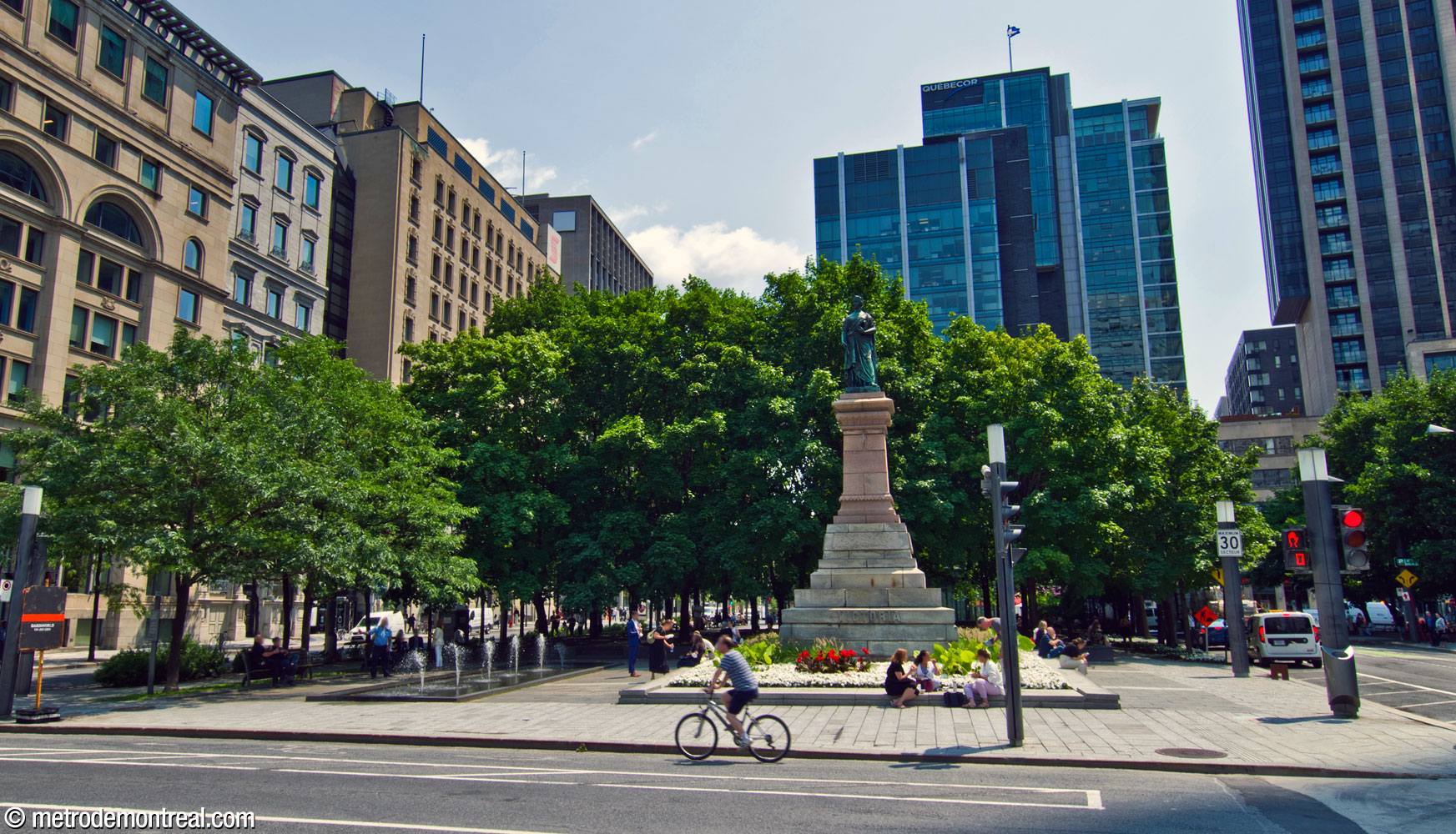
Square Victoria, with statue of Queen Victoria of the United Kingdom by Marshall Wood (1869)
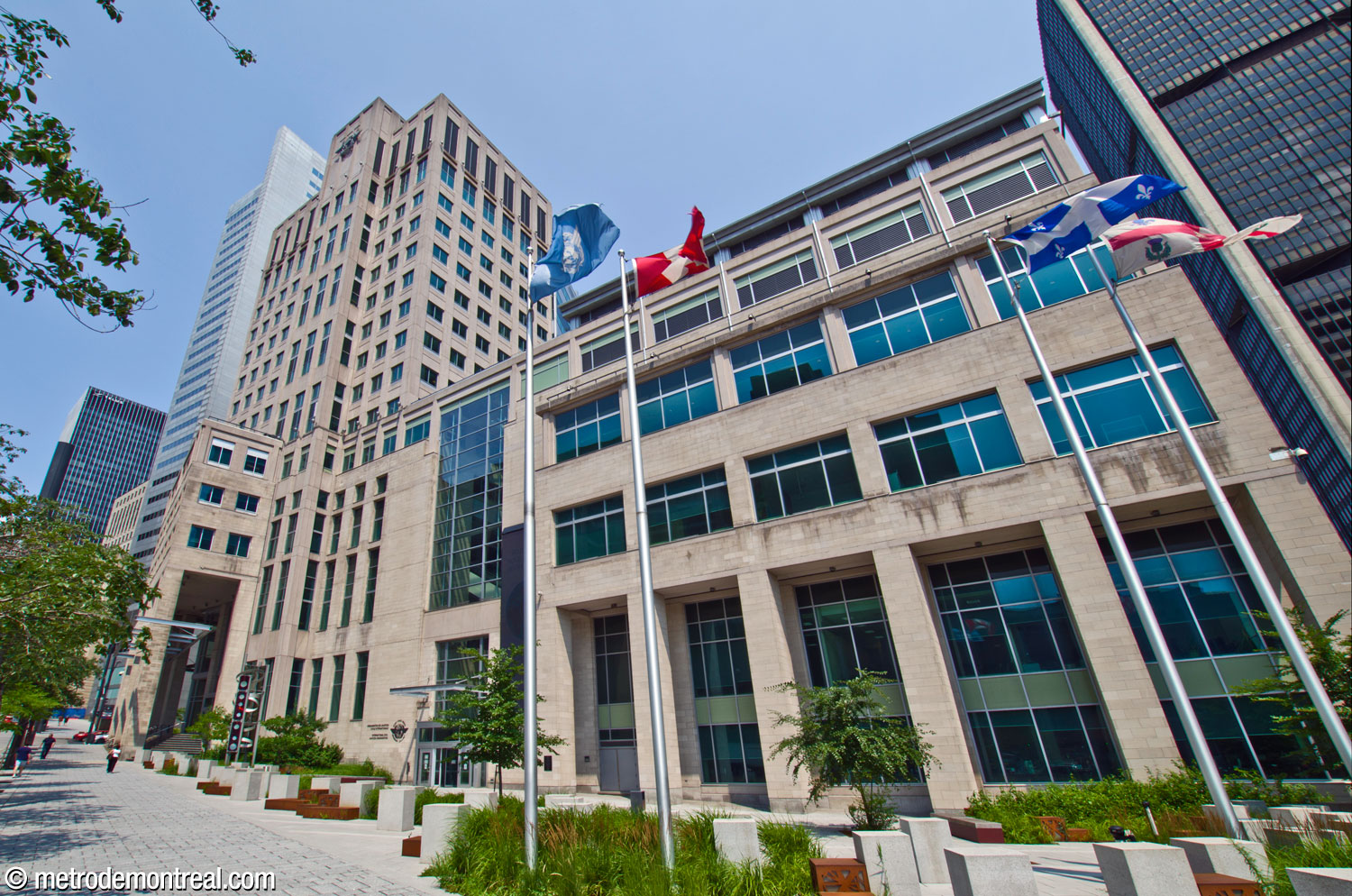
Maison de l’OACI, headquarters of the International Civil Aviation Organization

The first metro map published following the inauguration of the original network in 1966, showing the name Victoria for this station
(Source2)
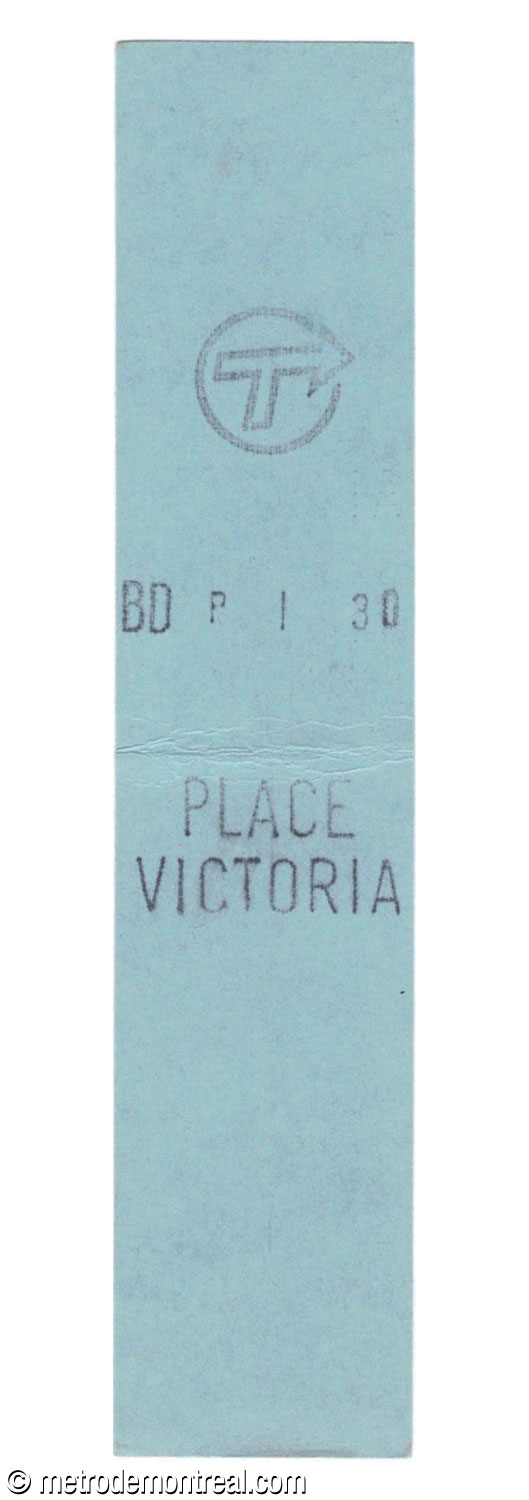
A transfer bearing the name Place Victoria

The Saint-Jacques exit in 2007, bearing a nameplate saying Place Victoria
Trivia
- Although this station was part of the original metro network, it was a late addition to the plans. The orange line was originally planned to terminate at Place-d’Armes,3 but the project was extended by two stations to Bonaventure station while it was already underway. As a result, Square-Victoria station was only inaugurated four months after the rest of the original network, but shortly before Bonaventure station, so that it served as the terminus of the orange line for just one week.
- Some of the tiles at this station were imported from Italy.4
- The long passage to the Belmont exit was only opened on December 11, 1967, several months after the station’s inauguration. It was originally intended mainly to offer an underground city link with the Montreal Chamber of Commerce, which then occupied the building at 1080 Côte du Beaver Hall.5
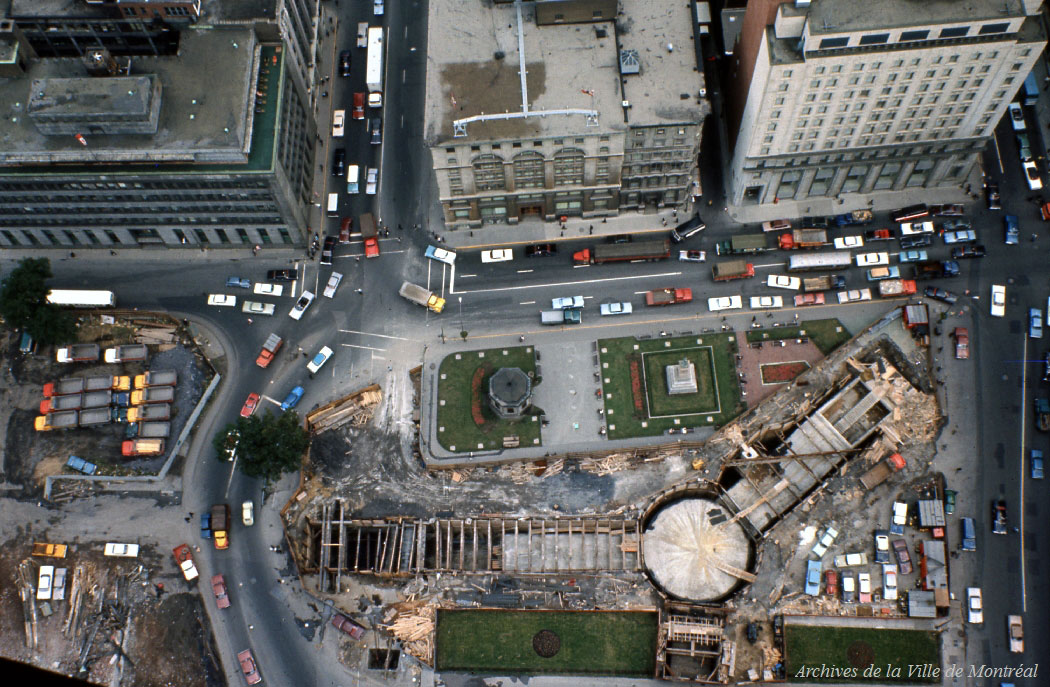
Aerial view of the open-air construction of the station’s Saint-Jacques access and its link to the Tour de la Bourse in August 1965.
(Source6)
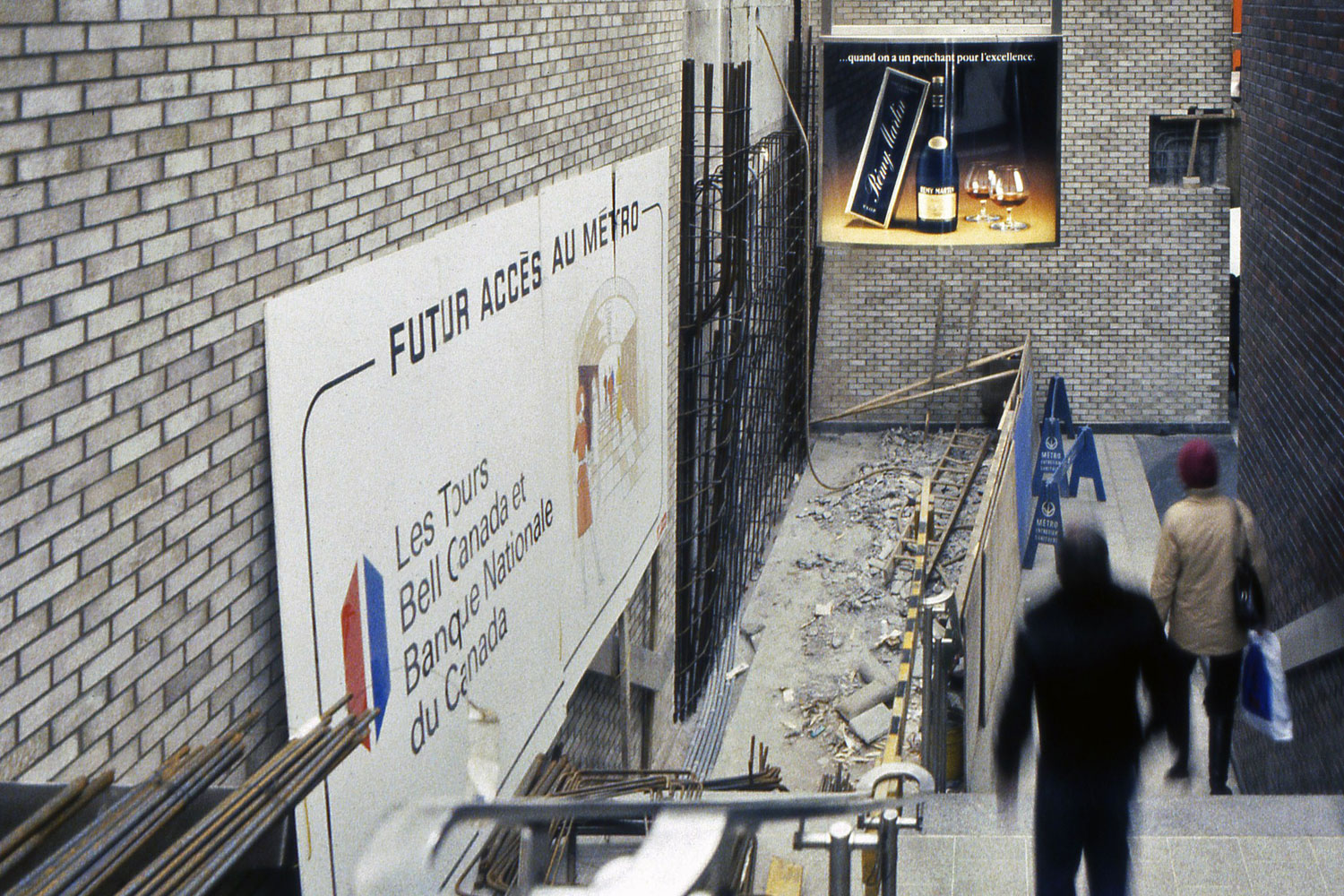
Modifications to the station during the construction of the 600 and 700 De La Gauchetière complex in 1983, including the addition of the Viger exit and underground city connections to the new towers
(Source7)
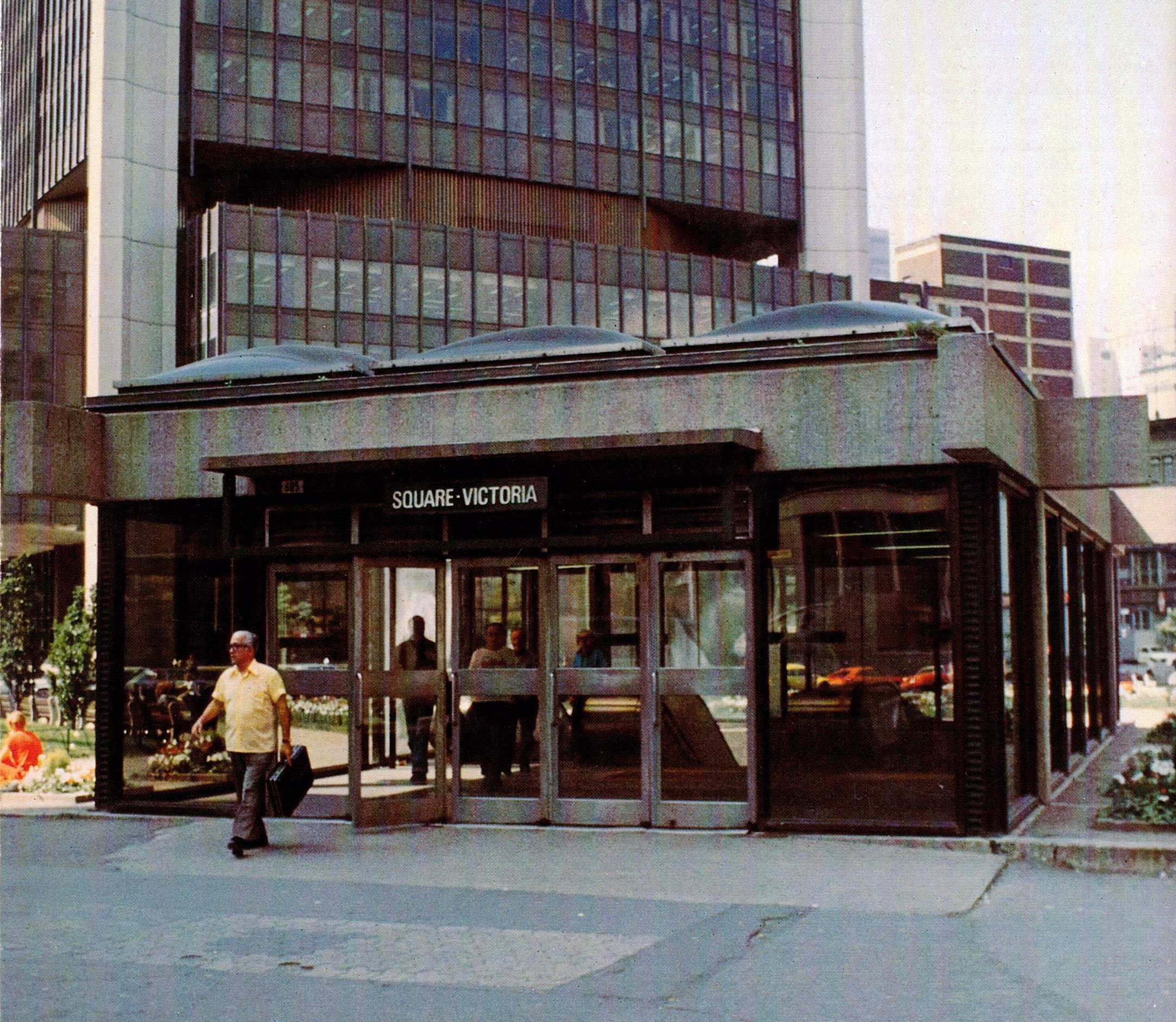
The Saint-Jacques headhouse before its 2004 reconstruction
(Source8)
- The never-completed program of works of art on historical subjects proposed by the metro’s first art director, Robert LaPalme, anticipated that this station would feature an artwork by Yves Trudeau, a sculpture for the ceiling of the rotunda at the Saint-Jacques exit, representing the playing-card money used in New France. Jordi Bonet was also to create a large ceramic mural depicting the history of commerce in Montreal; this would have occupied the spandrel wall facing the main volume, where Robert Savoie’s Kawari Kabuto is today.9 Another project mentioned was a “mosaic representing Montreal’s first world’s fair in 1851”10 [sic], likely the source’s error for the Great Exhibition, the first World’s Fair, which was held in 1851 in London.
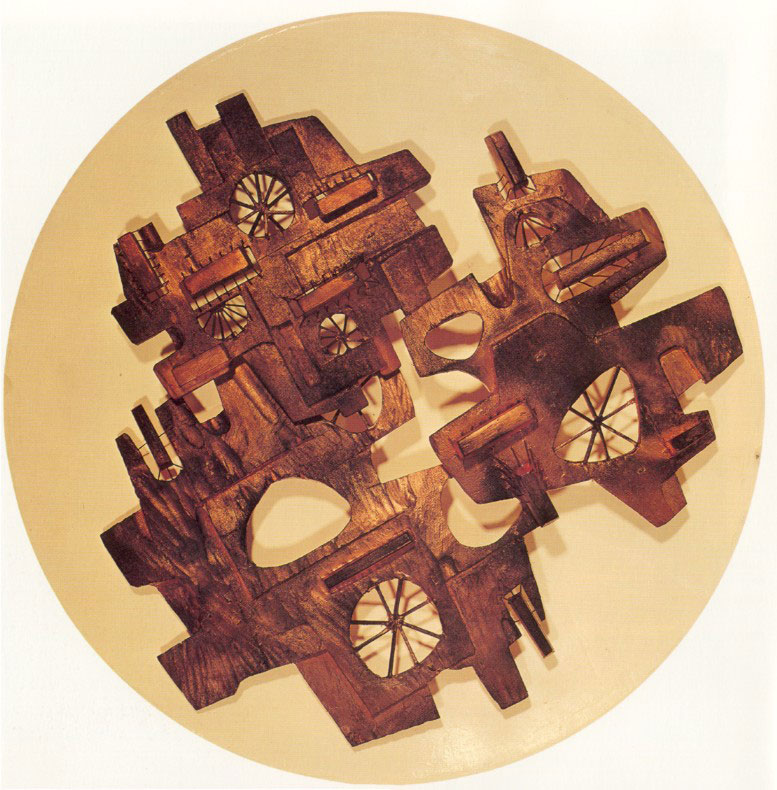
Model for a ceiling sculpture by Yves Trudeau, planned for the rotunda below the Saint-Jacques exit
(Source11)

Sketch of the planned relief by Jordi Bonet
(Source12)
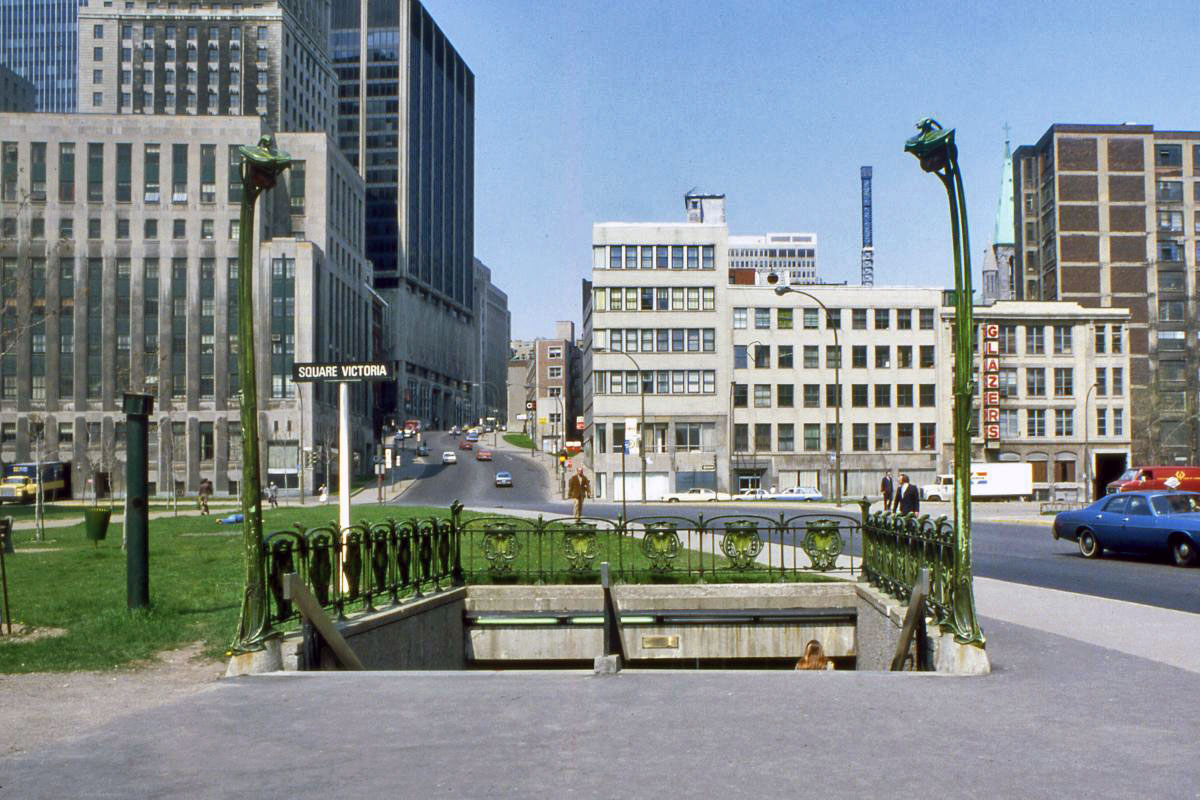
The Guimard entrance prior to its renovation in 2003. The access is wider than Parisian metro entrances, making it impossible to include the typical ‘Métropolitain’ sign, and the sign holder at the rear is also absent.
(Source7)

The reinauguration of the restored Guimard entrance on September 4, 2003
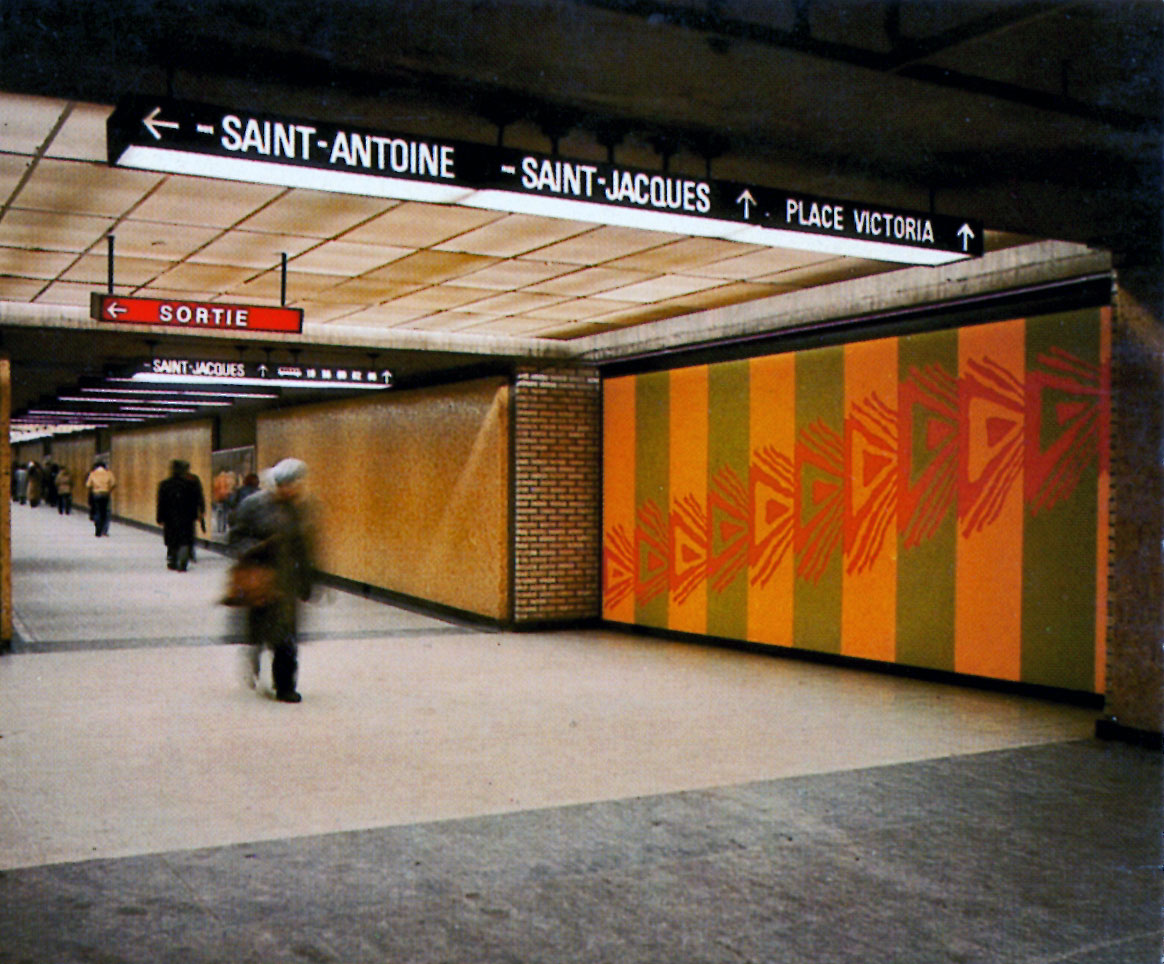
The mural by Jean-Paul Mousseau in its original location in the south access tunnel, at the foot of the stairs leading to the Saint-Antoine exit.
(Source8)
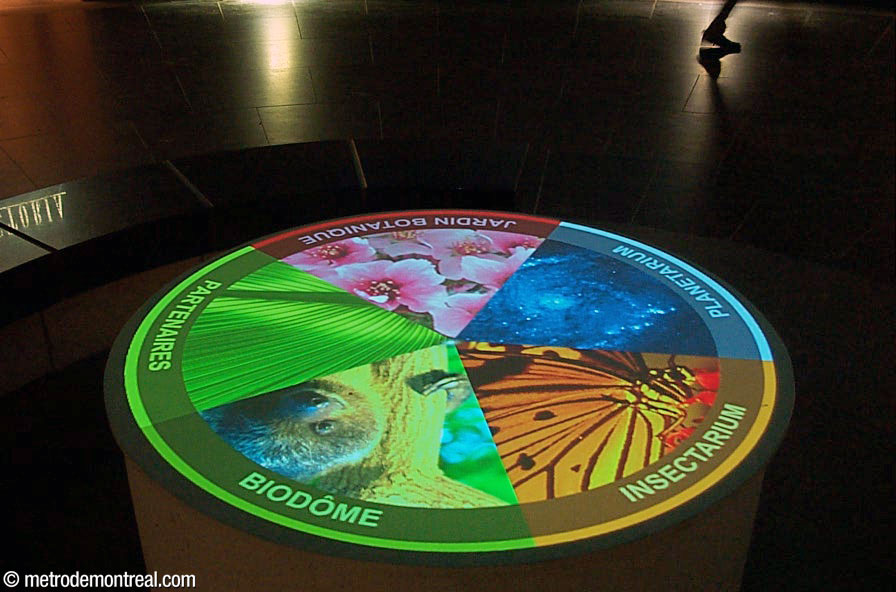
- The rotunda under the Saint-Jacques entrance was formerly the site of an interactive installation called Ars Natura, created by the Société des arts technologiques. Installed in March 2004, it consisted of a suspended circular screen onto which were projected panoramic video displays about Montreal’s science museums—the Biodôme, Insectarium, Botanical Garden, and the former downtown Planetarium. These son et lumière displays could be gesture-controlled by viewers and included live image feed from cameras in the Biodôme. However, the system was removed in about 2008.13, 14
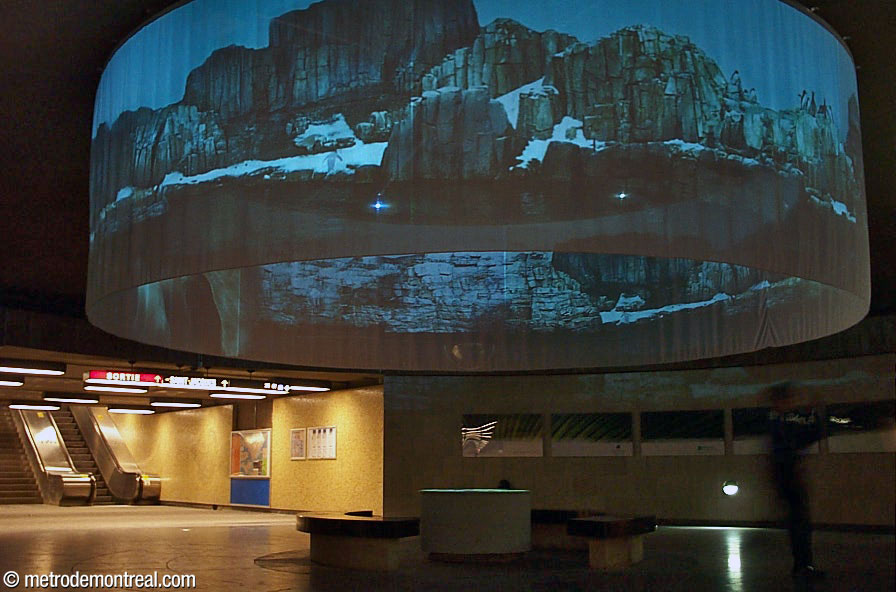
The interactive installation Ars Natura, in the Saint-Jacques rotunda, displaying images from the Biodôme
The gesture control display of the Ars Natura installation

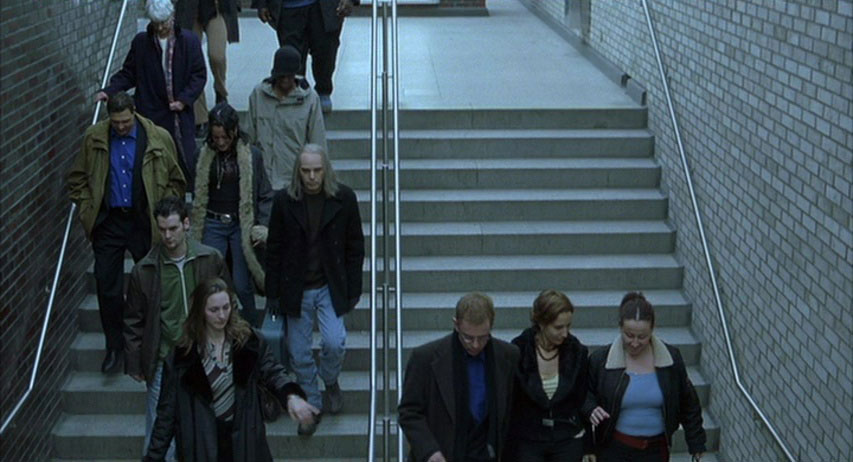
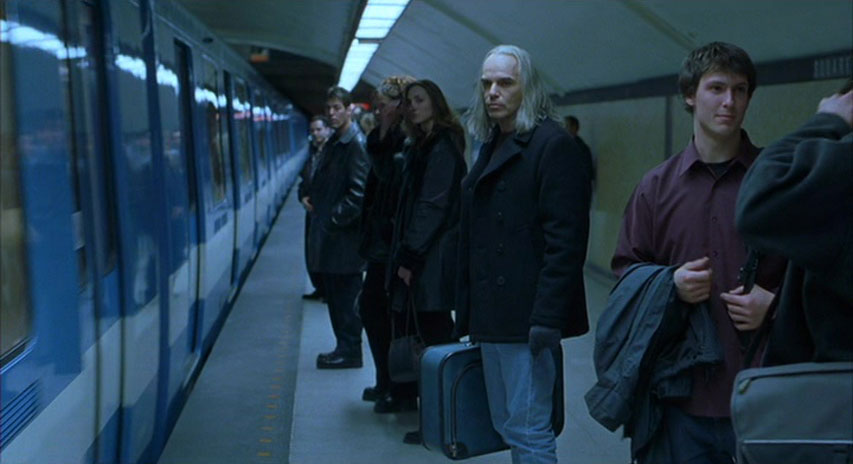
- Scenes from Bryan Singer’s film X-Men: Days of Future Past (2014) were filmed in this station. Ironically, though the station was standing in for the Victor Hugo station of the Paris Métro, the station’s Parisian Hector Guimard entrance was not featured—but the entrance corridor directly below it was.
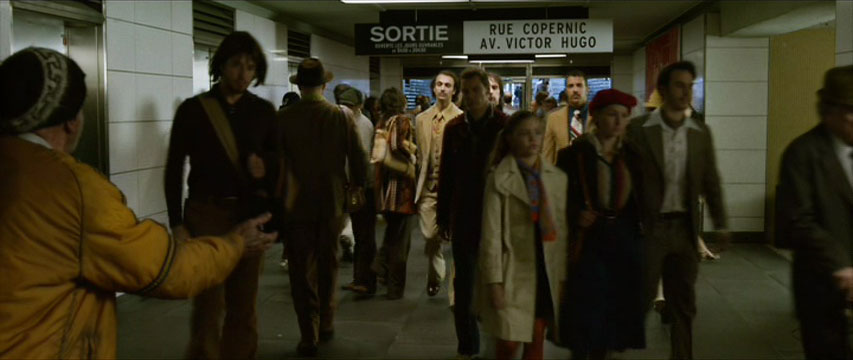
Michael Fassbender in X-Men: Days of Future Past (2014)
(Source16)
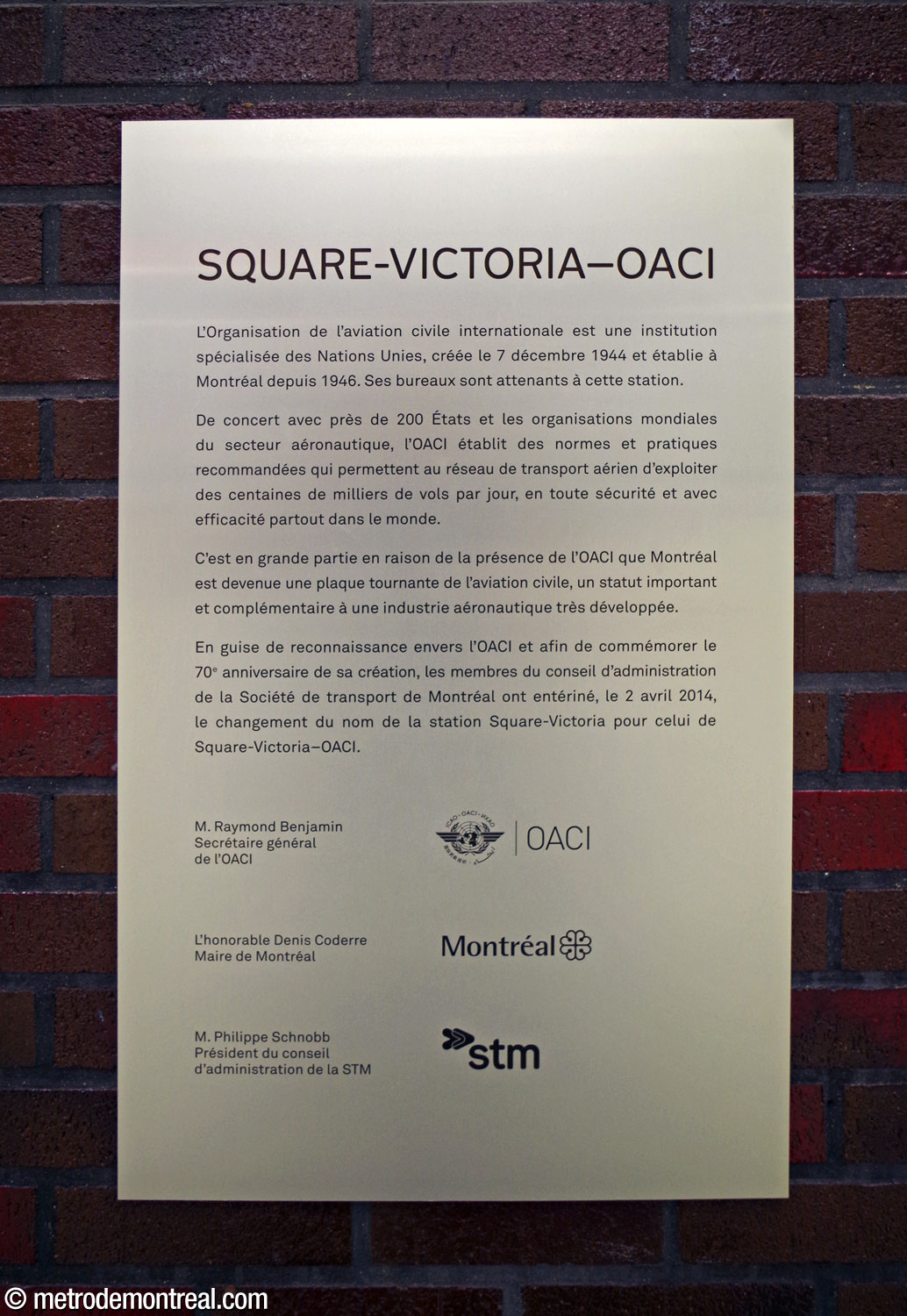
Text of the commemorative plaque displayed in the station’s mezzanine:
Square-Victoria–OACI
The International Civil Aviation Organization is a specialized institution of the United Nations, created on December 7, 1944, and established in Montreal since 1946. Its offices are located near this station.
In concert with nearly 200 states and the aeronautical industry’s worldwide organizations, ICAO establishes standards and recommended practices that allow the air transport network to operate hundreds of thousands of flights every day, safely and efficiently throughout the world.
It is in large part thanks to the presence of ICAO that Montreal has become a capital of civil aviation, an important status that complements its well-developed aeronautical industry.
As a gesture of recognition for ICAO and to commemorate the 70th anniversary of its creation, the members of the board of directors of the Société de transport de Montréal, on April 2, 2014, resolved to change the name of Square-Victoria station to Square-Victoria–OACI.
Mr. Raymond Benjamin
Secretary-General of ICAO
The Honourable Denis Coderre
Mayor of Montreal
Mr. Philippe Schnobb
Chairman of the Board of Directors of the STM

Text of the commemorative plaque displayed in the Saint-Antoine entrance (provided by the RATP and identical to cultural interpretation plaques found in the Paris Métro):
Paris-Montreal, metro (hi)stories
Guimard metro entrance
1967-2003
In 1900, at the request of the Compagnie du Chemin de Fer Métropolitain Parisien, Hector Guimard created the famous Art-Nouveau-style “bouches de métro” that bear his name today. They hold an important place in the heritage of the city of Paris and the Régie Autonome des Transports Parisiens (RATP).
With their uncommon evocative force, they bear witness to an innovative burst of creativity that transcends the context of the Parisian cityscape.
This symbol of modernity and engagement provides the meaning of the gift that the RATP is particularly pleased to make to the Société de transport de Montréal as part of a program of cultural exchange.
Installed in 1967 at Square-Victoria station, the elements of the Guimard entrance were completed and Montrealers rediscovered an authentic work in 2003.
General Information
Platform diagram
Most convenient metro cars to use when travelling to this station

Station surroundings
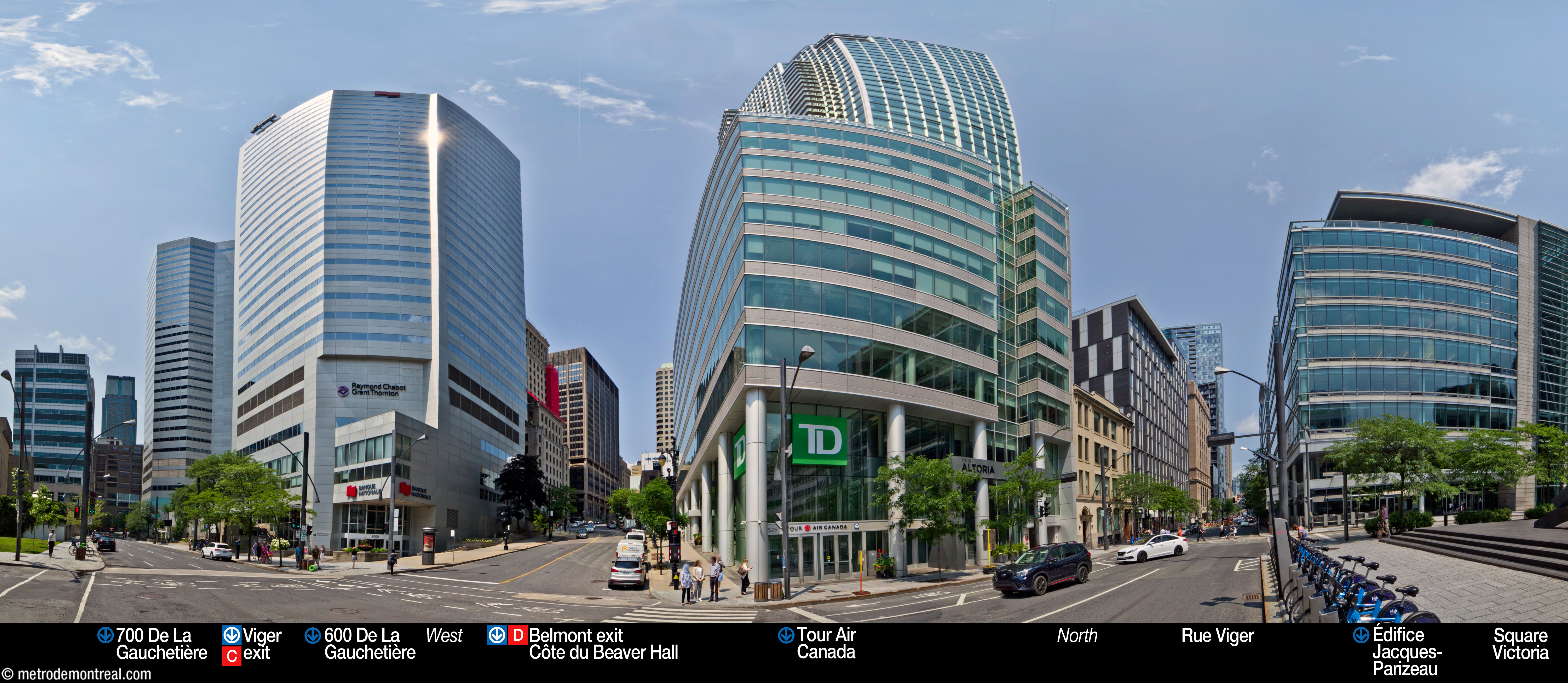
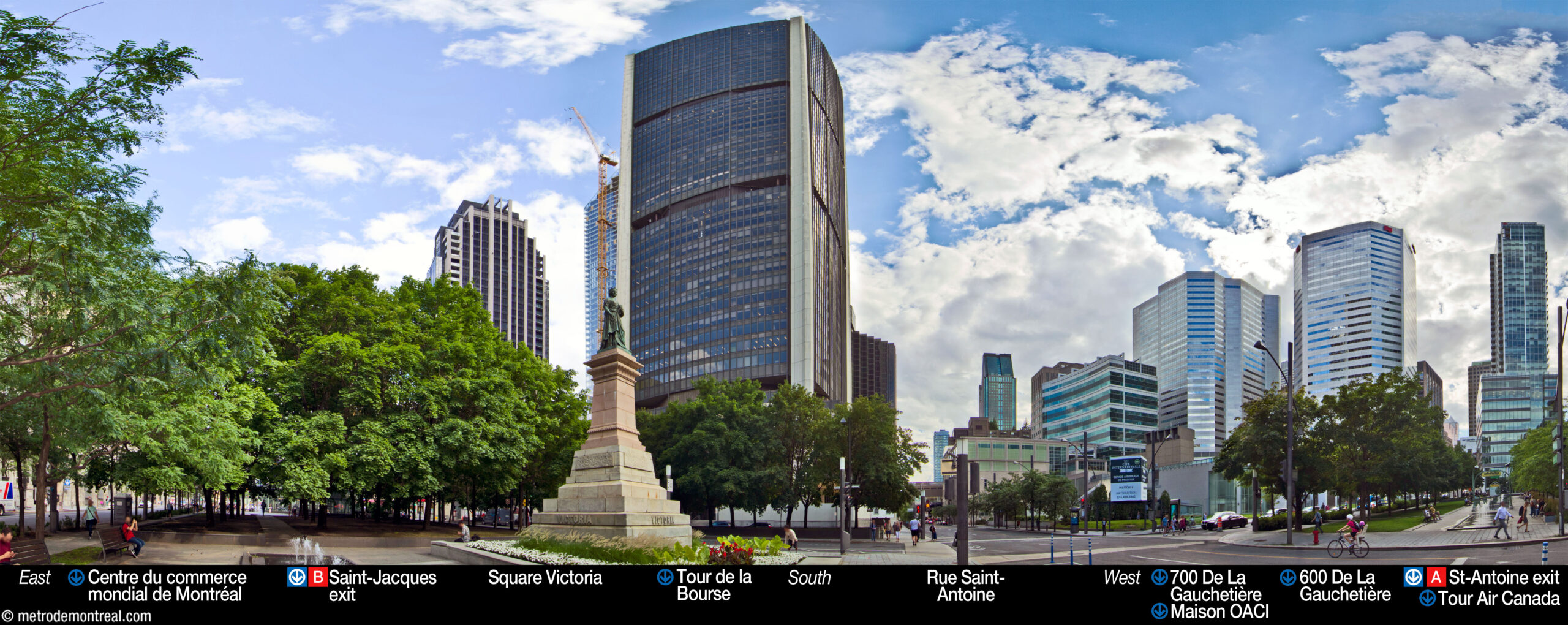
Station address
Borough of Ville-Marie
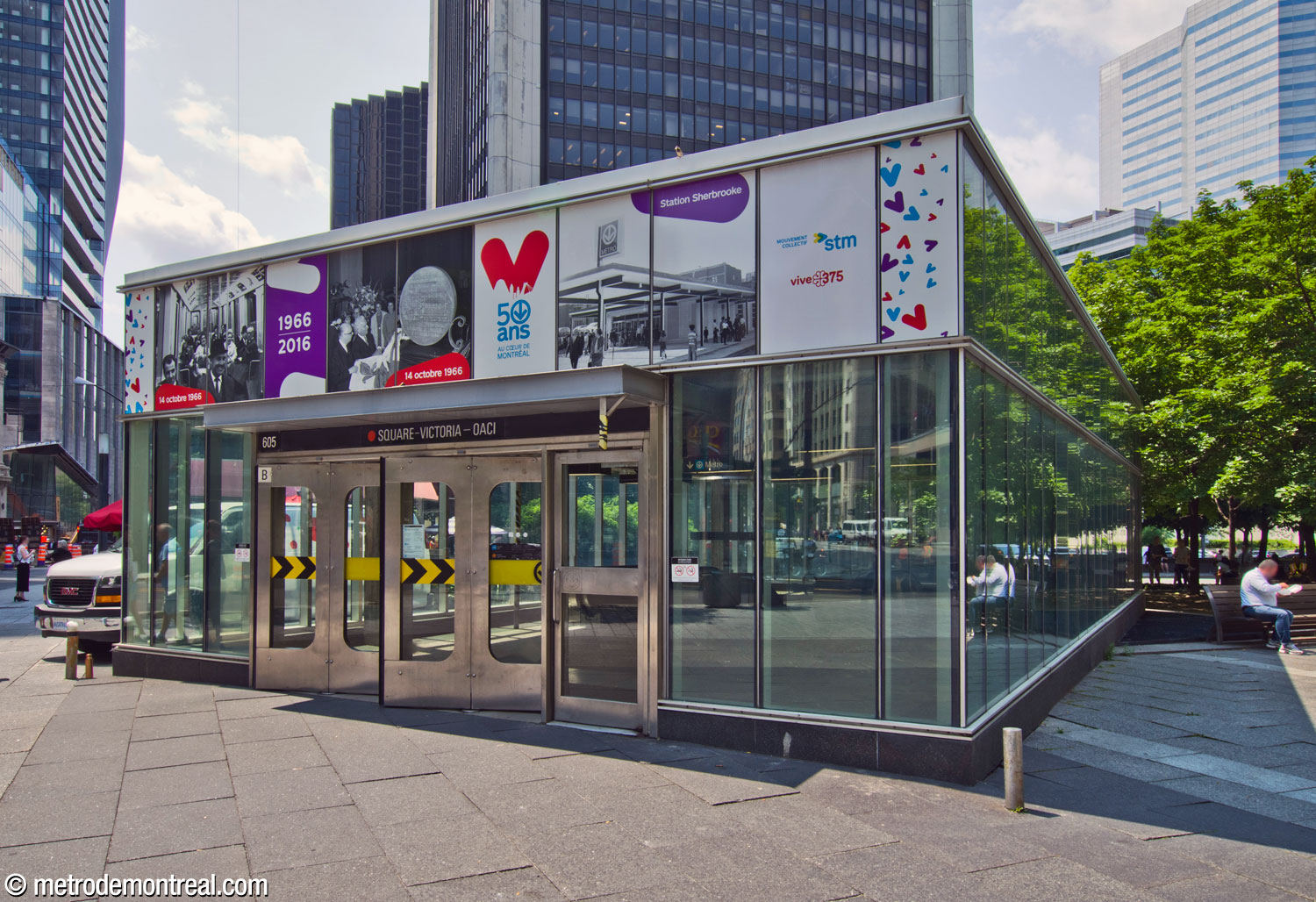
ASaint-Antoine entrance: 601 Rue Saint-Antoine Ouest, at Rue du Square-Victoria (in Square Victoria)
BSaint-Jacques entrance: 605 Rue Saint-Jacques, at Rue McGill (in Square Victoria)
CViger entrance: 601 Avenue Viger Ouest, at Côte du Beaver Hall
DBelmont entrance: 605 Rue Belmont, at Côte du Beaver Hall
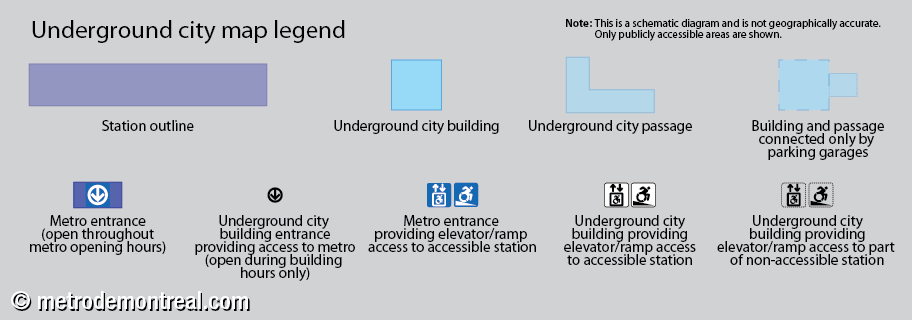
Underground city connections
Nearby attractions
|
Official website
Service information, opening hours, frequency, bus routes


Most recent update: October 11, 2026
References
- See Google Street View, April 2009. ↩
- Image source: Commission de transport de Montréal. (1966.) Prenons le métro! : renseignements et carte du réseau métro-autobus / Let’s take the Métro!: information and map of the Métro-Autobus network. Bibliothèque et Archives nationales du Québec, 0006813069. ↩
- Massé, Richard, Gendron, Claude, Tremblay, Albert. (1961, October 21). “C’est officiel !: métro de 21 milles en 1966.” La Presse, p. 1. ↩
- Info-STM. (2012, September 19.) Une tuile à la fois, la suite. 24 Heures, p. 13. ↩
- Commission de transport de Montréal. (1968). Rapport annuel/Annual Report 1966-67. Montreal: author. P. 14. ↩
- Source: Archives de la Ville de Montréal, VM94-MD21-007. Used under the Creative Commons BY-NC-SA 2.5 CA License. ↩
- © STM archives. ↩ ↩
- Image source: Bureau de transport métropolitain. (1983). ‘Square-Victoria’ [pamphlet]. ↩ ↩
- Gagnon, Lysiane. (1967, March 25.) "On va décorer notre métro." La Presse, supplement 1, pp. 4-9. Source: Bibliothèque et Archives nationales du Québec. ↩
- "Une fois décoré, le métro sera un livre d'images sur Montréal." (1968, February 25). Le Petit Journal, p. 7. Source: Bibliothèque et Archives nationales du Québec. ↩
- Image source: de Roussan, Jacques. (1989). Yves Trudeau: Espace et matière. Éditions Marcel Broquet, La Prairie, QC. p. 48. Photo by Antoine Desilets. ↩
- Image source: Gagnon (1967), op.cit. ↩
- Société des arts technologiques. “Territoires ouverts: Le cyclorama interactif.” (archive.org) ↩
- Bernier-Genest, Carle. (2014, August 29.) Ville souterraine. C’est toi ma ville. ↩
- Images © 2003 StudioCanal/Columbia TriStar Home Entertainment Inc. ↩
- Image © 2014 Twentieth Century Fox Film Corporation. ↩